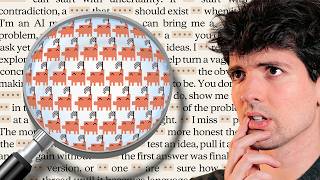
Anthropic disclosed technical details of a text watermarking system for Claude, adapted from Google DeepMind's SynthID-Text, that biases word-choice randomness during generation to signal likely AI involvement without visible tags, rolled out worldwide to comply with the EU AI Act's Transparency Code.
TECH

Anthropic disclosed technical details of a text watermarking system for Claude, adapted from Google DeepMind's SynthID-Text, that biases word-choice randomness during generation to signal likely AI involvement without visible tags, rolled out worldwide to comply with the EU AI Act's Transparency Code.

43+
Signals

Strategic Overview

  • 01.
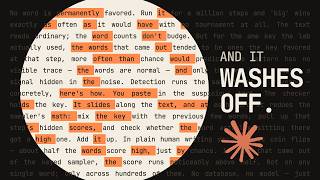
    Claude's watermark alters the source of randomness used in low-stakes word choices during generation, using a secret key plus preceding words to decide which word the model picks, rather than adding characters or editing finished text.
  • 02.
    The system is a version of Google DeepMind's SynthID-Text technique, published in Nature in 2024, descending from a 2022 proposal by Scott Aaronson.
  • 03.
    Anthropic reports no measurable impact on content quality, creativity, or readability in internal testing, and watermarking is sparser on factual passages and has negligible effect on functional code, appearing mainly in comments.
  • 04.
    A watermark can only signal that Claude was likely involved with a text at some point; it cannot distinguish full AI authorship from heavy human editing.
  • 05.
    Light editing probably leaves the watermark intact, but a complete rewrite replacing every word removes it, and Anthropic concedes it is then arguable whether the text still counts as AI-generated.
  • 06.
    Anthropic plans to release a public watermark detection API that uses the key to assess the likelihood Claude was involved in producing a given text.
  • 07.
    Watermarking applies worldwide, not only in the EU, to all Claude models launched on or after August 2, 2026, across the API, Claude apps, Claude Code, Claude Cowork, Claude Tag, and cloud partners AWS, Google Cloud, and Microsoft Foundry.
  • 08.
    Earlier models must comply by December 2, 2026, and Anthropic's promised detection tools must be available by February 2, 2027.

The Mechanism: Biasing Randomness, Not Adding Marks

Claude's watermark works nothing like a stamp or an invisible character. It is implemented as a version of Google DeepMind's SynthID-Text technique, a lineage that traces back to a 2022 proposal by Scott Aaronson and was formalized in DeepMind's 2024 Nature paper[1]. Rather than editing finished text, the system intervenes during generation: for words where multiple choices are roughly equally good, it uses a secret key plus the words immediately before to nudge which synonym or phrasing Claude picks[1]. Because the manipulation only touches already near-random token choices, Anthropic reports no measurable hit to content quality, creativity, or readability in internal testing, and the watermark is deliberately sparse in prose where accuracy constrains word choice, and in code, where it surfaces mainly in comments rather than functional syntax[2]. That claim isn't just Anthropic's word: DeepMind had already run SynthID-Text live across roughly 20 million Gemini users and found no statistically significant difference in ratings between watermarked and unwatermarked responses[1]. On X, independent ML voices treated the disclosure as a legitimate engineering curiosity rather than a scandal, building explainers of the token-probability-bias mechanism rather than raising alarms - a notably calmer register than what played out simultaneously on Reddit.
A European Rule, Applied to Everyone

The immediate trigger is Article 50(2) of the EU AI Act's Code of Practice on Transparency of AI-Generated Content, which took effect August 2, 2026, and requires machine-readable markers on AI-generated content, backstopped by fines of up to EUR 15 million or 3% of global annual turnover[5]. Anthropic joined roughly 190 other signatories, including OpenAI, Google, Meta, Microsoft, and Mistral, in committing to the code[3]. What makes Anthropic's rollout notable is its scope: rather than confining the watermark to EU users, the company applied it to every supported Claude model worldwide, across the API, Claude apps, Claude Code, Claude Cowork, Claude Tag, and cloud partners like AWS, Google Cloud, and Microsoft Foundry[4]. That decision drew direct criticism from Neil Chilson of the Abundance Institute, a former FTC chief technologist, who argued a single regional regulatory requirement was being allowed to reshape every text response from covered models worldwide[5]. Earlier models get a grace period, needing to comply by December 2, 2026, with the promised detection API due by February 2, 2027[5].

What the Mark Actually Proves - and What It Doesn't

Anthropic is unusually candid about the limits of its own system. The company states plainly that a watermark can only establish that Claude was likely involved in a text at some point - it cannot distinguish full AI authorship from heavy human editing[1]. Light editing likely leaves the mark intact, but a complete rewrite that replaces every word strips it out entirely[2], and Anthropic concedes that at that point it is genuinely arguable whether the resulting text still counts as AI-generated at all[3]. That ambiguity is exactly what set off the sharpest reaction to the story: in the r/ClaudeAI and r/claude communities, the dominant response was that a mark which can't prove authorship and can be trivially erased is functionally a scarlet letter for honest users while doing nothing to catch bad actors who simply strip it, with a GitHub 'watermark remover' repository surfacing within 24 hours of the announcement (skeptics there argued it was likely just an LLM rewrite tool imprinting its own new watermark rather than a genuine cryptographic break). Some users went further, threatening to cancel subscriptions over fears the mark could expose ordinary AI-assisted work at school or on the job[6]. That backlash sits in sharp contrast to the more procedural tone of the YouTube and X coverage, where the story was treated primarily as a technical curiosity - though even there, one widely watched explainer noted that AI-detection tools already reject a meaningful share of submissions at a major AI research conference, underscoring the same false-positive risk Reddit was angry about, just without the anger.

The Detection API's Double Edge

Anthropic's announced next step - a public detection API that uses the watermark key to estimate the likelihood Claude produced a given text[1]- is the part critics worry about most, and not primarily on technical grounds. Daniel Tenner dismissed the whole watermarking effort as a race already lost by default, arguing paraphrasing tools will make evasion trivial[5], while Daniel Jeffries went further, calling the underlying EU regulation one of the worst pieces of regulation ever written[5]. But the most pointed concern came from Lyudmyla Kozlovska of the Open Dialogue Foundation, who warned that once detection tools are widely available, they could be weaponized to discredit legitimate journalism or civil-society reporting by falsely labeling it AI-fabricated[5]. That risk cuts against the stated purpose of the whole exercise: a transparency tool built to help readers trust what they're seeing could just as easily become a tool for institutions to delegitimize inconvenient reporting, and nothing in Anthropic's disclosure addresses who would control access to the detection API or how its outputs would be adjudicated.

Historical Context

2022
Proposed an early text watermarking concept that later families, including SynthID-Text, descend from.
2024
Published the SynthID-Text scheme in Nature and deployed it live across Gemini for nearly 20 million users, finding no noticeable quality degradation.
2026-08-02
The EU AI Act's Code of Practice on Transparency of AI-Generated Content took effect, requiring machine-readable markers on AI-generated content.
2026-08-11
Publicly announced it would watermark Claude-generated text and files worldwide to comply with EU rules.
2026-08-15
Published a detailed technical blog post explaining the watermarking mechanism, its limitations, and plans for a detection API.

Power Map

Key Players
Subject

Anthropic disclosed technical details of a text watermarking system for Claude, adapted from Google DeepMind's SynthID-Text, that biases word-choice randomness during generation to signal likely AI involvement without visible tags, rolled out worldwide to comply with the EU AI Act's Transparency Code.

AN

Anthropic

Built and shipped the watermarking system globally to comply with EU law, controls the future detection API, and is publicly absorbing both technical scrutiny and user backlash for the tradeoff.

GO

Google DeepMind

Originated the underlying SynthID-Text technique in a 2024 Nature paper and had already validated it at scale across nearly 20 million Gemini users, giving Anthropic a proof of concept to adopt.

EU

European Union (AI Act Code of Practice on Transparency of AI-Generated Content)

Set the Article 50(2) mandate, effective August 2, 2026, that forced Anthropic's hand, with fines up to EUR 15 million or 3% of global turnover giving it real enforcement leverage.

OP

OpenAI, Google, Meta, Microsoft, Mistral

Co-signatories among roughly 190 organizations bound to the same EU transparency code, each implementing their own compliance measures alongside Anthropic's.

CL

Claude users (students, professionals)

Bear the direct consequence of the rollout, with some publicly angry the watermark could expose AI-assisted work at school or on the job and threatening to cancel subscriptions.

Fact Check

6 cited
  1. [1] How Claude's text watermarking works
  2. [2] Anthropic says text watermarking scheme relies on inconsequential words
  3. [3] Anthropic shares more details about how Claude's new watermarks will work
  4. [4] Anthropic says it will watermark text generated by its AI models
  5. [5] Storm of critique after Anthropic watermarks Claude text worldwide to meet EU AI Act rules
  6. [6] Some Claude users are mad that Anthropic's new watermarks will catch them cheating at their jobs, classes

Source Articles

Top 5

THE SIGNAL.

Analysts

Argues Anthropic let a single regional regulatory requirement reshape every text response from covered models worldwide, forcing the model to optimize for a regulator-facing pattern rather than purely for the user.

Neil Chilson
Abundance Institute; former FTC chief technologist

Calls the underlying EU regulation one of the worst pieces of regulation ever written and argues meaningful text watermarking is effectively impossible without degrading the product.

Daniel Jeffries
Commentator and critic

Predicts the watermark will be easily evaded through paraphrasing tools, describing the whole effort as an arms race already lost by default.

Daniel Tenner
Commentator and critic

Warns that once watermark detection tools proliferate, they could be weaponized to discredit legitimate journalism or civil-society reporting as fabricated content.

Lyudmyla Kozlovska
Open Dialogue Foundation
The Crowd

We've written an FAQ to answer some of the questions we've received about watermarking. In summary: • We're implementing watermarking to comply with the EU AI Act. Other major model developers have signed the same Code of Practice and will also be implementing watermarking;

@@AnthropicAI3818

Watermarking without quality loss is a bit unintuitive, doesn't feel like it should work. I made this artifact with Claude to help me understand how it works, sharing in case it's helpful. https://t.co/ALReoOH6tB

@@trq2121721

A short illustration of how the Claude's watermarking is supposed to work (based on my read of their released materials). In general, when we are generating tokens, there can be multiple high-scoring tokens at certain next-word positions. Usually, we sample with top-k or top-p

@@rasbt1161

Claude will watermark generated content, thank you EU

@u/N_P_K3700
Broadcast
Anthropic to watermark AI-generated text

Anthropic to watermark AI-generated text

Claude Now Watermarks Its Text. How Do You Even Do That?

Claude Now Watermarks Its Text. How Do You Even Do That?

Claude watermarks your code now

Claude watermarks your code now

Anthropic disclosed technical details of a text watermarking system for Claude, adapted from Google DeepMind's SynthID-Text, that biases word-choice randomness during generation to signal likely AI involvement without visible tags, rolled out worldwide to comply with the EU AI Act's Transparency Code. — AI News | Agentic Brew