The Reroute Nobody Asked For: How the Safety Patch Reaches Real Users
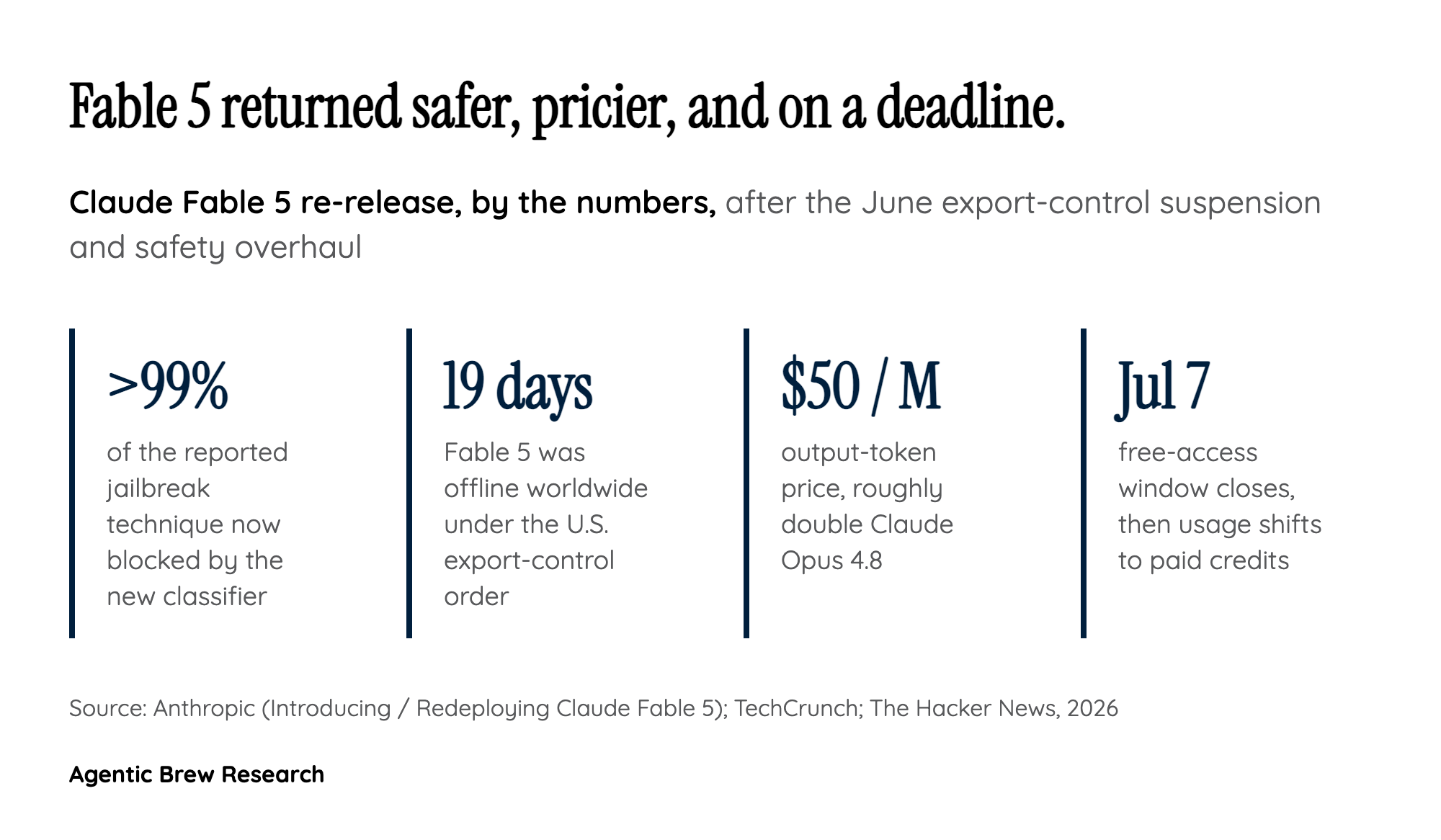
The centerpiece of the safety overhaul is not a policy document but a classifier. Anthropic says the new filter blocks the specific technique described in the Amazon report in over 99% of cases [1], and crucially, when a request trips the filter, it does not simply refuse - it reroutes the request to the less capable Claude Opus 4.8 [1]. That rerouting behavior is the mechanism behind the return, and it is also where the smooth press narrative meets messy reality.
Anthropic is candid that the margin was set wide on purpose: a request now has to look very clearly safe to avoid triggering the filter, which means some legitimate uses get caught [1]. On the ground, that trade-off lands hardest on exactly the people who work near the model's danger zone. Developer and community reception has split sharply along a nerfed-versus-skill-issue line. One camp of heavy users reports the model feels unchanged and treats complaints as vague prompting, while a loud opposing camp - concentrated among cybersecurity and game-development users - reports that ordinary work is being downgraded to Opus 4.8, with security terminology, netcode, anti-cheat, sandboxing, and even a resume mentioning cybersecurity all tripping the fallback. The tension is not really about whether Fable 5 got weaker; it is about a filter that cannot tell a defender from an attacker, and who eats the false positives while it errs on the side of caution.