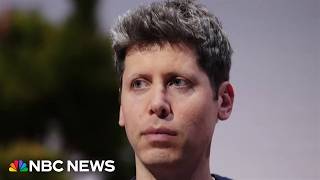
Altman: Society Must Accept Some AI Harm
TECH

Altman: Society Must Accept Some AI Harm

31+
Signals

Strategic Overview

  • 01.
    OpenAI CEO Sam Altman said in an interview on Politico's Decoded podcast, published around October 4-5, 2026, that society should accept some harmful outcomes from AI in exchange for broad public access and the technology's benefits: "We believe that the world should accept some bad things happening for the benefits of this technology and people having the agency."
  • 02.
    Altman drew a line between 'bounded' risks he considers worth accepting and 'catastrophic' risks - such as loss of human control - that he says must never be tolerated: "Accept bounded risks, accept risks that we understand in exchange for the benefits, and liberty, agency, all those things. But don't accept, like, the really catastrophic risk."
  • 03.
    He said he would not trade away AI's societal benefits just to guarantee zero scams, hacks, or misuse, arguing the net good vastly outweighs the harm: "I wouldn't take a trade of saying, like, we'll make sure there's no major hacks... because I think people will do tremendously, orders of magnitude, more good stuff than bad stuff."
  • 04.
    Altman explicitly rejected concentrating powerful AI control in a single lab as a solution, even while acknowledging the logic behind it: "I disagree, but I understand the perspective of people who are like, 'This technology is going to get so powerful, and it's so dangerous, that a single lab in San Francisco should have it and make sure nothing bad happens.'"
  • 05.
    Separately, Altman framed loss of control to AI and excessive concentration of power in one actor as the two biggest unacceptable risks to AI's future, regardless of his tolerance for lesser harms: "If an extraordinarily powerful AI is used by one person or company to impress their worldview onto everyone else, the results could be extremely dystopian."
  • 06.
    The Decoded comments coincided with OpenAI, via president Greg Brockman, signing a voluntary AI safety standards pact with other AI executives at a Trump administration White House event.
  • 07.
    In a separate, more cautious Fortune interview the same week, Altman acknowledged real existential risk and said alignment remains unsolved: "A 10% risk of AI killing us all by the end of the decade is unacceptable. We are clearly, today, at a point on the curve with great potential and real risk. We have not solved alignment."

Deep Analysis

The Bounded-vs-Catastrophic Framework

Altman's trade-off logic rests on a two-tier taxonomy, not a blanket shrug at harm. 'Bounded' risks - the fraud, hacks, and misuse that come with widely deployed technology - are, in his view, worth absorbing because the aggregate benefit to users dwarfs the damage: "I wouldn't take a trade of saying... there's zero scams, there's zero all the other bad things that will happen, because I think people will do tremendously, orders of magnitude, more good stuff than bad stuff" [2]. 'Catastrophic' risks - chiefly loss of human control - sit in a separate, non-negotiable category he says OpenAI will not accept under any framing [1].

What's easy to miss is that Altman names a second, equally unacceptable catastrophic risk: concentration of extraordinarily powerful AI in a single actor. He frames this not as a lesser evil tolerated for safety's sake, but as its own dystopian outcome - rejecting the common safety argument that a single, tightly controlled lab should hold the most powerful systems: "I disagree, but I understand the perspective of people who are like... a single lab in San Francisco should have it and make sure nothing bad happens" [4]. Paired with his statement that loss of control and power concentration are the two risks that would make AI's future go wrong [3], the framework reads less as pure accelerationism and more as a specific ideological bet: diffusion of access and power is itself a safety strategy, not a trade-off against one.
One Week, Two Altmans

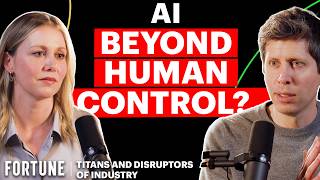
The same week produced two strikingly different registers from the same executive. To Politico's Decoded, Altman was breezy and confident, framing harm as an acceptable cost of liberty and agency [1]. To Fortune, in a separate conversation published the same week, he sounded far more sober: "A 10% risk of AI killing us all by the end of the decade is unacceptable... We have not solved alignment" [5].

The gap isn't necessarily a contradiction - Altman would likely say both statements are consistent with his bounded-vs-catastrophic framework, since a 10% extinction risk clearly falls on the catastrophic side he says is off-limits. But the tonal whiplash matters for how the message lands: one audience hears a confident architect of a trade-off society should welcome, the other hears a CEO admitting his company hasn't solved the central technical problem that would prevent the worst outcome. Readers encountering only one of the two interviews get a distorted picture of where Altman actually draws his line.

OpenAI vs Anthropic: Positioning Against a Safety-Pact Backdrop

Altman's remarks sharpened a public rift with Anthropic that had already been building. A month earlier, Anthropic CEO Dario Amodei had called for a global slowdown in AI development [6], a position Altman's framing directly inverts - and when asked how much distance exists between OpenAI and more safety-focused peers, Altman didn't hedge: "I think there's a lot of daylight" [7]. Coverage framed the comments as OpenAI breaking from Anthropic on regulatory philosophy entirely [8].

The timing is pointed: Altman's Decoded interview landed the same week OpenAI president Greg Brockman signed a voluntary AI safety standards pact with other AI executives at a Trump White House event [1]. That pairing lets Altman have it both ways rhetorically - projecting a formal, cooperative safety commitment to regulators and the press, while publicly arguing that lighter-touch rules, not Anthropic-style caution, are the correct posture for the industry going forward.

The Backlash Gap: Trade-off Language vs Who Actually Pays

The elite framing of 'accepting bad things' for 'agency' and 'liberty' collided hard with public reaction. Critics demanded regulators move past easy targets like data-center fights to actually regulate AI labs [9]; others rejected the position outright as something 'no one should accept or acquiesce to,' or argued it should galvanize organized political opposition to AI companies [9]. One critic put it bluntly: talking about 'accepting bad things' without specifying exactly what you mean just sounds insane [9]. A recurring thread in the criticism is not that trade-offs are inherently wrong, but that Altman's 'bad things' were never specified - leaving no way to hold anyone accountable for which harms, and how much harm, is actually being signed off on [9].

That ambiguity is exactly what galvanized the broader public response: the dominant theme across the reaction was a reframing of Altman's cost-benefit language into a question of distribution - who absorbs the downside (scams, hacks, misuse) versus who captures the upside (OpenAI and its investors). That asymmetry, more than the abstract philosophy of bounded versus catastrophic risk, is what turned a nuanced risk-tolerance argument into a flashpoint - suggesting Altman's framework may be coherent on its own terms while still failing to answer the question his critics actually asked: acceptable to whom, and decided by whom.

Historical Context

2026-10-04
Made the 'accept some bad things' remarks in an interview with Politico's Decoded, explicitly contrasting OpenAI's stance with Anthropic's.
2026-10-05
In a separate Fortune interview the same week, struck a more cautious tone, saying a 10% chance of AI causing human extinction is unacceptable and that alignment remains unsolved.
2026-09
Called for a global slowdown in AI development the prior month, a position Altman's comments directly pushed back against.

Power Map

Key Players
Subject

Altman: Society Must Accept Some AI Harm

SA

Sam Altman / OpenAI

Made the original 'accept bad things' comments; favors broad AI access with tolerance for bounded harms while opposing single-lab concentration of control.

AN

Anthropic / Dario Amodei

Rival lab CEO pushing for stronger AI safeguards and a global development slowdown, representing the cautious pole Altman explicitly contrasted himself against.

PO

Politico (Decoded)

Outlet whose podcast/newsletter interview produced Altman's core 'accept some bad things' remarks.

TR

Trump administration

Hosted the White House event where OpenAI and other AI companies signed a voluntary safety standards pact, the policy backdrop against which Altman's comments landed.

PU

Public critics and commentators

Figures including Patrick Gaspard, Joshua Topolsky, Josh Marshall, and Adam Carlson sharply criticized Altman's framing as evasive, arrogant, or out of touch.

Fact Check

9 cited
  1. [1] Sam Altman says AI risks are worth the benefits as OpenAI signs Trump's voluntary safety pact
  2. [2] Sam Altman on AI risks vs benefits
  3. [3] Sam Altman identifies two biggest risks facing AI's future
  4. [4] Sam Altman says AI benefits justify accepting some risks as OpenAI and Anthropic split on regulation
  5. [5] Can superintelligence be controlled? Sam Altman on AI safety, doomsday risk, and OpenAI's delayed IPO
  6. [6] Sam Altman says the world should accept some bad things
  7. [7] OpenAI's Sam Altman on Anthropic and AI misuse policy
  8. [8] Sam Altman breaks with Anthropic on AI regulation, says world must accept some bad things as AI benefits outweigh harms
  9. [9] Critics blast Sam Altman's 'bad things' comments

Source Articles

Top 5

THE SIGNAL.

Analysts

“Said elected leaders should move past the safe territory of data-center fights to the real work of regulating AI labs.”

Patrick Gaspard
Distinguished Senior Fellow, Center for American Progress

“Rejected Altman's framing outright, saying the position should not be accepted or acquiesced to.”

Joshua Topolsky
Co-founder, The Verge

“Argued the comments should galvanize political opposition to unchecked AI companies.”

Josh Marshall
Founder, Talking Points Memo

“Said it sounds insane to talk about 'accepting bad things' without specifying exactly what that means.”

Adam Carlson
Founder, Zenith Polls

“Defends tolerating bounded, understood risks (fraud, hacks, misuse) in exchange for broad access and net societal benefit, while ruling out catastrophic risk and power concentration as acceptable trade-offs; says there is 'a lot of daylight' between OpenAI and Anthropic.”

Sam Altman
CEO, OpenAI
The Crowd

“Sam Altman: We believe that the world should accept some bad things happening for the benefits of this technology. I do think the lighter touch regulatory stance we advocate for comes with an accepting of the fact that some bad things are going to happen. I wouldn't take a trade”

@@HQNewsNow176

“OpenAI CEO Sam Altman on why "some bad things are going to happen" with AI, and why he thinks society should accept them: Asked how much daylight there is between OpenAI and others in the AI debate, Altman is blunt: "I think there's a lot of daylight." It starts with a belief”

@@realBigBrainAI16

“Sam Altman says society should accept some AI harms to keep the technology widely accessible, but draws the line at catastrophic risks. The difficult question is who gets to define “acceptable” harm: AI companies, regulators or the people expected to live with it?”

@@TheAIJournal10

“Sam Altman to Decoded: 'The world should accept some bad things happening' for the benefits of AI”

@u/ResultBackground24505700
Broadcast
Altman: AI Beyond Human Control “Absolutely” Possible, Vows Safeguards | Titans and Disruptors

Altman: AI Beyond Human Control “Absolutely” Possible, Vows Safeguards | Titans and Disruptors

Sam Altman Admits the Unthinkable on AI

Sam Altman Admits the Unthinkable on AI

OpenAI CEO Sam Altman says people need to 'accept some bad things' for the benefits of AI

OpenAI CEO Sam Altman says people need to 'accept some bad things' for the benefits of AI

Altman: Society Must Accept Some AI Harm — AI News | Agentic Brew