DeepSeek open-sources AI agent harness
TECH

DeepSeek open-sources AI agent harness

26+
Signals

Strategic Overview

  • 01.
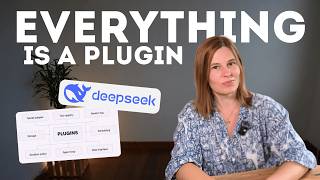
    DeepSeek released DeepSeek Harness (CLI package `dsh`), an MIT-licensed open-source agent harness built on the Cordis plugin kernel, where models, tools, skills, sessions, sandboxes, storage, agent loops, scheduling, and the UI are all swappable plugins.
  • 02.
    The harness can be launched immediately via `npx @deepseek-ai/dsh web` with no installation step, and ships a local Web UI served by default at http://127.0.0.1:3080.
  • 03.
    It offers four runtime modes - Standard (full toolset), Code (TypeScript/SDK orchestration), Minimal (bash and editor only, used in DeepSeek's own published benchmarks), and Creator (custom presets).
  • 04.
    The project's design rests on two stated principles - "Everything is a plugin" and "Every run is traceable" - with append-only session logs and a Trajectory view for inspecting, resuming, forking, searching, and replaying agent runs.
  • 05.
    The GitHub repository was created on August 13, 2026 and is versioned 0.1.0-rc.5, a release candidate with no formal GitHub releases or tags yet, and its README warns of upcoming compatibility-breaking changes.
  • 06.
    DeepSeek launched Harness alongside an upgraded DeepSeek-V4-Pro model at higher API prices, pairing free open-source agent infrastructure with a paid premium model.

"Everything Is a Plugin": Inside the Cordis Kernel

DeepSeek Harness (CLI package dsh) is built on Cordis, a plugin kernel where models, tools, skills, sessions, sandboxes, storage, agent loops, scheduling, and even the UI are swappable plugins rather than fixed components [1]. DeepSeek states the design rests on two principles - "Everything is a plugin" and "Every run is traceable" - with append-only session logs that record every prompt, reasoning step, tool call, and context injection [2]. Architecture documentation, including a Cordis primer, is written to be legible to both human developers and AI agents reading the codebase [7].

The traceability piece is what several reviewers flagged as the most distinctive feature: a "Trajectory view" lets developers inspect, resume, fork, search, and replay any agent run down to the individual tool call [2]. Reddit discussion in r/PiCodingAgent compared this "small core plus everything as a plugin" pattern to Pi Agent's similar extensions, skills, and tools architecture, treating the "small core plus session/plugin" approach as a shared design pattern across the two harnesses.
Platform, Not Product: Free Harness, Paid Premium Model

DeepSeek released Harness the same week it shipped an upgraded DeepSeek-V4-Pro model at higher API prices, pairing free, open agent infrastructure with a paid premium model - a combination commentators framed as challenging proprietary coding-agent ecosystems on both developer access and model capability [3]. Digital Applied's analysis frames the move as a direct answer to vendor lock-in: an open, MIT-licensed harness lets developers or enterprises swap in their own model, sandbox, or security rules by changing a plugin rather than rewriting a runtime [5]. The same open-sourcing also converts DeepSeek's own benchmark methodology - previously run through an unexamined "Minimal mode" - into something the community can inspect and, in principle, reproduce, though Digital Applied cautions the underlying performance numbers remain self-reported [5].

OrcaRouter's comparison puts a price on that strategy: even after DeepSeek's price increase, V4-Pro runs roughly 4-6x cheaper per output token than Anthropic's Claude models, meaning DeepSeek's platform bet is subsidized by a real cost advantage rather than price parity [6]. Prediction-market data cited in the same coverage still gives Anthropic an 84% probability of having the best AI model by late September 2026 - so DeepSeek's opening argument is about openness and cost, not yet about topping the model-quality leaderboard [3].

A Record-Setting Adoption Curve

Within roughly 24 hours of its August 13, 2026 launch, the deepseek-harness repository grew from about 27,500 stars on day one to roughly three times that - one of the fastest star-growth curves recorded for a developer tool on GitHub [4]. By the following day the count had passed 95,386 stars and 8,826 forks, and later tallies put the repository above 161,000 stars, 16,900-plus forks, and 676-plus watchers [1][4].

A community-run plugin marketplace, "DSH 1024Store," reported reaching 1,080 third-party plugins, suggesting the "everything is a plugin" design is already being tested by outside developers rather than staying theoretical [8]. That combination - stars, forks, and an independently seeded plugin economy - is a stronger adoption signal than any single metric alone.

The Developer-Preview Reality Check

Despite the adoption numbers, DeepSeek Harness is unambiguously unfinished software: the GitHub repository carries no formal releases or tags, is versioned 0.1.0-rc.5 as a release candidate, and its README warns explicitly that "there will be compatibility-breaking changes" [1][5]. Digital Applied's review treats it as preview-grade infrastructure meant for experimentation, not production automation [5].

Hands-on users echo that caution. Reddit threads describe the harness as functional and its UI and "code mode" as strong, but flag sub-agents as buggy and error-prone, the Node-based codebase as resource-hungry, and by some accounts "bloated" or "vibecoded," and raise an unresolved question about routing coding-agent traffic through a China-based provider. X and YouTube commentary skews more enthusiastic, but even there reviewers describe it as "not a mature product," and an early independent fork (r/hermesagent) already wires the harness in as a delegated coding sub-agent, routing calls through OpenRouter at roughly $0.30 per run - a sign outside developers are integrating it despite the rough edges above.

Commoditizing the Coding-Agent Layer

Commentary on the release frames it as a continuation of a recognizable DeepSeek playbook: take a layer the industry treats as expensive and proprietary, publish a capable open version, and move the competitive argument down one level - first model intelligence, now the agent harness that sits on top of the model. OrcaRouter frames the resulting contrast succinctly: Claude Code is "a finished product you rent," while DeepSeek Harness is "a kit of parts you rebuild" - useful to companies that want to avoid vendor lock-in by swapping a plugin rather than rewriting a runtime, but requiring more assembly than a turnkey product [6]. Notably, Harness is model-agnostic enough that competitors' models, including OpenAI Codex or Claude Code itself, can reportedly be plugged in as components inside a multi-agent Harness setup, undercutting the idea that this is purely a DeepSeek-versus-everyone fight.

If composable, model-agnostic agent runtimes catch on the way the star growth suggests they might, closed vendors will face growing pressure to justify their pricing and packaging against a free layer that can be assembled from the same components - including their own models.

Historical Context

2026-08-13
DeepSeek publicly released DeepSeek Harness v0.1 as MIT-licensed developer preview software, alongside the DeepSeek-V4-Pro model with raised API prices.
2026-08-14
Within roughly 24 hours the repository grew from about 27,500 stars on launch day to roughly 3x that, one of the fastest adoption curves recorded for a developer tool on GitHub.
2026-08-15
Star count passed 95,386 stars and 8,826 forks within about two days of publication.

Power Map

Key Players
Subject

DeepSeek open-sources AI agent harness

DE

DeepSeek AI

Creator and publisher of DeepSeek Harness and the underlying Cordis kernel; gives away the agent-tooling layer for free while monetizing through the higher-priced DeepSeek-V4-Pro model API, shifting its competitive moat from tool-access gatekeeping to model quality and cost.

AN

Anthropic / Claude Code

Incumbent proprietary coding-agent product that DeepSeek Harness is explicitly positioned against; still holds an 84% prediction-market probability of having the best AI model by late September 2026, so the near-term contest is over tooling openness and cost rather than raw model quality.

OP

OpenAI Codex

Cited alongside Claude Code as another closed agent architecture that DeepSeek Harness's composable, model-agnostic design is positioned against.

GI

GitHub developer community (r/LocalLLaMA, r/DeepSeek)

Early adopters driving the harness's record-fast star growth; praised its flexibility while flagging complexity and higher token usage as tradeoffs.

Fact Check

8 cited
  1. [1] deepseek-ai/deepseek-harness (GitHub repository)
  2. [2] DeepSeek Harness (official product page)
  3. [3] DeepSeek Open-Sources MIT-Licensed Harness for AI Coding Agents
  4. [4] DeepSeek Harness: Open-Source Agent Explained
  5. [5] DeepSeek Harness: Open-Source Agent Framework
  6. [6] DeepSeek Harness vs Claude Code
  7. [7] Cordis Primer (DeepSeek Harness docs)
  8. [8] Community-Built Plugin Store for DeepSeek Hits 1,080 Plugins on GitHub

Source Articles

Top 3

THE SIGNAL.

Analysts

Argues the release's real significance is that it legitimizes fully composable, auditable agent runtimes with swappable components as a mainstream design direction, not just the repository itself.

Flowtivity
Industry analysis blog

Frames Harness as DeepSeek's strategic answer to vendor lock-in that also converts its own benchmark methodology into inspectable, reproducible infrastructure - while cautioning that the underlying performance claims remain vendor-stated.

Digital Applied
Industry analysis blog

Positions Harness as "a kit of parts you rebuild" versus Claude Code as "a finished product you rent," useful for avoiding vendor lock-in, and notes DeepSeek V4-Pro remains roughly 4-6x cheaper per token than Claude even after DeepSeek's price increase.

OrcaRouter
Industry analysis blog (agent-tooling comparison)
The Crowd

The new DeepSeek Harness, explained by our team. dsh is at ~144K stars on GitHub and crushing it around the world. We've built an intensive deep dive on the harness and on the paper behind its Cordis kernel: 23 sections, from running it in 60 seconds to the formal theory, with more.

@@helmcode596

5 pattern every AI engineer should learn from Deepseek Agent Harness. 100% Opensource.

@@Saboo_Shubham_61

DeepsSeek did it again! They released the open source rival to Claude Code. It's called deepseek-harness. A fully autonomous coding agent that sits directly in your terminal to build, debug, and execute code for you. → Plug-and-play tools, skills, and memory → Live more

@@HowToPrompt__28

Deepseek Harness is on whole different level

@u/VEHICOULE_238
Broadcast
DeepSeek Harness: The End of Claude Code?

DeepSeek Harness: The End of Claude Code?

DeepSeek Harness - Its a Big Deal!

DeepSeek Harness - Its a Big Deal!

Why DeepSeek Harness Is The End Of Coding Agents as We Know Them

Why DeepSeek Harness Is The End Of Coding Agents as We Know Them

DeepSeek open-sources AI agent harness — AI News | Agentic Brew