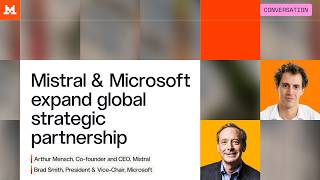
The Sovereignty Claim Meets the CLOUD Act
Brad Smith's pitch is that Europe gets frontier AI "without compromising control over their data, operations or digital future," [1]and the three-tier deployment model - fully Azure-hosted, cloud-connected Azure Local, or fully disconnected - is built to back that up technically. [3]But the fine print undercuts the headline: Microsoft's access to Mistral's models in Foundry is inference-only today, distillation access isn't yet available, and the underlying compute deal functions as an anchor-tenant arrangement rather than a locked multi-year contract - with no new Microsoft equity stake attached. [2][4]That gap between the sovereignty narrative and the actual terms is exactly where skeptics land: in online discussion of the deal, critics have pointed out that because Microsoft remains a US-headquartered company, EU-hosted data run through its cloud is still potentially reachable under the US CLOUD Act regardless of where the servers physically sit - a limitation independent of anything Mistral brings to the table. Gartner's Arun Chandrasekaran frames the deal's real goal more narrowly - serving European clients through better sovereign options and strengthening Microsoft's messaging - which is a more modest claim than full data sovereignty. [3]