DigitalOcean tool exposes silent AI agent failures
TECH

DigitalOcean tool exposes silent AI agent failures

18+
Signals

Strategic Overview

  • 01.
    DigitalOcean launched Signals and Simulations, two capabilities under DigitalOcean Agent Learning Services, built to surface and fix AI agents that fail while reporting technical success.
  • 02.
    Signals watches live production traffic on DigitalOcean Managed Agents and the Inference Engine and automatically flags problem sessions across three categories: interaction (user frustration), execution (tool reliability), and environmental (infrastructure) signals, with nothing extra to instrument.
  • 03.
    Simulations lets teams replay flagged failure scenarios and test a proposed fix in an isolated sandbox using the same harness and tools as production, scored by an LLM judge, before shipping; every proposed fix still requires human review before release.
  • 04.
    Signals, Simulations, and a companion observability product called Insights are all in public preview; a related Agent Data Services product is in private preview.

Deep Analysis

A 200 OK That Lied: How Silent Failures Hide Inside Agent Logs

DigitalOcean's own framing of the problem is blunt: a tool call can return a clean success code and still be wrong. The company's illustrative case is a breaking change to an internal refund CLI tool that silently switched units from dollars to cents, causing a support agent to issue refunds at 1% of the intended value while every log line reported success [1]. Signals is built to catch exactly that class of failure by watching live traffic on Managed Agents and the Inference Engine and sorting problem sessions into three buckets - interaction signals (a frustrated user), execution signals (an unreliable tool call), and environmental signals (an infrastructure fault) - without requiring teams to add any extra instrumentation [1]. On the tau-bench benchmark, DigitalOcean reports Signals reaches an 82% informativeness rate and a 1.52x efficiency gain over randomly sampling sessions for review [1], a concrete claim that the flagging is doing more than just surfacing noise.
Why DigitalOcean Didn't Just Build an AI That Watches Everything

The obvious fix for silent failures - run an LLM judge over every single agent session - breaks down at scale. DigitalOcean notes that raw agent trace volume can exceed 100 GB/s [1], which makes exhaustive AI grading of every interaction impractical and expensive. Signals instead relies on cheap, rule-based triage to narrow that flood down to a shortlist of sessions worth closer scrutiny, and only then converts flagged sessions into evaluation test sets with one click [2]. The more expensive step - an LLM judge actually scoring whether a proposed fix works - is reserved for Simulations, which replays a flagged scenario through the same harness and tools the agent uses in production before any change reaches a real user [1]. In DigitalOcean's internal testing, ten production failure scenarios were replayed end to end in under a minute, and the tooling works across agent frameworks including Claude Code, Codex, and OpenCode [2].

The Trust Deficit Behind the Timing

The launch lands against a backdrop of eroding enterprise confidence in autonomous agents. A VentureBeat Intelligence survey found that the share of enterprises willing to let agents make unreviewed production changes fell from 75% to 56% in a single month, and dropped even further among purchasing decision-makers, from 88% to 61% [5]. More tellingly, 61% of organizations that run pre-deployment evaluations still reported an agent that passed internal testing yet caused a customer-facing failure within the prior year, with 22% reporting multiple such incidents [5]- evidence that evaluation alone isn't catching what production traffic reveals. That same survey found only 29% of organizations use real-time automated quality checks as their primary monitoring method, while 36% still lean on simple trace logging that confirms a system is running without validating that it's right [5]. DigitalOcean's decision to keep a human in the loop for every proposed fix, rather than letting Simulations auto-approve changes, reflects that same note of caution [2].

Betting the Whole Stack: DigitalOcean's Full-Stack Agent Infra Play

Signals and Simulations don't stand alone - they sit on top of Managed Agents, which DigitalOcean launched in public preview on 2026-09-21 with Harness Runtime (per-agent microVMs) and Action Gateway, giving agents governed access to more than 16,000 tools across 500-plus providers [4]. Barely three weeks later, DigitalOcean used the same announcement window to unveil Agent Learning and Data Services, aimed at making deployed agents 'recursively self-improving' [6], which positions reliability detection as just one layer in a much larger product line covering an agent's entire post-launch lifecycle. That full-stack bundling strategy is also what independent commentary has actually responded to so far: AI industry voices praised the underlying Managed Agents platform's cost focus and its pause-when-idle, governed-tool operational pattern [3]- reactions to the broader infrastructure play rather than endorsements of Signals and Simulations specifically, since the latter launched too recently for independent reviewers to weigh in directly.

Historical Context

2026-08
A VB Intelligence survey found enterprise trust in letting AI agents make unreviewed production changes had fallen from 75% in July to 56% in August 2026, with 61% of organizations reporting an agent that passed internal evaluation but still caused a customer-facing failure.
2026-09-21
DigitalOcean launched Managed Agents in public preview, combining Harness Runtime (per-agent microVMs) and Action Gateway (governed access to 16,000+ tools across 500+ providers) as the infrastructure layer that Signals and Simulations now monitor.
2026-10-12
DigitalOcean also announced Agent Learning and Data Services on the same day, aimed at making deployed agents 'recursively self-improving,' positioning Signals and Simulations as one piece of a broader post-launch agent-improvement product line.

Power Map

Key Players
Subject

DigitalOcean tool exposes silent AI agent failures

DI

DigitalOcean

Cloud infrastructure provider building Signals and Simulations directly on top of its own Managed Agents and Inference Engine stack, bundling reliability tooling directly into the agent-hosting layer.

EN

Enterprises deploying AI agents in production

Target users whose trust in letting agents make unreviewed production changes fell sharply in a single month, creating the demand this tooling is built to answer.

CO

Coding and agent frameworks (Claude Code, Codex CLI, OpenCode, LangGraph, Hermes)

Supported agent runtimes and harnesses that plug into DigitalOcean's Managed Agents and can be monitored via Signals and tested via Simulations.

VI

Vinay Kumar, Chief Product and Technology Officer, DigitalOcean

Frames the company's agent strategy as shifting focus from launching agents to continuously improving them after deployment.

Fact Check

6 cited
  1. [1] Introducing Signals and Simulations
  2. [2] DigitalOcean Launches Tools to Debug Silent AI Production Failures
  3. [3] DigitalOcean Managed Agents
  4. [4] Managed Agents Public Preview
  5. [5] The Share of Enterprises Trusting AI Agents to Make Production Changes on Their Own Has Fallen From 75% to 56%, VB Intelligence Finds
  6. [6] DigitalOcean Launches Agent Learning and Data Services for Recursively Self-Improving AI Agents

Source Articles

Top 1

THE SIGNAL.

Analysts

“The question has changed from 'can we launch an agent' to 'does our agent get better with every run.'”

Vinay Kumar
Chief Product and Technology Officer, DigitalOcean

“I like the focus on performance and cost reduction, since many other agent management platforms are cost-prohibitive and make it hard to scale agents in production.”

Elvis Saravia
Dair.ai

“Pause-when-idle + governed tools is the ops pattern that scales.”

Ryan Martin
Seaotter
The Crowd

“Catch it at the first user, not the four-hundredth. A new user's bank link fails, the agent says "try again later," and nothing shows up in the logs. Watch a team find the bug and fix it before anyone else hits it, with Agent Learning Services and Agent Data Services, launching”

@@digitalocean505

“One thing that makes AI agents difficult to maintain is that a successful tool call doesn't always mean a successful outcome. @digitalocean's new approach helps teams spot these failures, understand what went wrong and test fixes against real-world scenarios before shipping”

@@codemarch95

“YOUR AI AGENT CAN FAIL AND EVERY LOG STILL LOOKS FINE. DigitalOcean just launched a way to catch that session before hundreds of users hit the same bug: → finds what quietly went wrong → replays the fix before it ships watch it catch the first one, not the 400th ↓”

@@brenzhills23

“what does real AI agent observability look like when stuff breaks quietly in prod?”

@u/Grouchy-Fun90264
Broadcast
End-to-end AI tools from DigitalOcean (GPUs, MCP, Agents, ...)

End-to-end AI tools from DigitalOcean (GPUs, MCP, Agents, ...)

Redefining Reliability: How DigitalOcean's AI-SRE is Revolutionizing Uptime - Deploy 2025

Redefining Reliability: How DigitalOcean's AI-SRE is Revolutionizing Uptime - Deploy 2025

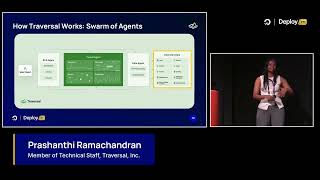
Traversal at DigitalOcean Deploy

Traversal at DigitalOcean Deploy