'Chat is dead': what the agentic pivot actually means
The headline-grabbing line came from a senior OpenAI employee who told the Financial Times that 'chat is dead' [2]. It is less a eulogy for conversation than a declaration that the question-and-answer text box is no longer the product. Thibault Sottiaux, who oversees OpenAI's core product and platform, framed the destination concretely: 'It will transcend the actual surface... what we're building towards is where you have your own personal agent that is capable of helping you... across everything in your life, be it personally or at work' [3].
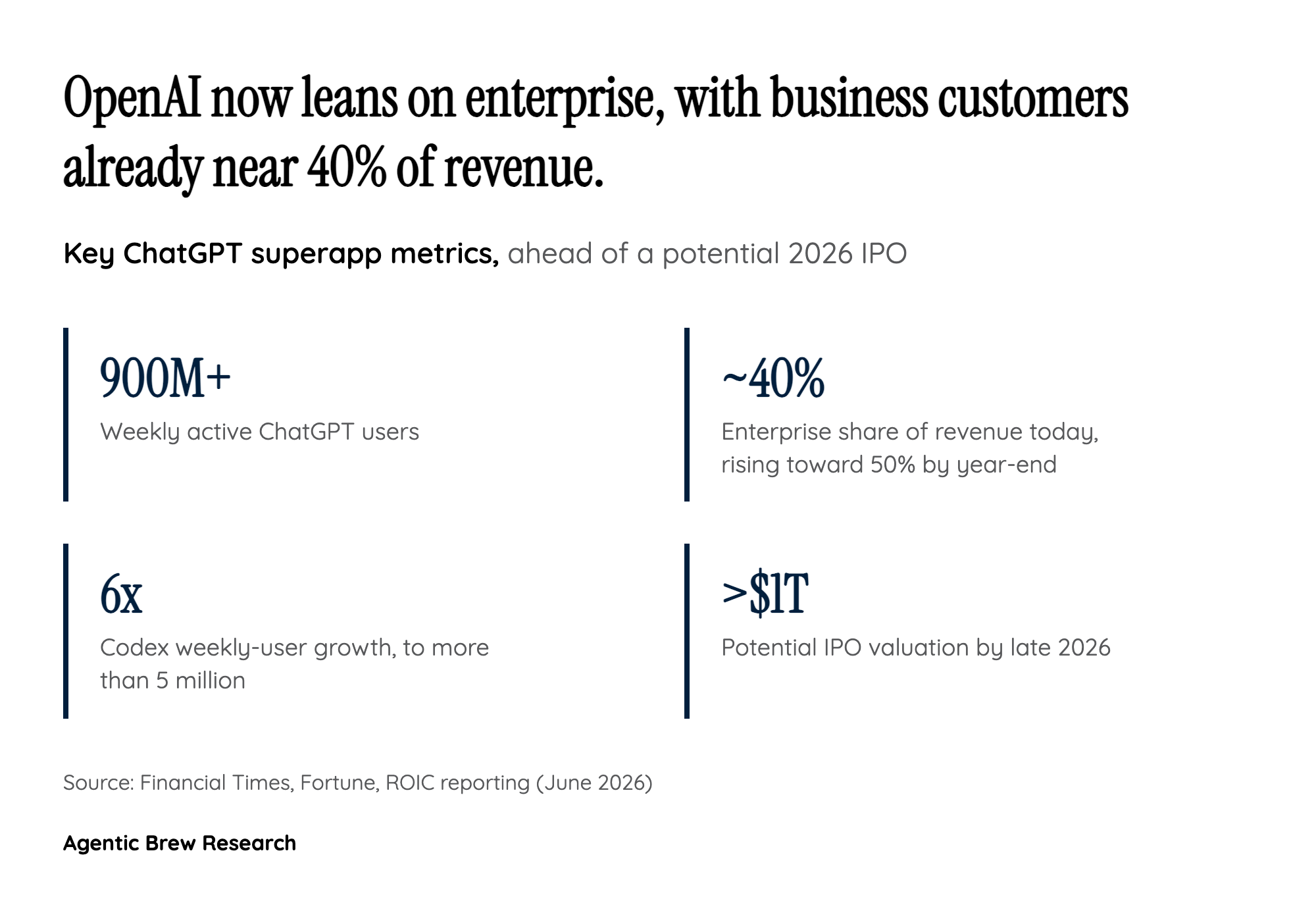
Concretely, 'agentic' means the system does not just answer, it acts. Instead of returning a list of flights, the agent books one; instead of explaining how to build a feature, Codex writes, runs, and ships the code. The 'superapp' is the container that lets one persistent agent reach across surfaces: ChatGPT, the Codex coding environment, the Atlas browser, image generation, and partner apps from Canva, Booking.com, Spotify, Expedia, Zillow, and Walmart for playlists, vacation planning, house hunting, and grocery orders [1]. The plan fuses Codex, ChatGPT, and Atlas into a single desktop superapp within weeks, with Atlas as the surface where a user's tools and context converge [4]. OpenAI executives have said separate products slowed development, prompting consolidation under unified leadership, with Fidji Simo leading the project and Greg Brockman overseeing integration [4].