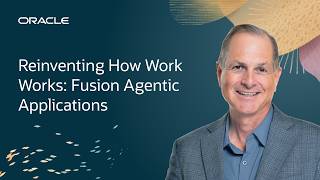
Oracle launches Fusion Claw, an agentic AI runtime for enterprise applications
TECH

Oracle launches Fusion Claw, an agentic AI runtime for enterprise applications

23+
Signals

Strategic Overview

  • 01.
    Oracle announced Fusion Claw, an agentic software runtime for its Fusion applications that lets AI agents carry out complex business tasks, from reconciling accounting entries to revising staffing plans when conditions change.
  • 02.
    Fusion Claw combines large language models for reasoning and planning with conventional deterministic software for calculations and transaction processing, which limits how often costly model calls are needed.
  • 03.
    Oracle shipped 25 new Claw-powered agentic applications, bringing its total Fusion Agentic Applications portfolio to 75, up from 22 apps at that product line's original introduction.
  • 04.
    Each completed Claw task generates an auditable 'Outcome Receipt' showing the policies applied, decisions made and transactions performed, and customers are billed for AI-unit consumption tied to work actually completed rather than flat licensing.

Deep Analysis

Why Claw Keeps the Expensive Model on a Short Leash

The core engineering bet behind Fusion Claw is a division of labor: a frontier model plans, reasons, and adapts, then Claw hands the actual execution to deterministic enterprise software that runs precisely and at scale [2]. That matters because frontier-model calls are the most expensive and least predictable line item in any agentic deployment, and Fusion Claw's architecture is built specifically to minimize how often that model needs to be invoked [3].

Manoj Chandra Jha, principal analyst at Nord-IQ Research, puts it directly: by reserving the expensive model for planning and running high-volume work on cheap deterministic computation, Fusion Claw can make agentic costs both lower and more predictable for CIOs [1]. That is a direct answer to the biggest objection enterprises have raised about agentic AI so far - that token costs scale unpredictably with usage. Whether that holds up depends entirely on how much of a given workflow can actually be pushed into the deterministic layer, which varies task by task.

The Paperwork Trail That Lets Agents Act First

The more consequential design choice may be governance, not cost. Oracle enforces limits through what it calls an Enterprise Operating Envelope - a codified set of objectives, procedures, policies, permissions, risk thresholds, and approval rules - and applies those parameters to identity, data, and actions on every individual run through an Outcome Trust Harness [2]. Every completed task then produces an Outcome Receipt documenting exactly which policies were applied, what decisions were made, and what transactions were executed [3].

That audit trail is the mechanism Oracle is using to clear the trust bar that has kept most enterprises from letting AI touch high-value processes unsupervised. Rob Fisher, KPMG International's global head of advisory, frames it in exactly those terms: organizations need governance guarantees before they will hand agentic AI real authority, and Fusion Claw is designed to bring those requirements together [4]. But Scott Bickley of Info-Tech Research Group adds a practical caveat: while deterministic controls are what make it possible to move agentic applications from prototype to production, he cautions CIOs to measure cost per completed business outcome rather than per AI unit consumed [1]- the receipts prove what happened, but they do not by themselves prove the economics worked.

Oracle's System-of-Record Advantage Shows Up in the Stock Price

The market read the launch as a competitive event, not just a product update. Oracle shares rose roughly 5% to trade near $139.54 on the day of the announcement, while Salesforce held roughly flat near $227.02 and ServiceNow slipped about 0.6% to $130.62 [5]. Twenty-five new Claw-powered apps landing at once, bringing the total to 75, reinforced the sense that Oracle is scaling agentic applications faster than rivals occupying adjacent enterprise-software territory [3].

One fintwit analyst framed the deeper logic plainly in a widely-shared post: Oracle already owns the system of record across finance, HR, supply chain, and sales, so if agents start doing the work that human seats used to do, Oracle is positioned to monetize that work itself rather than simply selling seats. That reading - Claw as a wedge to convert existing Fusion customers into outcome-based billing relationships - is arguably more consequential for Oracle's long-term positioning than the individual app features, since it changes what Oracle is charging for.

What the Cost Story Leaves Out

The efficiency pitch has real limits that the launch coverage itself surfaces. Bickley's caution about measuring cost per completed outcome rather than per AI unit implies that lower token consumption does not automatically mean lower total cost of ownership [1]. He also expects adoption to be uneven: existing Oracle Fusion customers running standardized, high-volume, measurable-outcome processes are the likely early adopters, while customers with heavily customized deployments or weaker governance maturity will move more slowly [1].

There is also a plainer risk sitting underneath the governance architecture: an agent with broad access to enterprise accounts and systems can cause real damage if misconfigured or manipulated, which is precisely why Oracle built the Operating Envelope and Outcome Receipts in the first place [6]. The guardrails are the product's answer to that risk, but they also concede the risk is real - the more autonomy Claw grants, the more the entire pitch rests on those governance controls holding up under adversarial or simply messy real-world conditions that a same-day launch has not yet tested.

Historical Context

2025-03-20
Oracle let customers create and modify AI agents across its Fusion application suite, an early building block toward the fuller autonomy Fusion Claw later introduces.
2025-10-06
Oracle added AI agents for marketing, sales, and service to Fusion Cloud, part of the buildout that preceded Fusion Claw.
2026-07-14
Oracle opened Fusion Agentic Applications to pro-code developers and coding agents, an earlier step in the same agentic-applications expansion.
2026-09-29
Oracle announced Fusion Claw and 25 new Claw-powered applications, bringing its Fusion Agentic Applications portfolio to 75, up from 22 apps at the product line's original introduction.

Power Map

Key Players
Subject

Oracle launches Fusion Claw, an agentic AI runtime for enterprise applications

OR

Oracle

Creator of the Fusion Claw runtime and the 75-application Fusion Agentic Applications portfolio; positions the launch directly against Salesforce and ServiceNow in enterprise agentic AI.

NA

Natalia Rachelson, SVP Application Development, Oracle

Explains the rationale for Claw's design - frontier models are needed for advanced optimization but are expensive, so token use is minimized wherever possible.

CH

Chris Leone, EVP of Oracle Applications and AI

Frames the shift of Oracle's enterprise applications from 'systems of record' to 'systems of outcomes,' the strategic narrative underpinning Claw.

GO

Google (Gemini) and OpenAI

Frontier model providers whose models power the reasoning and planning layer in the initial Fusion Claw release, determining which vendors capture the token spend.

SA

Salesforce and ServiceNow

Competing enterprise agentic-AI vendors whose stock moved differently from Oracle's on the announcement, underscoring the competitive stakes of the launch.

KP

KPMG International

Advisory partner whose commentary on enterprise trust requirements is used to validate Claw's governance design for high-value process adoption.

Fact Check

6 cited
  1. [1] Oracle Fusion Claw pinches AI costs, tightens grip on policies
  2. [2] Oracle Fusion Claw lets AI agents perform complex tasks on their own
  3. [3] Oracle expands AI agent functionality with Fusion Claw
  4. [4] Oracle Extends Fusion Agentic Applications With Introduction of Fusion Claw
  5. [5] Oracle Jumps 5% as Fusion Claw Launch Adds 25 Agentic Applications, Salesforce Holds Flat, ServiceNow Slips
  6. [6] Oracle Fusion Claw: AI Acts Without Asking

Source Articles

Top 3

THE SIGNAL.

Analysts

“Argues the split between expensive frontier-model reasoning and cheap deterministic execution can make agentic AI costs both lower and more predictable for CIOs, but warns governance still requires real engineering effort to encode policies and approval rules.”

Manoj Chandra Jha
Principal Analyst, Nord-IQ Research

“Sees deterministic controls as critical to moving agentic applications from prototype to production, but cautions that CIOs should measure the cost of completing a business outcome rather than just AI-unit or token consumption.”

Scott Bickley
Advisory Fellow, Info-Tech Research Group

“Frames Fusion Claw as part of an industry shift from single-task-assisting agents to applications that can own an entire complex business outcome.”

Aly Pinder
Research Vice President, Aftermarket Services Strategies, IDC

“Says enterprises need governance guarantees before trusting agentic AI with high-value processes, and that Fusion Claw is designed to give organizations that confidence.”

Rob Fisher
Global Head of Advisory, KPMG International
The Crowd

“$ORCL just launched Fusion Claw with 25 agentic apps across finance, HR, supply chain and sales as its CEO says Oracle is "moving from AI assistance to execution." Oracle already owns the system of record so if agents replace seats then it can monetize the work itself.”

@@StockSavvyShay478

“Today, @Oracle launched Fusion Claw to give enterprise agentic apps a runtime for autonomous execution at scale. Bringing Gemini to the platform pairs our models' reasoning with Oracle's deterministic execution, letting agents reliably handle complex workflows within set business”

@@ThomasOrTK57

“AI can do more than support the work. It can move it forward. Oracle Fusion Claw enables Fusion Agentic Applications to take on highly complex work, autonomously and at scale, within the boundaries your business defines. Learn how you can redefine the way work works:”

@@oraclefusion10
Broadcast
9-29-2026: Oracle Unveils Fusion Claw + Expands Agentic Applications

9-29-2026: Oracle Unveils Fusion Claw + Expands Agentic Applications

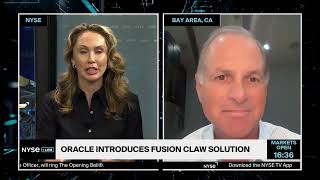
Oracle EVP Chris Leone on How Its Fusion Claw is Suited to Handle Complex Work

Oracle EVP Chris Leone on How Its Fusion Claw is Suited to Handle Complex Work

Reinventing How Work Works: Fusion Agentic Applications with Chris Leone

Reinventing How Work Works: Fusion Agentic Applications with Chris Leone

Oracle launches Fusion Claw, an agentic AI runtime for enterprise applications — AI News | Agentic Brew