US Ban on Chinese Optical Transceivers for AI Data Centers
TECH

US Ban on Chinese Optical Transceivers for AI Data Centers

44+
Signals

Strategic Overview

  • 01.
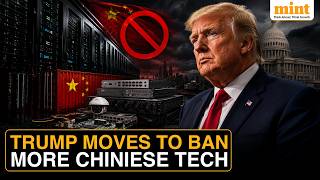
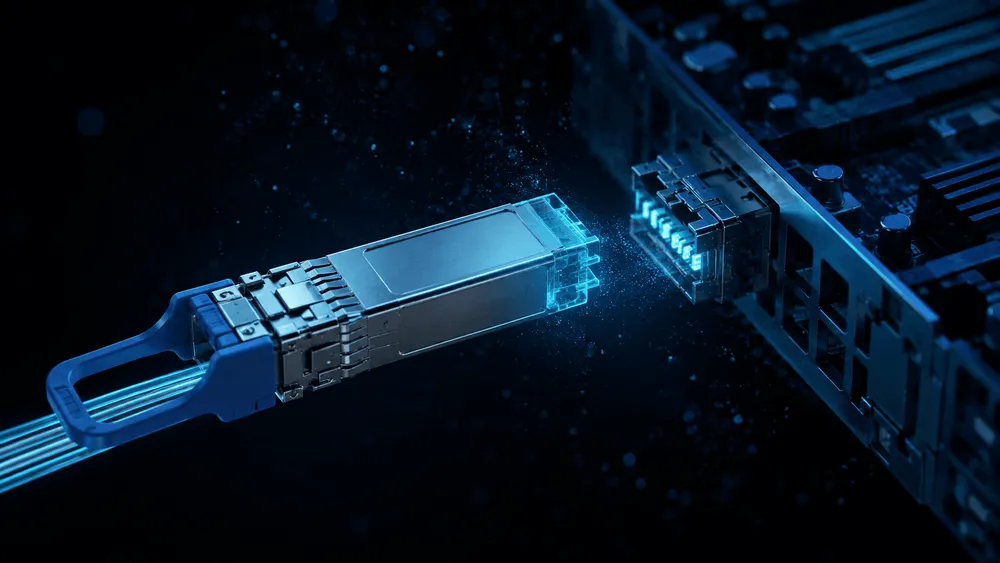
    The FCC is drafting a rule to ban US imports of new Chinese-made optical transceivers used in AI data centers, with officials hoping to publish and implement it before the end of 2026, citing risks of data theft, malware, and remote disruption.
  • 02.
    Zhongji Innolight and Eoptolink together control more than 60% of the global 800G-and-above optical module market that feeds Nvidia's AI clusters, and Innolight was added to the Pentagon's list of alleged Chinese military companies in June 2026.
  • 03.
    The rule would apply only to new transceiver models going forward, not require removal of already-installed equipment, and could still be modified or shelved before publication.
  • 04.
    China's Ministry of Commerce responded within a day with countermeasures against US entities, including tighter drone export reviews and a ban on US inspectors certifying Chinese products for export.

Deep Analysis

The Security Rationale and Its Skeptics

The FCC is drafting a rule to bar imports of new Chinese-made optical transceivers used in AI data centers, with officials hoping to publish and implement it before the end of 2026 [1], part of a broader Trump administration push to curb Chinese-made data center hardware [2]. The stated justification is narrow and specific: prevent Chinese firms from stealing data, installing malware, or remotely disrupting service inside US data centers [1]. The case got a political boost in June 2026, when Zhongji Innolight, which holds roughly 27% of the global transceiver market by revenue, was added to the Pentagon's list of alleged Chinese military companies [3].

But the security framing has real skeptics. Aman Mahapatra of Tribeca Softtech says the near-term espionage risk from currently shipping Chinese optics is thin, and geopolitical analyst Irina Tsukerman frames the fallout mostly in operational terms - CIOs will need to reassess vendor diversification and replacement compatibility rather than treat this as an urgent breach risk [1]. In China, Xiang Ligang of the Zhongguancun Modern Information Consumer Application Industry Technology Alliance argues unilateral exclusion would not genuinely strengthen US technological capability and would instead just raise costs for American firms [4]. Independent analyst Carmi Levy is blunter still, cautioning that no one should fool themselves into believing a Chinese data-center ban in the US would be any different from earlier attempts [1].


The Replacement Supply Chain Has Its Own China Problem

The obvious winners of a ban - Coherent and Lumentum - are not immune to Chinese leverage themselves. Both depend on indium phosphide for the high-speed lasers inside competitive transceivers [3], and China controls roughly 70% of global refined indium production, having already placed indium phosphide on its export-control list in February 2025 [3]. That single move caused InP substrate prices to surge by around 250% [3], even though AXT and Sumitomo Electric - not Chinese firms - control roughly 80% of global InP substrate manufacturing [3]. In other words, banning Chinese-assembled transceivers does not remove China from the supply chain; it just moves the choke point upstream to raw materials.

Neil Shah of Counterpoint Research makes the structural point explicit: the belief that the optical transceiver market can be neatly divided geographically misinterprets how the hardware ecosystem actually operates [5][6]. He argues Western suppliers lack the scale to replace Chinese vendors within 12 to 24 months, which would raise costs and could lower AI accelerator utilization for the hyperscalers who depend on these interconnects [6].

Market Whiplash: From IPO Champagne to a Regulatory Selloff

The timing could hardly be more pointed. Zhongji Innolight raised $6.81 billion in a Hong Kong IPO on July 30, 2026 [3]- just five days before Reuters reported the Trump administration and FCC were drafting the import ban [2]. Innolight shares fell 14-16% on August 5, 2026 on the news [3][5], erasing much of the IPO-week goodwill for a company that had just posted 60% revenue growth and 109% net profit growth for 2025 [3].

On the other side of the trade, US optical names rallied hard: Coherent gained as much as 11-18%, Lumentum climbed 5-14%, and Applied Optoelectronics - flagged as one of the biggest likely winners of redirected orders - jumped 17-18% [3][7]. Even Amazon, as a buyer rather than a supplier, saw its shares dip more than 1.7% on worries about higher procurement costs [3]; Bloomberg's official X account separately flagged the risk of "collateral damage" to hyperscalers from the ban, a more cautious counterpoint to the pure momentum-trade reaction playing out elsewhere. Social chatter zeroed in on second-order beneficiaries beyond the headline names: a Reddit thread in r/POETTechnologiesInc argued POET Technologies could benefit via its Malaysia-based ("China Plus One") manufacturing, though the thread drew pushback that POET doesn't manufacture in the US either and that the broader photonics assembly/testing chain spans China, Malaysia, Singapore, Taiwan, South Korea, and Thailand - meaning a broadly-drawn ban could turn a supply bottleneck into a full chokepoint rather than a clean US-vs-China split. Over in r/MRVL_Stock, traders flagged Marvell as a second potential beneficiary given its optical and DSP component business, while r/wallstreetbets treated the whole story as a straightforward momentum trade. YouTube coverage split along similar lines, between straight market reporting and hands-on investor takes - one investor video treated the news as a live trading catalyst serious enough to justify a portfolio shift into a smaller photonics play, Sivers Semiconductors, while explicitly cautioning viewers that the FCC rule is still a draft proposal that could change before taking effect. On X, breaking-news framing dominated the reaction, with a market-headlines account's post on the FCC draft drawing the highest engagement of any item in the conversation. LightCounting's own supply-demand math adds urgency to the trade: its research already pegged transceiver demand at roughly 30% above supply before the ban reports, with Ethernet transceiver sales expected to grow 73% in 2026 [8].

Precedent, Scope, and China's Retaliation

This would not be the FCC's first swing at Chinese hardware - the agency has already imposed similar import or authorization curbs on Chinese drones, routers, robots, and inverters, and is now drafting this transceiver rule as part of that same broader push [2]. Notably, the draft rule's scope is narrower than a full rip-and-replace: it would apply only to new transceiver models going forward and would not require pulling already-installed Chinese hardware out of existing data centers [3].

China's response arrived within a day of the story breaking. Its Ministry of Commerce announced countermeasures on August 5, 2026, including business restrictions on US entities, tighter national-security review of drone exports and components, a review of imported printing software and office equipment, and a ban on US inspectors certifying Chinese products for export under the CCC safety scheme [5]. The exchange adds a fresh point of friction to an already fragile US-China trade relationship, and underscores that even a narrowly scoped hardware rule can trigger broad retaliatory measures far outside the optics sector itself.

Historical Context

2018-04
DOD banned sale of Huawei devices at military exchanges over surveillance concerns, an early precedent for hardware-level bans on Chinese telecom-adjacent equipment.
2019-11
FCC voted to designate Huawei and ZTE as national security threats, barring US carriers from using federal subsidies to buy their equipment.
2022-11
FCC voted to prohibit authorization of Huawei/ZTE communications equipment on national security grounds, the first such blanket authorization ban in FCC history.
2025-02
China placed indium phosphide, a key material for high-speed transceiver lasers, on its export control list, later causing InP substrate prices to surge roughly 250%.
2026-06-08
Zhongji Innolight added to the DoD's list of alleged Chinese military companies.
2026-07-30
Innolight raised $6.81 billion in a Hong Kong IPO, five days before ban rumors surfaced.
2026-08-04
Reuters first reported that the Trump administration and FCC were drafting the ban on Chinese optical transceivers and other data center devices.
2026-08-05
China announced retaliatory countermeasures against US entities in response to the widening US technology curbs.

Power Map

Key Players
Subject

US Ban on Chinese Optical Transceivers for AI Data Centers

ZH

Zhongji Innolight

Leading Chinese optical transceiver maker with roughly 27% global market share by revenue; added to the DoD's Chinese military companies list in June 2026; raised $6.81 billion in a Hong Kong IPO on July 30, 2026 just before the ban reports emerged; shares fell 14-16% on the news.

EO

Eoptolink Technology

Second dominant Chinese transceiver supplier with about 96% of revenue from exports, making it highly exposed to a US import ban; together with Innolight controls over 60% of the 800G-and-above module market.

CO

Coherent

US optical component maker positioned as a primary replacement supplier and Nvidia investee ($2 billion in March 2026); shares rose 11-18% on the ban reports, though it also depends on indium phosphide inputs largely tied to China-linked supply chains.

LU

Lumentum

US optical component maker and second main beneficiary, also a $2 billion Nvidia investee (March 2026); shares rose 5-14% on the ban reports.

US

US hyperscalers (Amazon, Microsoft, Meta, Google)

Buyers of AI data center optics who would face higher procurement costs and potential supply bottlenecks transitioning away from cheaper, dominant Chinese suppliers; Amazon shares fell more than 1.7% on the news.

FC

FCC (Federal Communications Commission)

US regulator drafting the import ban, following its precedent of similar curbs on Chinese drones, routers, robots, and inverters.

Fact Check

8 cited
  1. [1] With FCC ban on new Chinese-made optical transceivers for DCs likely, it may be time to stock up
  2. [2] Exclusive: Trump Administration Drafting Ban on Chinese Data Center Devices, Sources Say
  3. [3] Five Days After Raising $6.81 Billion in Hong Kong IPO, Export Ban Rumors Emerge
  4. [4] US reported plan to ban Chinese optical transceiver imports draws criticism from Chinese experts
  5. [5] FCC Transceiver Ban Would Cut 60% of AI Data Center Supply, Western Replacements Need Chinese Indium
  6. [6] The US wants Chinese optics out of its AI data centres. Amazon and Microsoft pay first.
  7. [7] Applied Optoelectronics Rockets 17%, Coherent Climbs 11%, Lumentum Gains 6% on Reported U.S. Ban of Chinese Optics
  8. [8] New report warns China transceiver ban would hurt U.S. AI giants

Source Articles

Top 5

THE SIGNAL.

Analysts

Says the market cannot be neatly divided geographically because the hardware ecosystem is globally interdependent, and Western suppliers lack the scale to replace Chinese vendors within 12-24 months, which would raise costs and lower AI accelerator utilization for hyperscalers.

Neil Shah
Analyst, Counterpoint Research

Argues unilateral exclusion of Chinese companies would not genuinely strengthen US technological capability and would instead raise costs for American firms.

Xiang Ligang
Director-General, Zhongguancun Modern Information Consumer Application Industry Technology Alliance

Downplays the near-term security threat from currently shipping Chinese optics, calling the espionage risk thin.

Aman Mahapatra
Chief Strategy Officer, Tribeca Softtech

Advises that CIOs will need to reassess vendor diversification strategies and replacement compatibility as the rule advances.

Irina Tsukerman
Geopolitical analyst

Skeptical that a US ban on Chinese data center gear would function differently from prior comparable restrictions, implying similar enforcement and supply-chain complications.

Carmi Levy
Independent technology analyst
The Crowd

U.S. PLANS BAN ON NEW CHINESE DATA CENTER PARTS Reuters reports the Trump administration is drafting a ban on imports of new Chinese optical transceivers used in AI data centers over national security concerns. The proposed FCC rule, expected this year, aims to prevent

@@DeItaone830

A potential ban on the import of Chinese optical parts into the US would inflict collateral damage on hyperscalers, a report claims https://t.co/G4anmc00n3

@@business35

[Market Memo] Orange Man Attempted Chinese Transceiver Ban https://t.co/pjZ1sveQDF https://t.co/fLJ5Pd3nuP

@@insane_analyst121

USA considering a ban on Chinese manufactured optical transceivers

@u/UnderstandingFun944945
Broadcast
China Optical Stocks Drop on Reports of US Ban | The China Show | 8/5/2026

China Optical Stocks Drop on Reports of US Ban | The China Show | 8/5/2026

Trump's China Photonics Ban: Why I Just Bought Sivers

Trump's China Photonics Ban: Why I Just Bought Sivers

Trump Administration Planning To Ban On Chinese Data Centre Devices | Report

Trump Administration Planning To Ban On Chinese Data Centre Devices | Report