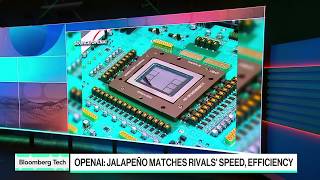
A Clean-Sheet Chip Built to Move Data Less
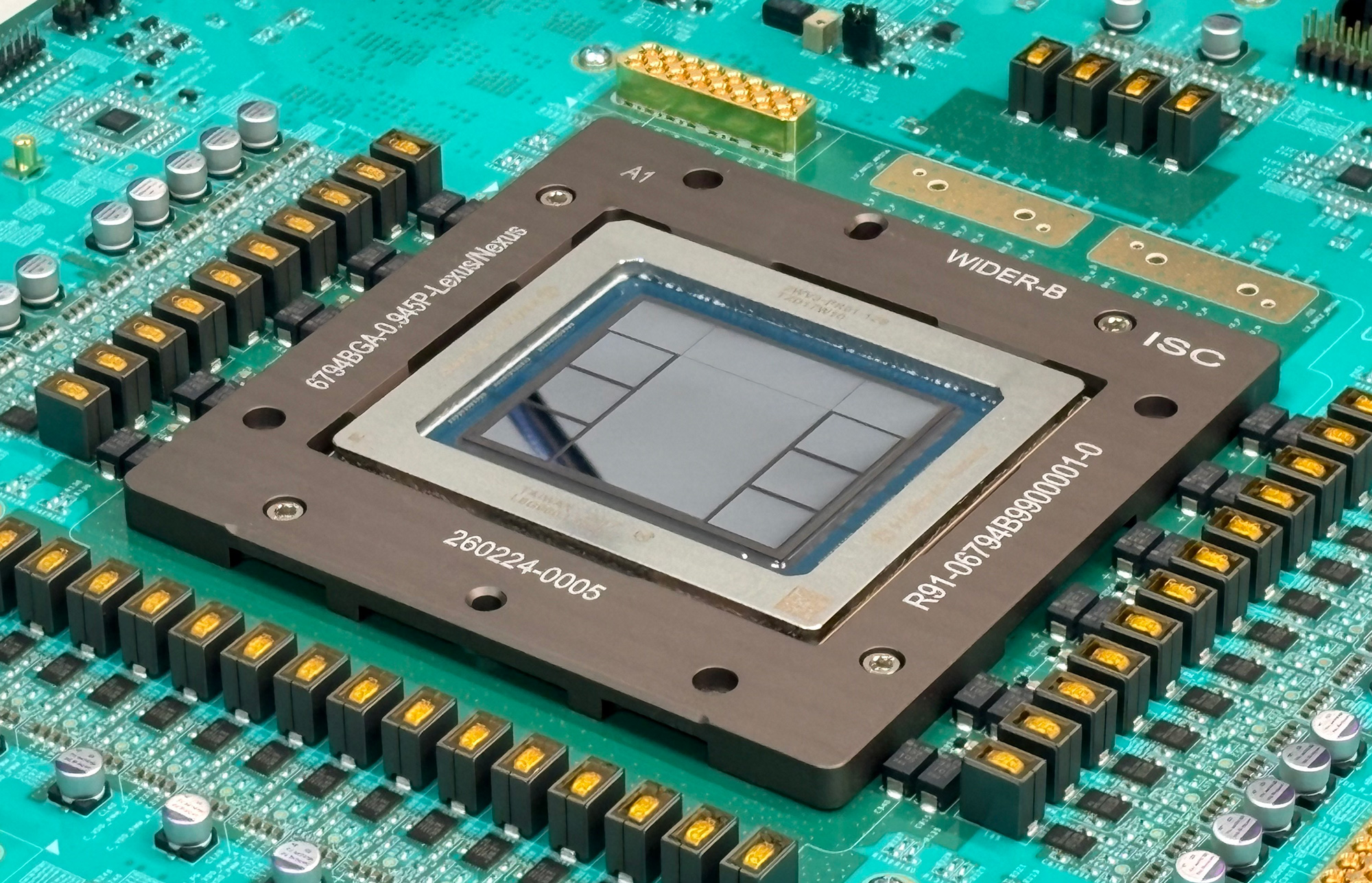
Jalapeno was designed from a blank sheet as an inference-only ASIC rather than a repurposed training chip. OpenAI has said plainly: "We designed Jalapeno to minimize data movement and communication delays." [1]The core idea is a unified prefill-decode architecture - instead of splitting the two phases of generating a response across separate hardware pools, as most GPU inference stacks do, Jalapeno handles both on the same silicon, with localized HBM sitting close to the compute that needs it. Each package carries six HBM4 stacks totaling 216 GiB of memory and 15.4 TB/s of bandwidth, and the design scales from 128-accelerator racks up to 2,048-chip pods delivering roughly 27 EFLOP/s of aggregate compute. [2]Getting there fast mattered too: OpenAI used its own models, including Codex, to help write and tune the chip's Gluon-language kernels - some hand-tuned to around 3,000 lines with a custom correctness sanitizer - which reportedly cut SIMD area by 8% and matrix-engine area by 10%, part of what let the team go from RTL freeze to tapeout in roughly nine months. [3]