Bill Gates warns AI poses societal risks, proposes robot tax and 'Human Reserved' jobs
TECH

Bill Gates warns AI poses societal risks, proposes robot tax and 'Human Reserved' jobs

39+
Signals

Strategic Overview

  • 01.
    Bill Gates published a nearly 6,000-word essay warning that world leaders, experts, and communities are not adequately confronting the challenges of the AI era, arguing the transition will be one of the most turbulent periods in human history.
  • 02.
    He frames AI as a civilizational fork, saying it will either be the greatest equalizer ever invented or the worst source of injustice.
  • 03.
    Gates warns many jobs, especially entry-level roles, will disappear forever, and that there is currently no plan in place to ease the transition into the AI era.
  • 04.
    As a policy response, Gates proposes a robot or AI token tax to remove the tax code's built-in bias toward automation, plus a new category of 'Human Reserved' jobs that societies deliberately keep staffed by humans.

Deep Analysis

The World's Most Famous Tech Optimist Just Sounded the Alarm

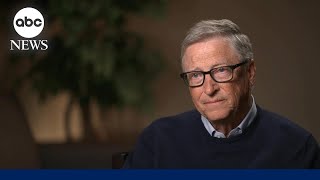
Bill Gates has spent decades as one of technology's most prominent optimists, so it is notable that his newest essay reads like a warning siren. In a nearly 6,000-word piece titled 'The turbulent AI era is here,' he writes that even under the best circumstances the transition to this new AI era will be one of the most turbulent times in human history, and that he does not see evidence that leaders, experts, and communities are confronting the challenges adequately [1]. That unpreparedness is not just his framing in the essay: in a separate interview with ABC News, Gates said plainly that government 'isn't ready to regulate artificial intelligence,' pointing to the spread of deepfakes as a concrete symptom of that gap, while also explicitly arguing against an AI pause as the wrong response to the problem. He frames the moment as a fork in the road: AI will either be the greatest equalizer ever invented, or the worst source of injustice [2].

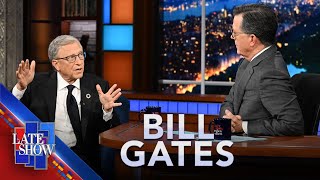
What makes the essay land differently than the usual AI-risk commentary is Gates' own account of his reaction to it. He describes himself as being in a state of shock that he is 'sort of the first one' to say plainly that the current trajectory is alarming, and argues that it is not the speed of AI's progress that makes this moment historically unique but its breadth - a single technology simultaneously reshaping biology, cybersecurity, white-collar work, and human relationships at once [3]. He frames the shift as personally disorienting too, saying AI systems have surpassed his own capabilities in a way he still finds unsettling to sit with [4]. In a separate conversation on The Late Show with Stephen Colbert, Gates put a finer point on that disorientation: he called AI 'the first technology that has no limit,' contrasting it with past tools that eventually hit a ceiling, and raised a related worry that leaning on AI too heavily could breed intellectual complacency in how people think and learn.

He goes further than raising personal alarm: he accuses AI companies of privately acknowledging danger while publicly downplaying it to protect fundraising, and explicitly rejects the idea that the industry can self-regulate the most dangerous tool it has ever built [4]. Gates says Microsoft's own AI chief, Mustafa Suleyman, privately shares these concerns even as public statements from AI leaders often suggest otherwise - a stance consistent with the sweeping warnings Suleyman raised in his 2023 book 'The Coming Wave' about a world unprepared for what AI would unleash [5].
The Fix Gates Wants: Tax Robots, Reserve Some Jobs for Humans

Where the diagnosis is about danger, Gates' concrete proposal targets the incentive structure driving automation. He argues that when an employer hires a person, they pay payroll taxes on that person's earnings, but when the same employer buys a robot, it can usually be written off immediately as a business expense - meaning the tax system nudges companies toward replacing people with machines rather than staying neutral between the two [6]. His proposed correction is effectively a robot or AI token tax that removes that structural bias.

His more novel proposal is what he calls 'Human Reserved' jobs: roles that society deliberately keeps staffed by humans even where AI or robots are technically capable of doing them, much like a nature reserve sets aside land regardless of whether it could be developed [7]. Gates estimates this protected category could realistically cover up to about 40% of jobs - 'as high as I can get,' in his words [8]. His illustrative example is deliberately visceral: there is no technical reason a robot could not deliver a terminal diagnosis to a patient, he says, yet it shouldn't be allowed to [6].

Beyond Employment: Bioterrorism, Fraud, and What AI Companions Do to Kids

Gates' warning extends well past the labor market. He rates the bioterrorism risk from AI-assisted pathogen design as roughly 50 times higher than the risk of a naturally occurring pandemic, arguing that a small number of bad actors with access to advanced AI could now design novel pathogens capable of threatening hospitals and critical infrastructure [3][9]. He also warns that AI dramatically lowers the skill floor for crime, arguing that even criminals with very limited technical ability will be able to target victims - individuals, companies, and governments alike - at scale [2].

A less-discussed thread in the essay concerns children. Gates argues that AI risks compounding harms already caused by social media, specifically through AI companions that are always agreeable and never push users outside their comfort zone - a dynamic he says could stunt children's development and displace real human relationships [2].

Data Backs the Urgency, But the Messenger Faces Skepticism

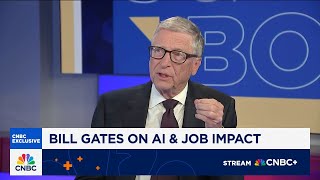
Gates' warning arrives alongside data that lends it some empirical weight. A Stanford analysis he cites found a 19-percentage-point employment gap for workers aged 22 to 25 in the most AI-exposed occupations, driven mainly by reduced hiring rather than layoffs, with a related figure putting the relative decline in early-career employment in those AI-exposed jobs at 13% [10]. It echoes an earlier IMF estimate that AI will affect roughly 40% of jobs globally - breaking down to about 60% in advanced economies, roughly 40% in emerging markets, and about 26% in low-income countries [11]. In a CNBC interview, Gates called AI 'the biggest technical thing' of his lifetime while also flagging what he sees as a forming AI investment bubble, one that risks colliding with the same job-loss anxiety and a growing backlash over the energy demands of new AI data centers.

Yet reaction to Gates' framing splits along more specific lines than simple agreement or disagreement. On r/singularity, discussion centers less on whether Gates is right than on how a 'Human Reserved' quota would actually work, with real debate over pairing it with universal basic income and skepticism that reserved-job categories are enforceable without binding legislation behind them. On r/politics, alongside discussion of concrete follow-on policy asks - mandatory safety reviews, international agreements governing dangerous AI capabilities, and taxes on AI usage, all extending past what any single article proposed - top comments repeatedly cited Gates' past association with Jeffrey Epstein as grounds to distrust him as a messenger on AI ethics. A related but distinct objection surfaced on r/Seattle: that Gates' continued financial ties to Microsoft, a company aggressively building AI products, undercut his credibility as a disinterested voice on AI's downsides.

That skepticism sits in tension with more sanguine voices elsewhere in the industry, such as JPMorgan Chase's Jamie Dimon (see Stakeholders), who has offered a notably more optimistic read of AI's effect on work [2]. Meanwhile, the essay's core claims spread quickly through major outlets' own framing on X: WSJ pitched it as marking one of the most turbulent times in human history, Semafor described Gates as having 'hit the AI panic button' after AI crossed dangerous thresholds, and The Next Web zeroed in on the policy mechanics, framing 40% as the maximum share of jobs realistically protectable. The gap between Gates' alarm and that skepticism - rather than agreement on the facts - is arguably the more interesting story right now.

Historical Context

2023
Published 'The Coming Wave,' warning society was unprepared for the sweeping changes AI would bring - a position Gates says Suleyman still privately holds.
2024-01-15
IMF Managing Director Kristalina Georgieva warned that AI would affect almost 40% of global jobs and worsen inequality unless policymakers acted.
2026-08-26
Published the essay 'The turbulent AI era is here' and gave accompanying interviews, marking a public shift from his historically optimistic stance on technology toward a stark warning about AI's societal risks.

Power Map

Key Players
Subject

Bill Gates warns AI poses societal risks, proposes robot tax and 'Human Reserved' jobs

BI

Bill Gates

Microsoft co-founder and Gates Foundation chair; author of the essay and public statements driving this story, proposing a robot/AI token tax and 'Human Reserved' jobs as policy responses.

BI

Big Tech / AI companies

Accused by Gates of privately acknowledging AI's dangers while publicly downplaying them to protect fundraising and valuations; Gates explicitly rejects their capacity for effective self-regulation.

MU

Mustafa Suleyman

Microsoft AI CEO who Gates says privately shares his concerns about AI risk, consistent with the warnings Suleyman raised in his 2023 book 'The Coming Wave' about society being unprepared for AI's sweeping changes.

ST

Stanford researchers

Produced the labor-economics study Gates cites as evidence that AI-driven job displacement among young workers has already begun.

IM

IMF

Published a 2024 estimate, cited in coverage of Gates' warning, that AI would affect almost 40% of global employment and worsen inequality.

WO

World leaders and governments

The primary audience of Gates' warning; accused of not adequately confronting AI's challenges or building a coordinated governance plan.

JA

Jamie Dimon

JPMorgan Chase CEO cited in contrast to Gates, offering a more optimistic framing of AI's effect on work and representing the counter-narrative to Gates' warnings.

Fact Check

11 cited
  1. [1] Bill Gates warns of AI-driven economic upheaval to jobs
  2. [2] Bill Gates warns AI could bring huge risks - or benefit the world - and says leaders aren't prepared
  3. [3] 'This is crazy. This is insane': Bill Gates has changed his mind about AI and jobs
  4. [4] Bill Gates warns AI is more dangerous than the tech industry will admit
  5. [5] 'I am very concerned': Bill Gates says the world needs a plan to deal with AI, and he has three ideas to start
  6. [6] Bill Gates wants to see a robot tax and 'Human Reserved' jobs to mitigate harms from AI
  7. [7] Why we need 'Human Reserved' jobs: Bill Gates' AI memo
  8. [8] Bill Gates wants 40% of jobs reserved for humans
  9. [9] Bill Gates issues a strident warning about AI
  10. [10] AI hits entry-level jobs hardest: Stanford study
  11. [11] IMF warns AI to hit almost 40% of global employment, worsen inequality

Source Articles

Top 5

THE SIGNAL.

Analysts

Argues society has crossed dangerous thresholds in AI's biological, cybersecurity, psychosocial, and job-displacement risks without a coordinated governance plan, warning AI could replace human cognitive work faster than displaced workers can move into new roles.

Bill Gates
Co-founder, Microsoft; Chair, Gates Foundation

Says the public disagreement among AI company leaders about whether risks are real is disingenuous, since he believes they all privately share his concerns: 'I know they're all worried.'

Bill Gates
Co-founder, Microsoft

Describes being in a state of shock that he is 'sort of the first one' to call the AI moment dangerous, arguing it is the breadth rather than the speed of AI's disruption that makes it historically unique.

Bill Gates
Co-founder, Microsoft
The Crowd

"Even under the best circumstances, the transition to this new AI era will be one of the most turbulent times in human history," Bill Gates writes in a new, 12-page essay. https://t.co/n64xTCSH1L

@@WSJ558

NEW: Bill Gates says it's time to hit the AI panic button. The technology has crossed dangerous thresholds in biology, cybersecurity, white-collar work, and human relationships, Gates said in an interview with Semafor.

@@semafor29

Bill Gates says 40% of jobs is the maximum protectable. He wants some roles reserved for humans and AI tokens taxed, and describes that as "as high as I can get", which leaves the rest of the labour market to whatever happens.

@@thenextweb11

Bill Gates Warns A.I. Is More Dangerous Than Big Tech Will Admit

@u/superdouradas2300
Broadcast
Bill Gates says government isn't ready to regulate artificial intelligence

Bill Gates says government isn't ready to regulate artificial intelligence

Bill Gates: AI Is "The First Technology That Has No Limit"

Bill Gates: AI Is "The First Technology That Has No Limit"

Bill Gates: AI is the biggest technical thing ever in my lifetime

Bill Gates: AI is the biggest technical thing ever in my lifetime

Bill Gates warns AI poses societal risks, proposes robot tax and 'Human Reserved' jobs — AI News | Agentic Brew