OpenAI's First Consumer Hardware Device
TECH

OpenAI's First Consumer Hardware Device

33+
Signals

Strategic Overview

  • 01.
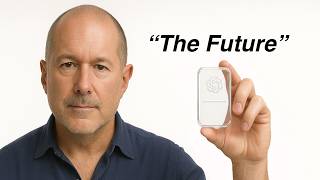
    OpenAI's first consumer product is a portable, screenless smart speaker with a camera, environmental sensors, rechargeable battery, and motorized parts that move autonomously. The device is designed to act as a humanlike AI companion at home, controlling smart-home appliances, playing media, answering questions, and tapping into ChatGPT's full voice capabilities.
  • 02.
    The device is priced between $200 and $300 and is targeted for commercial release in 2027 - delayed from an earlier 2026 target. OpenAI may unveil it publicly before the launch, though the ongoing Apple lawsuit could affect timing.
  • 03.
    OpenAI acquired io Products Inc. in a $6.5 billion all-stock deal, completed July 9, 2025. The firm was co-founded by former Apple Chief Design Officer Jony Ive, who now leads all creative and design work at OpenAI for hardware.
  • 04.
    Apple filed a trade secret theft lawsuit on July 10, 2026 targeting OpenAI and former Apple employees - including OpenAI's Chief Hardware Officer Tang Tan - alleging confidential engineering files were taken before those employees joined OpenAI's hardware program.

Deep Analysis

Designed to Feel Alive, Not Just Respond

The most philosophically distinct feature of OpenAI's device is not its camera, its voice mode, or its smart-home integration - it is the explicit design goal to make the object appear alive. Motorized mechanical parts move autonomously; the device does not wait passively for commands but instead physically animates to create a sense of presence. OpenAI internally frames this not as a speaker at all, but as "the first of its kind: a computer built for AI to help make busy people more productive." [1]

This represents a genuine paradigm break from existing smart speakers. Amazon Echo and Google Home are designed as ambient tools - they sit inert until triggered, and their industrial design reflects that passivity. Apple's HomePod leans on audio fidelity as its primary value proposition. OpenAI's device instead draws on a different design tradition: the AI companion, something that learns its owner's routines and preferences over time, proactively surfaces information, and draws on personal data such as emails to anticipate needs. [2]Critics have raised concerns about the deliberate psychological effect of designing a machine to feel like a relationship rather than a tool - what commentators have called heavy anthropomorphism. [1]Whether that is a feature or a liability will depend heavily on how regulators and consumers receive the concept once the device ships.

The $6.5B Design Bet - What OpenAI Actually Bought

The acquisition of io Products closed on July 9, 2025 for $6.5 billion in stock - OpenAI's largest deal by a wide margin and one of the most expensive hardware-talent acquisitions in tech history. io Products had approximately 55 employees at the time of closing. That implies a valuation of roughly $118 million per employee, paid for a company that had not shipped a single consumer product. [3]

What OpenAI purchased was not technology or IP in the conventional sense - it was design credibility and an intact team of Apple-pedigree engineers willing to bet their careers on AI-native hardware. Jony Ive, Apple's former Chief Design Officer, co-founded io Products alongside Tang Tan (who led iPhone and Apple Watch product design for 24 years at Apple), Evans Hankey, and Scott Cannon. [4]Sam Altman described Ive as "the greatest designer in the world" when announcing the deal. The underlying thesis is that hardware form factor is the next battleground for AI adoption - that getting AI into the physical environment of a home requires the same obsessive industrial design discipline that made the iPhone the dominant personal computer of the 2010s. OpenAI is developing approximately five hardware products in total, with longer-term plans including a mobile AI device capable of replacing the smartphone. [5]

The Lawsuit at the Heart of the Hardware Program

On July 10, 2026 - four days before Bloomberg published its detailed account of the device - Apple filed a trade secret theft lawsuit in U.S. District Court for the Northern District of California. The lawsuit names OpenAI and two former Apple employees: Tang Tan, now OpenAI's Chief Hardware Officer, and Chang Liu, a former Apple Senior Systems Electrical Engineer who joined OpenAI in 2026. Apple's complaint states: "This case is about Apple's former employees stealing Apple's trade secrets for the benefit of OpenAI." [6]

The specific allegation against Chang Liu is that he downloaded over 1,000 pages of confidential Apple engineering files before departing for OpenAI. [6]The significance is structural: Tang Tan is not a peripheral figure in OpenAI's hardware program - he is the Chief Hardware Officer, the person leading the product that Bloomberg just described. Over 400 former Apple employees now work at OpenAI. OpenAI disputed the allegations, stating it had no interest in other companies' trade secrets. [7]Regardless of outcome, the lawsuit creates direct legal risk around the 2027 launch timeline. Courts can issue injunctions that restrict use of disputed knowledge in product development, and even the discovery process may slow engineering decisions.

The Amazon Echo Problem - Bull and Bear Cases

The most immediate public reaction to the device reveal has been skepticism framed as a simple comparison: is this just an Amazon Echo with a different name? This critique is not frivolous. The Echo, Siri, and Google Assistant all launched with promises of ambient AI that would anticipate needs, control the smart home, and become indispensable companions. None achieved that vision at scale. The question is whether the underlying AI capability gap between those products and what ChatGPT can do in 2026 is large enough to make the same form factor work where it previously failed.

Tech communities reacted to the device reveal with immediate skepticism - the dominant framing across online forums compared it directly to Amazon Echo and questioned the rationale for paying $200-$300 for dedicated hardware when ChatGPT already runs free on a smartphone. The bull case rests on exactly that capability delta. The gap between Alexa's command-response model and GPT-4o's simultaneous-listen-and-speak voice mode, contextual awareness, and ability to act on email and calendar data is qualitatively different, not just iterative. The bear case centers on a simpler objection: most people already own a smartphone running the same underlying model. A $200-$300 dedicated device needs to justify its existence against an app that costs nothing on hardware the user already carries. [8]The device's answer to that objection appears to be physical presence in the home - ambient availability without requiring you to reach for a phone - combined with the camera and sensors that a phone in your pocket cannot provide.

Privacy Stakes of an Always-On Camera in the Home

The device includes a camera and environmental sensors in addition to microphones - a meaningfully different sensor profile from existing smart speakers. Amazon Echo and Google Home drew years of public concern over always-on microphones; adding a camera to a device designed to learn its owner's routines and physical surroundings raises the stakes considerably.

OpenAI envisions the device drawing on personal data - including emails - to anticipate needs and surface information proactively. [2]Combined with a camera that can observe the physical environment, the device would accumulate a data profile that is arguably more intimate than anything a smartphone collects - a smartphone does not sit on your kitchen counter observing your daily routine. OpenAI has not yet detailed its data retention policies, what the camera footage is used for, or how the personal context it collects is stored and governed - questions that will need answers before regulators and privacy-conscious consumers can evaluate the product on its merits.

Historical Context

2024
io Products was founded by Jony Ive, Scott Cannon, Evans Hankey, and Tang Tan - all former Apple designers - with the mission to create AI-native hardware devices.
2025-05-21
OpenAI announced the acquisition of io Products in a $6.5 billion all-stock deal, its largest acquisition ever, marking its formal entry into consumer hardware.
2025-07-09
OpenAI and io Products formally completed the merger, with all 55 io employees joining OpenAI.
2026-02-20
Initial reports described OpenAI's first device as a smart speaker with a camera and AI companion functionality, with a 2027 launch target and a price range of $200-$300.
2026-07-10
Apple filed a trade secret theft lawsuit in U.S. District Court for the Northern District of California naming OpenAI and former Apple employees Tang Tan and Chang Liu.
2026-07-14
Bloomberg published the primary detailed account confirming the device form factor as a movable, screenless smart speaker designed as a humanlike AI companion - four days after Apple filed its lawsuit.

Power Map

Key Players
Subject

OpenAI's First Consumer Hardware Device

OP

OpenAI

Developer and owner of the hardware product; acquired io Products for $6.5B to build its consumer device division under Jony Ive.

JO

Jony Ive

Former Apple Chief Design Officer and founder of io Products and design firm LoveFrom. Now leads all creative and design work at OpenAI for hardware.

TA

Tang Tan

OpenAI Chief Hardware Officer; former Apple VP of Product Design who led iPhone and Apple Watch design for 24 years. Named in Apple's trade secret lawsuit as a central defendant.

AP

Apple

Filed a trade secret lawsuit against OpenAI on July 10, 2026, alleging former employees including Tang Tan and Chang Liu stole confidential engineering files before joining OpenAI's hardware program.

SA

Sam Altman

OpenAI CEO; co-initiator of the Jony Ive partnership and the io Products acquisition strategy.

CH

Chang Liu

Former Apple Senior Systems Electrical Engineer who joined OpenAI in 2026. Named in Apple's lawsuit for allegedly downloading over 1,000 pages of confidential Apple engineering files before departing.

Fact Check

8 cited
  1. [1] OpenAI's first hardware product is a screenless AI speaker designed to feel alive
  2. [2] OpenAI's first hardware device is a screenless ChatGPT speaker with camera and motion sensors
  3. [3] OpenAI acquires Jony Ive's io Products in $6.5B stock deal
  4. [4] Jony Ive to lead OpenAI's design work following $6.5B acquisition of his company
  5. [5] Report: OpenAI's first device will be a portable speaker with a camera and other sensors
  6. [6] Apple sues OpenAI over alleged trade secret theft
  7. [7] Apple sues OpenAI over alleged trade secret theft
  8. [8] OpenAI's AI Hardware Device Will Be a Smart Speaker

Source Articles

Top 5

THE SIGNAL.

Analysts

"Framed the hardware partnership as a generational computing shift: "thrilled to be partnering with jony, imo the greatest designer in the world. excited to try to create a new generation of AI-powered computers.""

Sam Altman
CEO, OpenAI

"Disputed Apple's allegations: "We have no interest in other companies' trade secrets. We remain focused on building innovative technology that empowers people everywhere.""

OpenAI (corporate statement)
Defendant in Apple trade secret suit

"Raised concerns about the device's deliberate anthropomorphism - specifically the choice to make it appear alive rather than machine-like - and the potential psychological effects on users."

Technology critics
Technology commentators
The Crowd

"NEW: OpenAI's first product is a mobile, screen-free home smart speaker that a user can build a connection with like an AI companion. Amid Apple's trade secret lawsuit, the iPhone maker has nothing like it on the market."

@@markgurman1386

"Though the new product resembles a speaker, OpenAI internally describes it as the first of its kind: a computer built for AI to help make busy people more productive. It includes a camera and other sensors that help it understand a user's surroundings and context."

@@markgurman712

"OPENAI: The first device from OpenAI will be a screenless smart speaker, as reported by Bloomberg. > OpenAI is developing a mobile, screen-free smart speaker to serve as a humanlike AI companion that can control smart-home appliances and tap into the capabilities of OpenAI's ChatGPT."

@@testingcatalog390

"NEW LEAK: OpenAI's First Device Will Be Moveable, Screenless Speaker Built as AI Companion"

@u/WholeSeason7147362
Broadcast
Apple is Suing OpenAI

Apple is Suing OpenAI

Jony Ive's SECRET NEW Product!

Jony Ive's SECRET NEW Product!

Sam Altman & Jony Ive's Secret OpenAI Device Is About to Change Everything

Sam Altman & Jony Ive's Secret OpenAI Device Is About to Change Everything