The Memory Wall: Why Unified Memory Beats GPU VRAM for Local AI
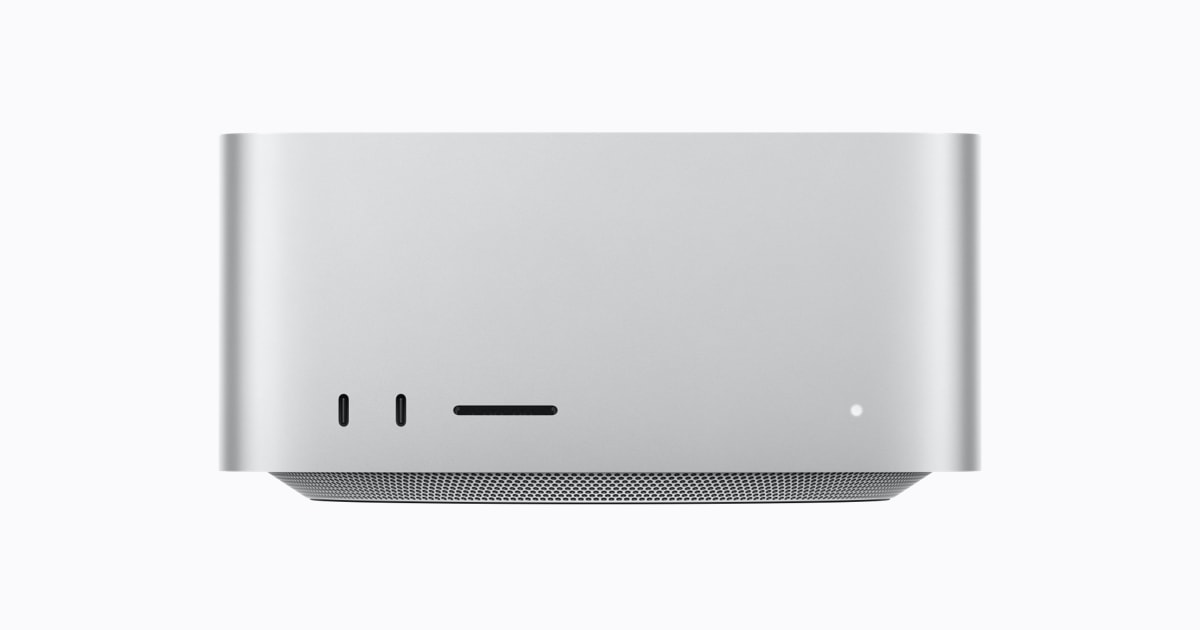
Apple's real pitch with the M5 Ultra isn't raw compute - it's memory. The chip's new quad-die UltraFusion design combines four dies into a 36-core CPU and 80-core GPU sharing a single pool of up to 512GB of unified memory at 1.2TB/s of bandwidth, 50% more than the outgoing M3 Ultra[1]. That distinction matters because today's frontier open-weight models - in the 70B to 400B-plus parameter range - simply don't fit inside the VRAM of a typical consumer GPU[4]. By putting CPU, GPU, and Neural Engine on one addressable memory pool instead of splitting compute from a smaller dedicated VRAM buffer, Apple lets a single Mac Studio hold and run models that would otherwise require multiple enterprise GPUs. Apple's own benchmarks claim the M5 Ultra delivers up to 4.3x the peak AI compute of the M3 Ultra and 9.8x that of the original M1 Ultra, with LLM prompt processing up to 9.8x faster than that first-generation chip[4]. The smaller M6 Mac mini gets a scaled-down version of the same idea - a first-generation 2-nanometer chip with a 12-core CPU, 12-core GPU, and a dual 16-core Neural Engine - though its unified memory bandwidth tops out around 170GB/s, a fraction of the Ultra's ceiling[1][3]. The gap between those two numbers is effectively Apple's product ladder: buy more bandwidth and memory headroom, and you buy the ability to run bigger models locally.