OpenAI Codex Micro - First Branded Hardware for AI Agent Developers
TECH

OpenAI Codex Micro - First Branded Hardware for AI Agent Developers

28+
Signals

Strategic Overview

  • 01.
    OpenAI launched the Codex Micro on July 15, 2026, a $230 programmable macro pad built with boutique keyboard maker Work Louder, marking OpenAI's first branded consumer hardware product.
  • 02.
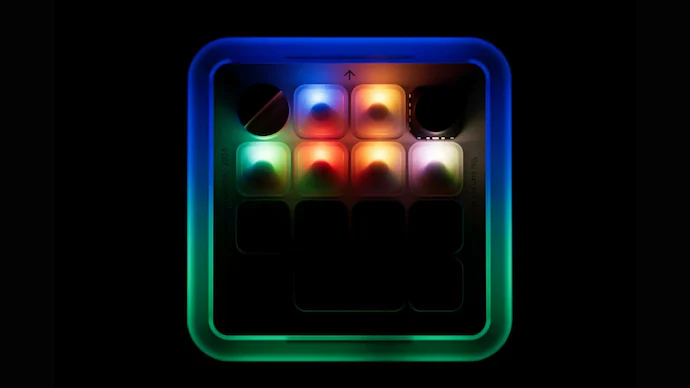
    The device features six RGB Agent Keys that display live color-coded status of running Codex threads - white for idle, blue for thinking, green for complete, amber when input is required, and red for errors.
  • 03.
    Built on Work Louder's Creator Micro 2 chassis, the Codex Micro includes 13 mechanical switches, a rotary encoder for adjusting agent reasoning level, a capacitive touch sensor, and a 2D analog joystick for triggering full workflows like PR review and debugging.
  • 04.
    The Codex Micro is a limited-run product sold until stock runs out, targeting the 5 million weekly active Codex users, and is separate from OpenAI's broader consumer hardware project being developed with designer Jony Ive.

Six LEDs That Redefine How Humans Supervise AI Agents

The Codex Micro's most consequential feature is not its mechanical switches or aluminum frame - it is the six RGB Agent Keys on the top row that display live status of Codex threads without requiring the developer to switch windows [1]. White means idle, blue means thinking, green means complete, amber signals that the agent needs human input, and red indicates an error. This is a fundamental shift in how AI oversight is delivered: moving from a screen-first, tab-switching workflow to ambient peripheral awareness [2].

The design logic tracks directly with how agentic coding has changed developer workflows. As Daniel Vaughan noted, coding agents have shifted from single-turn assistants to long-running autonomous systems, and the human oversight interface has become the bottleneck [3]. A developer running six parallel Codex threads today must either context-switch between browser tabs or miss critical moments when an agent needs approval to proceed. The Agent Keys solve this by pushing status information to the physical desk layer, where it competes with nothing. The joystick compounds this by triggering entire pre-configured workflows - PR review, debugging sequences - rather than single keystrokes, collapsing multi-step approval chains into one physical action [4].

The $86 OpenAI Premium - What You Actually Pay For

Work Louder's Creator Micro 2, the chassis beneath the Codex Micro, retails at $144 for the wired version and $174 for the wireless Pro. The Codex Micro costs $230, creating a premium of $56 to $86 depending on which variant you compare [5]. What fills that gap? Three things: the Codex-specific firmware that drives the RGB agent status system, the 32-piece icon keyset tailored to AI coding workflows, and OpenAI's brand equity.

The firmware integration is the defensible part. The six Agent Keys require a live connection to Codex thread state - this is not remappable to a generic macro function and does not exist on the base Creator Micro 2 [6]. The ChatGPT Desktop App integration adds AppSense app detection and six programmable layers that switch automatically based on which application is in focus. Buyers also retain access to Work Louder's open-source VIA configurator for full custom remapping [7]. Whether the premium is justified is a matter of workflow intensity: for a developer running Codex agents for four or more hours daily, the reduction in cognitive overhead has a genuine dollar value. For occasional Codex users, the $230 price is harder to defend against a generic macro pad at a third of the cost.

Why OpenAI Picked a Boutique Maker Over a Peripheral Giant

The choice of Work Louder over an established peripheral brand like Logitech or Razer is not accidental - it reflects a deliberate product strategy for software-specific hardware. Work Louder had already built application-specific Creator Micro configurations for Figma and Framer, demonstrating that a small-batch, software-integrated macro pad can find a loyal audience among power users of a specific tool [4]. The collaboration model is proven: a software company provides the integration layer and brand distribution; Work Louder provides the chassis, manufacturing, and Input configurator software.

For OpenAI, this approach carries minimal hardware R&D risk. The Creator Micro 2 chassis is already in production, already available in clicky and silent variants with USB-C and Bluetooth connectivity [2]. OpenAI contributed the firmware, the keyset design, and the platform integration - not the hardware engineering. The result is a product that reaches market in months rather than years. The downside is limited differentiation at the hardware level; the Codex Micro is recognizably a Work Louder product with an OpenAI skin. For a limited-run accessory targeting a niche of 5 million users, this tradeoff is rational - the boutique positioning signals insider-community membership rather than mass-market aspiration [8].

The Jony Ive Shadow - Deliberate Hardware Sequencing

The Codex Micro arrives at a specific moment in OpenAI's hardware timeline: after the $6.5 billion acquisition of Jony Ive's io Products in May 2025 but before the consumer AI device that remains in development [9]. The sequencing is deliberate. By launching a niche developer accessory first, OpenAI establishes a hardware presence without committing to mass-market claims it cannot yet fulfill. The Codex Micro is explicitly framed as not part of the Jony Ive project, which manages press expectations and prevents the $230 macro pad from being measured against a rumored paradigm-shifting consumer device [9].

This sequencing also tests OpenAI's Supply Co. retail infrastructure - the new storefront launched alongside the Codex Micro - at low stakes. A limited-run sell-out creates positive commercial optics without requiring the supply chain scale a mass-market product demands. If the Jony Ive device underdelivers relative to expectations, the Codex Micro provides a data point that OpenAI can ship hardware that developers actually use. The promotional video's nearly 1 million X views within 24 hours of the announcement suggests the brand has the distribution reach to make hardware launches culturally visible, independent of unit sales volume [7].

The Ecosystem Lock-In Beneath the Keycaps

The Codex Micro's commercial logic extends beyond the $230 unit price. The device only delivers its core value proposition - live agent status, reasoning dial, workflow joystick - when used with Codex and the ChatGPT Desktop App. This is hardware as platform retention: a developer who owns a Codex Micro has a tangible switching cost when considering GitHub Copilot, Cursor, or another coding agent [10]. The Supply Co. storefront launch alongside the hardware is equally strategic - it gives OpenAI a direct retail channel and customer relationship previously handled entirely through API and app-store distribution.

The competitive implications are real. If the Codex Micro's RGB agent supervision interface proves useful in practice, it validates tactile AI agent dashboards as a product category - and invites responses from competing platforms [7]. GitHub Copilot and Cursor both have large developer user bases. A Cursor-branded macro pad or a similar GitHub-integrated peripheral would be straightforward to produce using the same Work Louder playbook. OpenAI's first-mover advantage in this category is narrow and time-limited, which makes the limited-run framing look less like scarcity marketing and more like a realistic assessment of how long the category moat holds before competitors close it [11].

Historical Context

2025-05
Acquired designer Jony Ive's io Products startup for $6.5 billion, marking the company's first major hardware investment and signaling long-term consumer hardware ambitions.
Pre-2026
Built application-specific Creator Micro configurations for Figma and Framer, validating the software-company plus boutique keyboard maker collaboration model for niche professional tools.
2026-06
OpenAI Codex reached 5 million+ weekly active users, establishing the large developer audience that justified a hardware accessory investment.
2026-06-30
Codex Micro announced at the AI Engineer World's Fair in San Francisco, with a promotional video that generated nearly 1 million views on X within 24 hours.
2026-07-15
Codex Micro officially launched at $230 with orders open, sold through OpenAI's new Supply Co. retail storefront until stock runs out.

Power Map

Key Players
Subject

OpenAI Codex Micro - First Branded Hardware for AI Agent Developers

OP

OpenAI

Product creator and AI platform provider that leveraged its 5M+ weekly Codex user base to launch a hardware ecosystem accessory and new Supply Co. retail storefront.

WO

Work Louder

Boutique keyboard startup that contributed the Creator Micro 2 chassis, Input configurator software, and manufacturing expertise, with prior collaboration history with Figma and Framer.

SO

Software developers and Codex power users

Primary end users who supervise AI coding agents for hours at a time and benefit from reduced friction in human oversight workflows.

JO

Jony Ive / io Products

Designer and startup acquired by OpenAI for $6.5 billion in May 2025, leading a separate broader consumer AI hardware initiative distinct from the Codex Micro.

Fact Check

11 cited
  1. [1] OpenAI Is Selling a $230 Codex Micro Hardware Product
  2. [2] OpenAI Ships Its First Hardware: The $230 Codex Micro Macro Pad
  3. [3] Codex Micro and Work Louder: Macro Pad Hardware for Agentic Coding Workflows
  4. [4] OpenAI Codex Micro Hardware Built With Work Louder
  5. [5] OpenAI Codex Micro Launches July 15: Macro Pad Built With Work Louder
  6. [6] OpenAI Supply Co-Lab: Work Louder Codex Micro
  7. [7] OpenAI Expands Into Developer Hardware With Codex Micro Keyboard
  8. [8] OpenAI Prepares Codex Micro Keypad to Control AI Agents
  9. [9] OpenAI Launches Codex Micro Keypad as Its First Hardware Product - Jony Ive's Device Still Delayed
  10. [10] OpenAI Launches Codex Micro Keyboard for AI Agents
  11. [11] OpenAI's First Hardware Isn't the Revolutionary iPhone Killer We Expected

Source Articles

Top 4

THE SIGNAL.

Analysts

"Described the Codex Micro as designed to supercharge people's Codex usage, framing it as an enhancement tool for developers using agentic coding rather than a standalone product."

Dominik Kundel
Spokesperson, OpenAI

"Argued that as coding agents move from single-turn assistants to long-running autonomous systems, the human oversight interface becomes the bottleneck - and that a macro pad accelerates human-agent interaction without making the underlying model smarter."

Daniel Vaughan
Developer analyst, Codex Knowledge Base

"Called the device 'a bit gimmicky' while acknowledging that OpenAI works within and with the developer community, producing products that are fun and capture the cultural moment."

Industry observer
Unattributed commentator
The Crowd

"Meet kbd-1.0-codex-micro, built with @work_louder. Map the buttons and joystick to your workflow, and keep your pinned chats in view. Get yours before stock returns 410."

@@OpenAIDevs3642

"OpenAI reveals Codex Micro (their first hardware product, so to say). OpenAI's $230 Codex Micro is a compact control deck for agentic coding, with RGB status keys, shortcuts for common Codex actions, and a dial for adjusting reasoning effort. Built with Work Louder."

@@kimmonismus873

"Work Louder's Codex Micro is a small keypad built for ChatGPT Codex, with 6 RGB agent status keys, customizable command keys via the Input software and 6 programmable layers with app-based auto switching"

@@btibor91138
Broadcast
OpenAI's New Coding Model Has Inferior Accuracy. BUT the Hardware That Runs It Is Incredible

OpenAI's New Coding Model Has Inferior Accuracy. BUT the Hardware That Runs It Is Incredible

OpenAI Launches Codex Micro: The $230 Mini Keyboard for AI Programming

OpenAI Launches Codex Micro: The $230 Mini Keyboard for AI Programming

GPT-5.6 Just Deleted Their Databases | OpenAI Goes Hardware Today

GPT-5.6 Just Deleted Their Databases | OpenAI Goes Hardware Today