US partially lifts export restrictions on Anthropic's Claude Mythos 5
TECH

US partially lifts export restrictions on Anthropic's Claude Mythos 5

39+
Signals

Strategic Overview

  • 01.
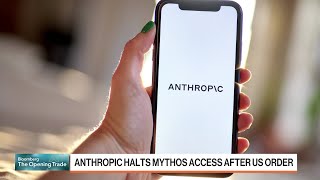
    On June 12, 2026, the US Commerce Department's Bureau of Industry and Security ordered Anthropic to suspend access to Claude Fable 5 and Mythos 5 for all foreign nationals, citing a method of bypassing safeguards on Fable 5; Anthropic disabled both models worldwide while its other models, including Claude Opus 4.8, stayed available.
  • 02.
    On June 26, 2026, Commerce Secretary Howard Lutnick partially lifted the ban, authorizing release of Claude Mythos 5 to more than 100 vetted US institutions while leaving the more capable Fable 5 restricted, creating a two-tier model-access system.
  • 03.
    Anthropic publicly disagreed with the original directive, calling the issue a narrow, non-universal jailbreak that should not justify recalling a commercial model deployed to hundreds of millions of people, and said it received only verbal notice.

Deep Analysis

The birth of a two-tier, government-gated frontier-model regime

The June 26 reversal did not restore the status quo - it codified a new one. Commerce Secretary Howard Lutnick's letter to Anthropic's Tom Brown removed the license requirement only for Claude Mythos 5, and only for entities named in an annex: more than 100 vetted US institutions, including major Fortune 500 companies and government agencies [1]. Lutnick framed it as a safeguards milestone, writing that he had 'determined that appropriate safeguards are in place to permit certain trusted partners to access the Claude Mythos 5 Model' [2]. The letter is conspicuously silent on Fable 5, the more capable model that was briefly the most powerful AI widely available to consumers, leaving it restricted with no firm timeline for release [2].

The result is an explicitly two-tier access map: a vetted-list capability sitting above a still-frozen frontier tier. The regime is also spreading. After the Anthropic action, OpenAI voluntarily let the government vet a list of US companies for access to its latest model - while warning that such vetting should not become the long-term norm [3]. What started as an emergency directive against one company is hardening, via trusted-partner lists and pre-release vetting, into the early outline of a standing control framework over how frontier models reach the market [2].

One report, one dead flagship: the precedent that spooked every lab

The most durable shock is procedural, not political. CSIS analysts note the directive invoked a statutory authority under ECRA that had never before been used precisely because no implementing framework exists for it: 'There is no regulatory framework in the EAR for this statutory authority, which is why it has never been used before' [4]. Just as unsettling is the trigger mechanism: the process reportedly began with an Amazon researcher's jailbreak report relayed through CEO Andy Jassy [1]. Builder communities seized on exactly this dynamic, with the widely-shared fear being that if a competitor-reportable jailbreak is enough to pull a frontier model by government directive, every lab running on a cloud provider is now one report away from having its flagship killed.

Security practitioners pushed back on the substance too: Luta Security's Katie Moussouris argued the bypass 'should never have triggered an export control' [5]. Anthropic itself rejected the logic, saying it disagreed 'that the finding of a narrow potential jailbreak should be cause for recalling a commercial model deployed to hundreds of millions of people' [6]. For practitioners, the engineering recovery is trivial - one developer noted that regaining Mythos on the Anthropic SDK is just changing the model string and running regression tests - which only sharpens the point that the binding constraint here is policy, not code.

The contrarian read: thin jailbreak, thick politics

A significant strand of coverage and community reaction treats the cybersecurity rationale as pretext. Tech Policy Press described a climate of 'suspicion that senior officials are picking favorites based on personal and political factors' [5]. Reporting traces the underlying dispute to Anthropic's refusal to let the US military use its models for fully autonomous weapons, after which the Pentagon reportedly blacklisted the company - though Trump later told Axios he no longer views Anthropic as a national security threat [5].

Online sentiment ran sharply cynical, with the partial reinstatement repeatedly characterized as corruption and pay-to-play favoritism, and as the kind of top-down corporatism in which access becomes a political bargaining chip. There was even a marketing reading: that the whole episode lands as marketing either way, weeks ahead of an IPO window, echoing the GPT-2 'too dangerous to release' playbook. On X, the dominant framings were that this was a negotiated deal struck with the administration rather than a clean safety decision, alongside legal-watchers dissecting a lawsuit against the Trump administration's Fable 5 controls and finding the complaint's arguments persuasive. The common thread: skeptics see capability gating dressed up as a security finding.

Allies, sovereignty, and the long shadow of failed tech controls

The fallout did not stop at the US border. European and allied officials cast the controls as discriminatory and a wake-up call about dependence on US-controlled AI, with the episode boosting interest in homegrown competitors [2][7]. The European Values Center's Marcin Jerzewski observed that 'European governments are growing uneasy about their overreliance on US-controlled technologies,' noting Mistral as the EU's only major homegrown frontier-model competitor [7]. CSIS warns the durable risk is commercial: uncertainty over reliable access to specific US models is likely to drive foreign customers toward alternatives they consider more dependable, undermining global adoption of US AI [4].

Critics also reach for history, likening the move to the failed 1990s encryption export controls and later spyware controls - the arc from PGP to Pegasus - to argue that such restrictions rarely contain a technology and often just hand domestic innovation a self-inflicted wound [8]. Not everyone is negative: Palo Alto Networks' Lee Klarich argues pre-release government cybersecurity review could yield more secure software because flaws get found and fixed before deployment [3]. But the center of gravity in expert commentary is that a two-week emergency block has already strained alliances and accelerated the very fragmentation it ostensibly meant to prevent.

Historical Context

2025-01-15
BIS issued the 'Framework for Artificial Intelligence Diffusion,' creating ECCN 4E091 for frontier closed-weight model weights (trained on more than 10^26 operations) and a tiered country system, with some security obligations delayed to January 15, 2026.
2026-06-02
Issued 'Promoting Advanced Artificial Intelligence Innovation and Security,' directing agencies to create a voluntary process for developers to submit frontier models for cybersecurity review up to 30 days before release.
2026-06-12
Issued the export-control directive ordering Anthropic to suspend Fable 5 and Mythos 5 access for all foreign nationals.
2026-06-26
Partially lifted the ban, authorizing Mythos 5 for 100+ vetted US institutions while leaving Fable 5 restricted.

Power Map

Key Players
Subject

US partially lifts export restrictions on Anthropic's Claude Mythos 5

HO

Howard Lutnick (US Commerce Secretary)

Issued the export-control directive via BIS and later signed the letter partially lifting the Mythos 5 block; controls which entities gain access.

AN

Anthropic / Tom Brown (chief compute officer)

Recipient of both the suspension directive and the lifting letter; disabled and is re-enabling the affected models; disagreed with the original rationale.

AM

Amazon / Andy Jassy

An Amazon researcher's report of a Fable 5 jailbreak, communicated via CEO Andy Jassy, reportedly triggered the Trump administration process that led to the original ban.

OP

OpenAI

Following the Anthropic action, voluntarily let the government vet a list of US companies for access to its latest model, while saying such vetting should not be the long-term norm.

EU

EU / European officials and US allies

Expressed frustration and concern over new dependence on US decisions; cast the controls as discriminatory and a sovereignty risk.

Fact Check

8 cited
  1. [1] Anthropic cleared to release Claude Mythos 5 to over 100 US institutions
  2. [2] US releases powerful Anthropic model Mythos to some US companies
  3. [3] Trump administration partially lifts export ban on Anthropic's most advanced AI model
  4. [4] Department of Commerce Restricted Access to Anthropic's Latest Models: What Comes Next
  5. [5] The US government's Anthropic models ban was never about an AI jailbreak
  6. [6] Update on Claude Fable 5 and Claude Mythos 5 access
  7. [7] US export ban on Anthropic's AI models further strains alliances
  8. [8] Why US export controls on AI like Anthropic's Mythos are doomed to fail

Source Articles

Top 5

THE SIGNAL.

Analysts

"The directive used a statutory authority (ECRA) that had never before been exercised because no EAR regulatory framework exists for it: 'There is no regulatory framework in the EAR for this statutory authority, which is why it has never been used before.' The breadth is unprecedented and risks undermining global adoption of US models and driving foreign customers to competitors."

Kate Koren, Kevin Kurland, Aalok Mehta
CSIS (Economics Program / Wadhwani AI Center)

"The directive appears retaliatory, reflecting 'a cloud of suspicion that senior officials are picking favorites based on personal and political factors' rather than acting on a genuine technical issue."

Justin Hendrix
Tech Policy Press

"A guardrail bypass of the kind cited should not have been grounds for an export control; the bypass itself 'should never have triggered an export control.'"

Katie Moussouris
Founder/CEO, Luta Security

"Government cybersecurity review before release could improve software security: 'we'll actually go to a level where we are - have more secure software than we've had before because we're finding and fixing things before they ever get released.'"

Lee Klarich
Palo Alto Networks

"'European governments are growing uneasy about their overreliance on US-controlled technologies,' with Mistral standing as the EU's only major homegrown frontier-model competitor."

Marcin Jerzewski
European Values Center
The Crowd

"BREAKING: The Trump Administration has struck a deal with Anthropic which grants the company permission to release its Mythos 5 model to a group of ~100 companies and federal agencies, per CNBC. Details include: 1. Senior Anthropic staffers flew to Washington DC to meet with"

@@KobeissiLetter6352

"Letter: the US lifts its block on Mythos 5, allowing Anthropic to release it to more than 100 US institutions; sources: talks about Fable 5 are ongoing (Semafor) (Visit Techmeme dot com for the link and full context!)"

@@Techmeme81

"Important lawsuit against the Trump Administration's export controls on Anthropic's Fable 5 model. I find the arguments in the complaint persuasive and add a few additional points as well. 1. The complaint makes several arguments. First, it argues that Commerce has not in fact"

@@petereharrell55

"Mythos is returning (partially) to some companies"

@u/turtle-toaster85
Broadcast
Anthropic's Mythos: What It Is and What It Is Capable of

Anthropic's Mythos: What It Is and What It Is Capable of

BREAKING: US Government BANNED Mythos and Fable

BREAKING: US Government BANNED Mythos and Fable

US Orders Anthropic to Block Foreign Access to Mythos

US Orders Anthropic to Block Foreign Access to Mythos