Meta Opens Muse Smart Glasses to Third-Party Hardware
TECH

Meta Opens Muse Smart Glasses to Third-Party Hardware

20+
Signals

Strategic Overview

  • 01.
    Meta announced Muse Gadgets on October 2, 2026, an open-source ESP32 firmware and Linux SDK that lets developers build custom hardware compatible with Muse, Meta's personal AI agent.
  • 02.
    The SDK lives in the facebookincubator/muse-gadget-sdk GitHub repository under an Apache 2.0 license, split into esp32, linux, and skills directories, each with a README and an AGENTS.md file written for coding agents.
  • 03.
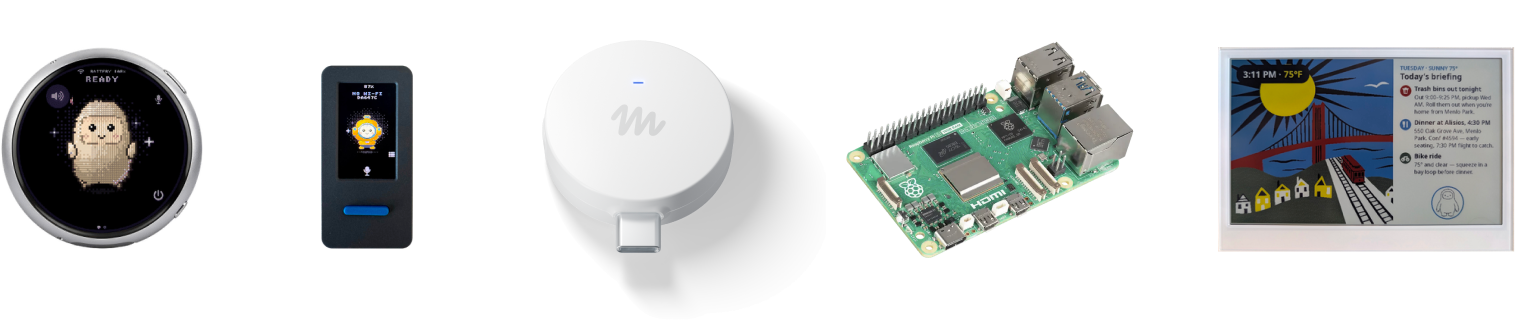
    Alongside the SDK, Meta released its own first-party accessory, Muse Home Link, a USB-C powered dongle built on Espressif's ESP32-C5 chip that lets Muse control smart-home devices like TVs and speakers over the local network.
  • 04.
    Meta manufactured 5,000 Muse Home Link units, offered free to active US Muse subscribers (one per subscriber) on a first-come, first-served basis.

Why Meta Is Giving Away the Keys to Muse's Hardware Layer

Meta's Muse Gadgets release is less a product launch than an infrastructure handoff. The company published its ESP32 firmware and Linux SDK as open source under an Apache 2.0 license, organizing the repository into esp32, linux, and skills directories, each carrying both a human-readable README and an AGENTS.md file explicitly written for coding agents rather than people [1]. That detail matters: Meta is betting hobbyists will increasingly delegate the actual wiring and firmware work to an AI coding assistant, with the SDK built to be legible to a bot as much as a person. Developers get started by grabbing a capped API token from gadgets.muse.ai - each token limited to a set number of devices - and pointing that coding agent at the GitHub repo, a workflow pitched as frictionless rather than enterprise-grade [2]. Alongside the open framework, Meta shipped its own reference device, Muse Home Link, a USB-C powered dongle built on Espressif's ESP32-C5 chip that lets Muse talk to TVs, speakers, and anything else exposing a local network interface [3]. By releasing both the open-source SDK and a working first-party example, Muse Home Link, on the same day, Meta paired the developer toolkit with proof that the approach works outside the lab.

The Fine Print: An 'Open' Platform Meta Can Shut Off at Will

Read past the hacker-friendly framing and the terms are strikingly one-sided. Meta states plainly that the SDK and tokens are 'not a supported product or developer platform,' and it reserves the right to change or withdraw access at any time [4]. Anyone who solders together a custom Muse Gadget is also on their own if the board gets bricked - Meta assigns that risk entirely to the builder [4]. This is a meaningfully different posture from a true developer platform with API stability guarantees and support channels; it is closer to a reproducible tech demo. The repository's own description leans into that framing, calling the project something 'built by hackers, for hackers, just for fun' rather than a foundation for commercial products [1]. For hobbyists tinkering over a weekend, that is a fair trade. For anyone weighing a serious investment of time or money building a business on top of Muse Gadgets, it is a flashing warning sign that the ground could shift without notice.

Hardware Sprawl Meets a Monetization Clock Wall Street Is Watching

Muse Gadgets does not exist in isolation - it is one more hardware surface Meta has rolled out for its personal AI agent in under a month, following Muse's own launch, the Muse Charm keychain device, and glasses integration unveiled at Meta Connect. That cadence has coincided with a sharp run in Meta's stock, which rose roughly 36 percent in September 2026 amid the Muse launch cycle [5]. But not every analyst is convinced the hardware blitz translates into near-term revenue. Needham's Laura Martin has warned that Meta is 'notoriously slow' to monetize new products and pointedly noted that Meta does not control the endpoints that Muse needs to succeed [6]- a reference to episodes like Amazon blocking Muse from shopping on Amazon.com just weeks before Muse Gadgets shipped [7]. Giving away free hardware and open SDKs is a classic way to grow a user base fast, but it does nothing to resolve the structural problem that the platforms Muse most needs to act on - retailers, home-device makers, app ecosystems - are under no obligation to let it in.

Builders Are Thrilled, Skeptics Are Already Asking 'Why'

Reaction across builder and social channels splits by which device is being discussed. On the Muse Gadgets announcement itself, Reddit's r/MuseAgent showed genuine builder enthusiasm, with commenters in the announcement thread confirming its authenticity and noting the Home Link giveaway is US-only. Sentiment on X was similarly positive, with builders framing the release as Meta building a hardware developer ecosystem for the physical world. That enthusiasm is separate from a harder-edged debate specific to Meta's earlier Muse Charm keychain device: on a different Reddit thread about Charm, skeptics described it as hype-driven device sprawl, while others countered that most of what Charm does could already be handled by binding a phone's existing action button to Muse. The two conversations should not be conflated - the Charm skepticism was about Charm, not about the Muse Gadgets SDK or Home Link, which drew builder enthusiasm on its own announcement thread.

Historical Context

2026-09-08
Muse, Meta's personal AI agent, launched.
2026-09-21
Amazon blocked Meta's Muse agent from shopping on Amazon.com, an early sign of platform resistance to Meta's agentic ambitions.
2026-09-23
Meta debuted Muse Charm, a palm-sized keychain AI device, previewing its push into standalone AI hardware ahead of Muse Gadgets.
2026-09-25
At Meta Connect 2026, Meta showcased smart glasses broadly, positioning Muse as the voice interface coming to glasses.
2026-10-02
Meta announced Muse Gadgets (open-source ESP32/Linux SDK) and shipped Muse Home Link, opening the Muse hardware ecosystem to outside builders.

Power Map

Key Players
Subject

Meta Opens Muse Smart Glasses to Third-Party Hardware

NA

Nat Friedman

Head of product at Meta Superintelligence Labs; publicly announced Muse Gadgets and Muse Home Link, extending Muse into physical hardware via a project the GitHub repo itself describes as built by hackers, for hackers, just for fun.

AL

Alexandr Wang

Meta executive who co-announced the Muse Gadgets launch on X, posting: 'today we are announcing Muse Gadgets! this is an open-source ESP32 firmware and Linux SDK... we are also releasing our own gadget: Muse Home Link' - echoing the same announcement Nat Friedman posted.

HA

Hardware maker ecosystem (Seeed, M5Stack, Waveshare, AiPi, individual hobbyists)

Third-party and DIY builders whose off-the-shelf ESP32 boards and displays are highlighted as example Muse Gadget form factors on gadgets.muse.ai.

AM

Amazon

Blocked Meta's Muse agent from shopping on Amazon.com, showing that retailers control whether Muse-type agents can act on their endpoints regardless of Meta's hardware openness strategy.

Fact Check

8 cited
  1. [1] Muse Gadget SDK on GitHub
  2. [2] Meta Open-Sources Muse Gadget SDKs for DIY AI Hardware Devices
  3. [3] Meta's Muse Gadgets Open Up an Open-Source Smart Home Link
  4. [4] Meta Muse Gadgets: Open-Source Hardware SDK, Explained
  5. [5] Meta Stock Surges 36% in September on Muse AI Boom - Can It Breach the $2T Mark?
  6. [6] Meta Stock Rides Muse AI Wave as Analysts Flag Monetization Risk
  7. [7] Amazon Blocks Meta's Muse AI From Agentic Shopping
  8. [8] Meta Muse Gadgets Opens the AI Agent to DIY Hardware With a Free Home Link for US Subscribers

Source Articles

Top 1

THE SIGNAL.

Analysts

“Warned that Meta is historically slow to monetize new products, while flagging that Meta does not control the third-party endpoints Muse needs to succeed.”

Laura Martin
Analyst, Needham

“Called Muse the most approachable personal AI agent product he has tried.”

Ben Thompson
Analyst, Stratechery
The Crowd

“🚨 MUSE ECOSYSTEM ALERT 🚨 today we are announcing Muse Gadgets! this is an open-source ESP32 firmware and Linux SDK for anyone to make hardware that works with Muse we are also releasing our own gadget—Muse Home Link—to enable your muse to work with your smart devices (TV, speakers, etc.)”

@@alexandr_wang4224

“$META is opening Muse up to custom hardware. Nat Friedman announced Muse Gadgets, with open-source ESP32 firmware and a Linux SDK that let developers connect Muse to displays, speakers, sensors, actuators, Raspberry Pis and other devices. Every gadget pairs with Muse using an SDK token. Meta also built Muse Home Link, a small USB-C device that connects Muse to your home network so it can interact with compatible TVs, speakers, printers and anything exposing a local HTTP API. Meta manufactured 5,000 Home Links. They're expected to ship in October and are free to active U.S. Muse subscribers, one per subscriber, while supplies last.”

@@wallstengine230

“$META is opening Muse to custom hardware with open source ESP32 firmware and a free Home Link that lets the agent control devices across the home. That turns Muse into a developer platform for the physical world using cheap hardware and open tooling to seed an ecosystem early.”

@@StockSavvyShay218

“Introducing Muse Gadgets: Open source hardware for your Muse”

@u/6353JuanTaboApp621
Broadcast
Meta Connect Keynote 2026

Meta Connect Keynote 2026

Meta's Muse actually does the thing | The Vergecast

Meta's Muse actually does the thing | The Vergecast

Meta REALLY Wants You to Use Muse AI: Everything From Meta Connect 2026 | All Things Mobile

Meta REALLY Wants You to Use Muse AI: Everything From Meta Connect 2026 | All Things Mobile