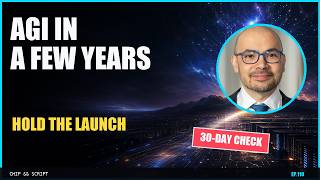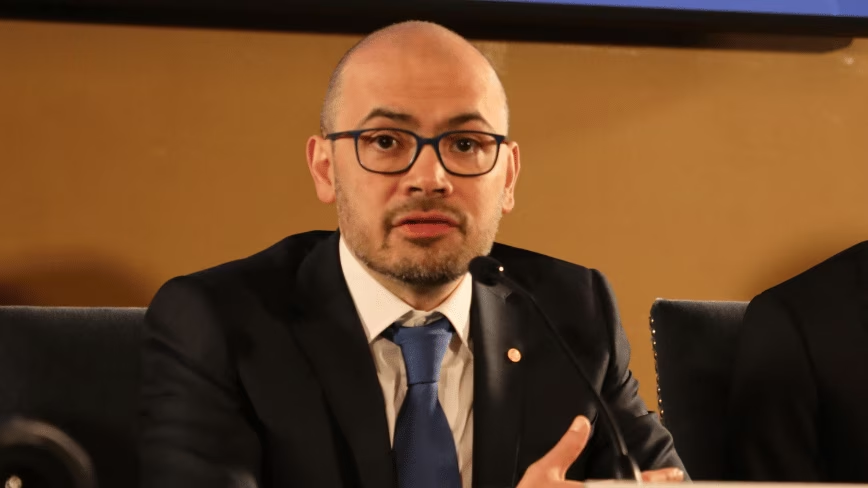
Hassabis proposes U.S.-led AI standards body for frontier models
TECH

Hassabis proposes U.S.-led AI standards body for frontier models

14+
Signals

Strategic Overview

  • 01.
    On July 14, 2026, Google DeepMind CEO Demis Hassabis published 'A Framework for Frontier AI and the Dawning of a New Age,' calling for the U.S. to establish a FINRA-modeled AI Standards Body to safety-test frontier models before public release.
  • 02.
    The proposed public-private partnership would require frontier labs to voluntarily submit models up to 30 days before release for testing covering cybersecurity, biological threats, and deceptive AI behavior, with compliance eventually becoming mandatory for U.S. market deployment.
  • 03.
    Sam Altman (OpenAI), Satya Nadella (Microsoft), and Sundar Pichai (Google) publicly endorsed the proposal; the White House had already aligned through a June 2, 2026 executive order establishing classified benchmarks for frontier models with a 30-day voluntary review.
  • 04.
    The proposal includes a 'slowdown mechanism' giving the body authority to coordinate a halt in AI development across all frontier labs if critical risks are identified; Hassabis aims for the body to be operational before year-end 2026.

Deep Analysis

The Anthropic Freeze Was the Wake-Up Call

The proximate cause of Hassabis's proposal is concrete: the Trump administration froze Anthropic's Mythos and Fable models with no established protocol, forcing Anthropic to spend 2.5 weeks negotiating release. Hassabis explicitly called this 'a bit of a wake-up call,' and the episode directly triggered OpenAI to delay GPT-5.6 pending government approval. [4]The industry's real fear is not abstract safety risk but arbitrary, uncoordinated government intervention with no rulebook - the proposal is as much about creating legal predictability for labs as it is about protecting the public. By proposing a structured 30-day window with defined criteria, Hassabis is essentially asking the government to trade unpredictable freezes for a process the industry helped design. [1]


FINRA vs. FAA: Two Very Different Visions of Oversight

Hassabis explicitly chose the FINRA model - a federally-overseen self-regulatory organization funded and largely governed by the industry it regulates - over the FAA model proposed by Anthropic CEO Dario Amodei approximately one month earlier. The distinction is structural and consequential. FAA-style oversight means direct government authority with deployment-blocking power; FINRA-style means the industry sets its own standards under federal oversight. [3]Critics like Mark Daley at Noetic Engines argue the proposed body dangerously conflates four distinct functions: scientific lab, standards organization, industry regulator, and security council - a concentration that makes it an 'epistemic chokepoint' with authority over which models can enter the global market. [7]That Hassabis chose the lighter-touch model while pushing for it to eventually become mandatory for all frontier-class models regardless of country of origin reveals the underlying bet: self-regulation now to prevent harder government mandates later. [2]

The Prisoner's Dilemma Is the Actual Structural Problem

The structural logic behind Hassabis's proposal is a coordination problem: competitive pressure makes individual safety investment commercially irrational. A lab that voluntarily slows down for safety testing loses market position to one that does not. The proposed Standards Body is designed to solve this coordination failure by making the slowdown universal and the rules identical for everyone - including foreign models seeking U.S. market access. [1]This is why the 'slowdown mechanism' - authority to coordinate a halt in AI development across all frontier labs if critical risks are identified - is the most consequential and controversial element. It is the only provision that actually changes the competitive calculus, because it removes the first-mover advantage for unsafe releases. [4]Benchmarks refreshed quarterly and exemptions for startups and academics are design choices that reflect this competitive-dynamics framing, not just technical safety considerations.

The 18-Month Clock and Why the Timeline Argument Does Work

Hassabis grounded the urgency in a specific technical claim: within 18 months, biological and nuclear capabilities could emerge in open-source AI models, with current cyber-risks described as 'warning shots.' [8]This framing - AGI is 'probably only a few short years away' and the impact will be '10x of the Industrial Revolution at 10x the speed' - is doing political work as much as predictive work. [6]The proposal's implementation window (end of 2026) maps directly onto that 18-month risk horizon. The timeline argument is what converts the proposal from optional good governance into an emergency measure - and emergency measures attract emergency political support, as the White House's prior executive order alignment suggests. [5]

Historical Context

2026-06-02
Executive order directed creation of classified benchmarks for 'covered frontier models' with voluntary 30-day pre-release evaluation access, structurally anticipating Hassabis's proposal.
2026-06
Trump administration froze Anthropic's Mythos and Fable models without established protocol; Anthropic spent 2.5 weeks negotiating release - the direct catalyst Hassabis cited for his proposal.
2026-06
Anthropic CEO proposed an FAA-style AI regulatory framework approximately one month before Hassabis, establishing a rival architectural vision centered on direct government deployment-blocking authority.
2026-07
OpenAI delayed GPT-5.6 release pending government approval, demonstrating the regulatory uncertainty the proposed Standards Body is designed to resolve.
2026-07
Illinois SB 315 passed, requiring annual third-party audits for frontier AI developers starting 2027, representing state-level momentum running parallel to federal proposals.
2026-07-14
Published 'A Framework for Frontier AI and the Dawning of a New Age,' receiving public endorsements from Altman, Nadella, and Pichai within hours.

Power Map

Key Players
Subject

Hassabis proposes U.S.-led AI standards body for frontier models

DE

Demis Hassabis / Google DeepMind

Proposal author; briefed Trump administration, rival labs, and European officials; 2024 Nobel laureate in Chemistry for AlphaFold.

SA

Sam Altman / OpenAI

Publicly endorsed the proposal on X; OpenAI subsequently delayed GPT-5.6 release pending government approval.

SA

Satya Nadella / Microsoft

Called the proposal 'important'; added institutional weight from the largest enterprise AI deployer.

DA

Dario Amodei / Anthropic

Proposed a rival FAA-style regulatory framework one month prior; Anthropic's Mythos model freeze was a direct catalyst for Hassabis's proposal.

TR

Trump Administration / White House

Issued June 2, 2026 executive order on classified frontier model benchmarks with 30-day voluntary review - structurally aligned with Hassabis's proposal architecture.

MA

Mark Daley / Noetic Engines

Primary public critic; argues the proposal conflates scientific, regulatory, licensing, and security functions and risks becoming a U.S.-controlled epistemic chokepoint.

NI

NIST / CAISI

Existing U.S. government body coordinating AI evaluations with defense, energy, homeland security, and intelligence agencies.

Fact Check

8 cited
  1. [1] A Framework for Frontier AI and the Dawning of a New Age
  2. [2] Exclusive: Google's Hassabis calls for U.S.-led global AI watchdog
  3. [3] DeepMind CEO calls for an independent standards body to regulate frontier AI
  4. [4] Hassabis wants a FINRA-style referee for frontier AI
  5. [5] DeepMind CEO Hassabis says nobody in the world knows what happens next
  6. [6] Demis Hassabis Says AGI Could Arrive Within a Few Short Years, Calls for US Frontier AI Standards Body
  7. [7] Who Gets to Define the Frontier
  8. [8] Demis Hassabis Frontier AI Framework - Dawning of a New Age

Source Articles

Top 5

THE SIGNAL.

Analysts

"This is a thoughtful proposal from Demis."

Sam Altman
CEO, OpenAI

"An important piece from Demis. We need more of this kind of thinking."

Satya Nadella
CEO, Microsoft

"Well said Demis! Worth reading."

Sundar Pichai
CEO, Google

"Verification is itself a form of power. The proposed body conflates scientific lab, standards org, industry regulator, licensing authority, and security council - benchmarks cannot verify deployed systems stay compliant with tested versions, and a U.S.-controlled body risks being an epistemic chokepoint excluding foreign models."

Mark Daley
Analyst, Noetic Engines

"The magnitude of this technology's impact will be unprecedented, perhaps 10x of the Industrial Revolution at 10x the speed. AGI is probably only a few short years away - nobody in the world knows what happens next, so cautious optimism means building guardrails now."

Demis Hassabis
CEO, Google DeepMind
The Crowd

"https://t.co/PTeDiv1b6L"

@@demishassabis19131

"Anyone who reads Demis new essay should also read Bill Gurley work on the principles of open standards (1998) https://t.co/HyRGM7DGbE"

@@kevg1412179

"Demis proposal for a frontier model Standards Body is an important blueprint for governance as AI begins to impact almost every aspect of society."

@@alexolegimas79
Broadcast
Demis Hassabis Wants a Frontier AI Gate. Here is the Real Proposal

Demis Hassabis Wants a Frontier AI Gate. Here is the Real Proposal

Hassabis Calls for a US-Led Global AI Watchdog

Hassabis Calls for a US-Led Global AI Watchdog

DeepMind CEO Wants a 30-Day Check Before AGI Ships

DeepMind CEO Wants a 30-Day Check Before AGI Ships