Gemini 4 Argon launch and global rollout
TECH

Gemini 4 Argon launch and global rollout

33+
Signals

Strategic Overview

  • 01.
    Google made Gemini 4 Argon generally available on October 13, 2026, expanding it from a two-week-old preview restricted to vetted cybersecurity defenders in its Fairwind Program into a model open to developers, enterprises, and paying consumers worldwide.
  • 02.
    At general availability, Argon is reachable through the paid Gemini API, Google AI Studio, the Antigravity agentic development environment, eligible Gemini Enterprise subscriptions, and - for Android developers - Android Studio and Firebase AI Logic.
  • 03.
    Within the same launch week, two major developer-tooling platforms added Argon as a selectable model: GitHub Copilot (Pro+, Max, Business, and Enterprise tiers) and GitLab's Duo Agent Platform, its orchestration layer for coordinating AI agents across planning, coding, security, and delivery.
  • 04.
    Google is offering Argon at an introductory rate of $2 per million input tokens and $10 per million output tokens, but that pricing is time-limited - it doubles across every tier on December 1, 2026.

SOTA on paper, uneven in practice

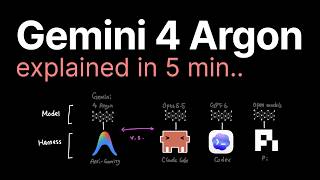
Google's own comparison table shows Argon winning 13 of 19 benchmark rows against Claude Opus 5.5, Claude Fable 5.1, and GPT-6 Astra [1], and the model tops the Vals Index leaderboard along with LMArena's Text Arena and creative-writing categories [2]. But that scorecard frays once you look past the leaderboard: reporting on the launch found Argon finishes last among top models on both the FrontierSWE v2 and Terminal-Bench 4.0 agentic-coding benchmarks, and ranks ninth in LMArena's separate WebDev category [3]. The same reporting cites unnamed Google employees finding Argon performs worse on real-world programming and front-end design tasks than its benchmark wins suggest, flagging the gap as a possible case of 'benchmaxxing' - optimizing for test suites rather than general capability [3]. On harder factual-recall questions, Argon answers correctly only half the time, versus 63 percent for GPT-6 Astra [3]. That split between measured intelligence index and demonstrated reliability is the central tension of this launch. A widely watched YouTube explainer on the launch, Caleb Writes Code's 'Gemini 4 Argon explained in 5 min..,' adds a further wrinkle to the coding-benchmark story: it credits Argon with a 77.9 percent score on a SWE-bench-style coding test, ahead of every other current model, but flags that Epoch AI identified 23 erroneous tasks within that same benchmark, and that the full 113-problem set has been public for months - meaning labs that release later, Google included, can end up training on leaked solutions that inflate late-mover scores. That is a concrete, independently sourced reason to read the 13-of-19 scorecard above with the same skepticism already directed at the real-world coding gap.
The pricing cliff: a roughly seven-week discount window

Google introduced Argon at $2 per million input tokens and $10 per million output tokens in its standard tier - with cached input priced near $0.10, which likewise doubles to about $0.20 on December 1 - positioned well below some rival models' rates [4]. That rate is explicitly temporary: on December 1, 2026, standard pricing doubles to $4/$20, the Batch/Flex tier rises from $1/$5 to $2/$10, and the Priority tier goes from $3.60/$18 to $7.20/$36 [5]. Jefferies analyst Brent Thill read the discount as a deliberate forcing function - aggressive enough that rivals 'may have to cut prices' to compete - while BNP Paribas' Nick Jones pointed to Google's combination of proprietary compute, distribution, and balance-sheet depth as a durable edge that could let it sustain this kind of pricing pressure longer than smaller labs [6]. Anyone building production workloads on the launch pricing needs to budget for the cliff now, not in six weeks.

Developers report wildly inconsistent quality

Independent of the official benchmarks, hands-on testing paints a messier picture than the launch materials suggest. A widely discussed community comparison thread described Argon as one of the most confusing models its author had tested - flagship-level one moment, then hallucinating basic facts the next - with commenters speculating (without confirmation) that Google could be serving a cheaper stand-in model to some users rather than the full model consistently. A separate side-by-side coding test found Argon notably faster and cheaper than Claude Opus 5.5 on an identical prompt, but flagged 'basic UX flaws' that made the resulting output unusable on mobile. That inconsistency has a cost dimension too: a separate, widely discussed Reddit thread recounted a user burning through their Gemini usage allowance after roughly ten messages, despite rating Argon's research and analysis quality above GPT-6 Sol High - and the comment debate that followed split between readers who think OpenAI and Anthropic are subsidizing subscription usage at a loss to win market share ahead of prospective IPOs, and others who read Google's tighter quotas as a sign it is running Argon at sustainable margins rather than discounting usage the way its rivals might be. Set against all of that, Google's own usage data for its Antigravity coding tool tells a more flattering story: agentic code submissions are up more than 35 percent and rollbacks are down nearly a third since Argon's rollout [7], even as community commentary suggests Antigravity itself still trails rival coding agents built on competing models in developer mindshare.

Where Argon's lead looks most durable: vision and OCR

One place the benchmark lead holds up better under independent scrutiny is vision. An Ultralytics auto-annotation benchmark spanning 26 models placed Argon first overall, scoring 0.565 mAP50 against 0.491 for GPT-6.1 Sol, 0.489 for Gemini 3.8 Flash, 0.476 for Claude Opus 5.5, and 0.470 for GPT-6 Astra - leading in 11 of 12 image domains and tying in underwater imagery, while processing each image in a median of about 5 seconds and 150 output tokens [8]. That is a narrower, more verifiable claim than the broad 'best model' marketing around Argon, and it maps directly onto practical use cases like automated dataset labeling and document OCR.

Benchmark leadership hasn't translated into tool-choice share

Google leaned hard into the GA moment on X: CEO Sundar Pichai personally confirmed the global rollout, spelling out availability across the paid Gemini API and Gemini platform, Google Antigravity for Ultra subscribers, and the Gemini app and Search for Ultra and Pro subscribers - a post that read as a statement of confidence rather than a routine release note. A finance-focused account picked up on the 1 million token context window alongside the looming December price increase and framed the combination as evidence Google is 'not playing catch-up anymore,' and Google's own account ran a thread highlighting internal engineering teams using Argon on what it called their hardest engineering problems. That confident framing sits awkwardly next to adoption data surfaced in the same YouTube breakdown that raised the benchmark-contamination concern above: despite Argon's benchmark-topping coding score, Google's own agentic coding tool, Antigravity, has roughly 2.4 million weekly users against an estimated 5 million for OpenAI's Codex - the benchmark win has not yet pulled developers away from the incumbent tool. The video also points to Google's Q2 earnings disclosure that the Gemini API is now processing 22 billion tokens per minute, up 6 billion from the prior quarter, reading that jump as a sign Google is compute-constrained rather than demand-constrained - a more grounded explanation for the pricing cliff above than pure promotional urgency, and a reminder that the context window's jump from 64,000 to 1 million tokens at this release is as much a reliability-engineering story as a headline spec.

Historical Context

2026-09-30
Google first released Gemini 4 Argon in a restricted preview limited to vetted cybersecurity defenders via the Fairwind Program, pitched as the company's most powerful model yet.
2026-10-13
Google expanded Gemini 4 Argon to global general availability for developers, enterprises, and paying consumers, two weeks after the cybersecurity-only preview.
2026-10-13
GitHub Copilot announced general availability of Gemini 4 Argon across its Pro+, Max, Business, and Enterprise plans on the same day as Google's broader rollout.

Power Map

Key Players
Subject

Gemini 4 Argon launch and global rollout

GO

Google / Google DeepMind

Developer and publisher of Gemini 4 Argon

FA

Fairwind Program partners (cybersecurity defenders)

Initial limited-preview users of Argon before public general availability, testing its claimed ability to find, validate, and patch software vulnerabilities

GI

GitHub Copilot

Third-party integration offering Argon via its model picker to Pro+, Max, Business, and Enterprise subscribers

GI

GitLab (Duo Agent Platform)

Integrated Argon into its agentic software-delivery orchestration platform for enterprise customers

AR

Artificial Analysis

Independent benchmark evaluator whose Intelligence Index scoring places Argon roughly on par with GPT-6 Astra

UL

Ultralytics

Ran an independent vision/auto-annotation benchmark across 26 models, ranking Argon first overall

Fact Check

11 cited
  1. [1] Google's own benchmark comparison table (via note.com)
  2. [2] Introducing Gemini 4 Argon
  3. [3] Opinions are divided on Gemini 4 Argon
  4. [4] Gemini 4 Argon's $2/$10 API pricing doubles December 1: full price table
  5. [5] Google Gemini 4 Argon's introductory deal ends soon: API prices double December
  6. [6] Google turns up AI heat with Gemini 4 Argon: rivals may have to cut prices, analyst says
  7. [7] Gemini 4 Argon lands everywhere while Anthropic builds its own git to survive Claude's output
  8. [8] Gemini 4 Argon auto-annotation benchmark
  9. [9] GitHub Copilot adds Gemini 4 Argon
  10. [10] GitLab Duo Agent Platform adds Gemini 4 Argon
  11. [11] Google makes Gemini 4 Argon broadly available with limited-time low API pricing of $2/$10 per 1M token

Source Articles

Top 5

THE SIGNAL.

Analysts

“Calls Argon a very strong model but disputes that it is the single best model available: "This is a really, really, really good model. But is it the best model out there? I actually don't think it is."”

Sam Witteveen, CEO of Red Dragon AI
Cautiously positive but skeptical of 'best model' marketing

“Points to Alphabet's combination of AI research, proprietary compute infrastructure, distribution, and financial resources as a durable advantage that could let Google offer competitive models across more price points over time.”

Nick Jones, BNP Paribas analyst
Positive on Google's competitive position

“Sees Argon's aggressive introductory pricing as a potential forcing function on rival pricing - calling the launch "a great step in the right direction" - while cautioning that benchmark gains still need to prove out in real-world use.”

Brent Thill, Jefferies analyst
Cautiously positive

“Frames Argon's long-horizon reasoning as suited to agentic software-delivery lifecycles within governed enterprise controls: "As software development becomes more agentic, teams need models that can support long-running, multi-step work across all stages of the development lifecycle. Gemini 4 Argon is designed to help organizations bring AI into development, security, and operations while keeping it within established enterprise workflows and controls."”

Stuart Moncada, GitLab VP
Positive, strategic framing for enterprise agentic workflows

“Documents a gap between benchmark wins and real-world coding/front-end performance, reporting that some Google employees found Argon performs worse on real-world programming tasks than the benchmark scores suggest, and raises the possibility of 'benchmaxxing'.”

Techzine (industry reporting on benchmark data and unnamed Google employees)
Mixed / divided opinion
The Crowd

“Gemini 4 Argon is here. It's available globally today for developers and enterprises in the paid tier of the Gemini API and the Gemini platform, for Ultra subscribers in Google Antigravity, and Ultra and Pro subscribers in the Gemini app and Search. Hope you all enjoy it!”

@@sundarpichai28157

“Gemini 4 Argon is out for everyone. 1M context, and API pricing doubles after Nov 30. Google's not playing catch-up anymore $GOOGL Lets play”

@@GorillaMartinii0

“Teams across Google put Gemini 4 Argon to work on our hardest engineering problems. Here's what happened”

@@Google911

“Claude opus 5.5 vs argon 4”

@u/opmgyhx974
Broadcast
Gemini 4 Argon explained in 5min..

Gemini 4 Argon explained in 5min..

Gemini 4 Argon: 10 incredible AI demos (1M token output in action)

Gemini 4 Argon: 10 incredible AI demos (1M token output in action)

GEMINI 4 ARGON IS WEIRD...

GEMINI 4 ARGON IS WEIRD...

Gemini 4 Argon launch and global rollout — AI News | Agentic Brew