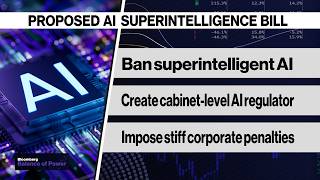
A Ban Built on an Undefined Word
The bill's core mechanism hinges on 'artificial superintelligence' - defined two ways: an AI system that matches or exceeds human cognitive performance across a broad range of domains, or one capable of planning and executing the disempowerment of humanity, including overthrowing the U.S. government[1]. That two-track definition is also the most contested part of the bill. Legal and technical critics note that superintelligence 'lacks a universally accepted technical definition,'[2]meaning severe felony-level enforcement would hinge on a threshold nobody can measure with certainty. AI researcher Gary Marcus, who broadly supports a pause and a new regulator, argues the permanent, unilateral ban itself is 'too broad'[3]and would foreclose legitimate research along with genuine risk. He points instead to a capability-gated alternative proposed by Anthony Aguirre, under which narrowly-scoped AI tools keep advancing while only systems combining greater intelligence, generality, and autonomy must clear a high-assurance alignment and oversight bar before development can continue[3].