Bernie Sanders bill to ban Flock AI surveillance cameras
TECH

Bernie Sanders bill to ban Flock AI surveillance cameras

26+
Signals

Strategic Overview

  • 01.
    Sen. Bernie Sanders (I-VT) pledged to soon introduce federal legislation banning Flock Safety's AI surveillance cameras and similar AI mass-surveillance systems, framing the technology as a step toward totalitarian-style tracking of citizens.
  • 02.
    As of late August 2026, no such bill had actually been introduced in Congress; Sanders and Rep. Anna Paulina Luna (R-FL) had only announced intentions to draft an outright ban, without a specified timeline.
  • 03.
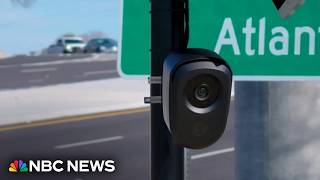
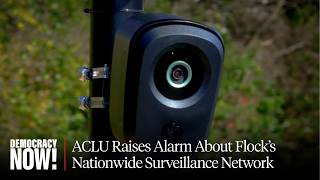
    Flock's cameras combine vehicle images with databases of phone numbers, relatives, and court records, allowing law enforcement to identify who a driver is, where they are going, and why.
  • 04.
    Facing mounting backlash, Flock announced platform changes in mid-August 2026, including cutting default data retention from 30 days to 7 days and requiring officers to log a case code before accessing data.

Deep Analysis

The Ban That's All Headline, No Bill Text

Nearly every headline this week promised a 'Bernie Sanders bill' to ban Flock cameras, but as of late August 2026 no such bill had actually been introduced in Congress [1]. What exists instead is a public pledge: Sanders told reporters, 'We must come together to stop Flock and AI mass surveillance. That is why I will soon be introducing legislation to do just that' [5], and framed the stakes explicitly around totalitarianism, warning that inaction risks the government coming to 'know, control and influence everything you do, say and even think' [2]. Rep. Anna Paulina Luna (R-FL) has separately signaled she is preparing her own bill to ban Flock outright, but neither lawmaker has specified a timeline [1].

This isn't the first attempt to rein in Flock through federal law, it's just the most sweeping one. Three narrower bills already sit in Congress: Rep. Tim Burchett's Protection Against Mass Surveillance Act would bar federal agencies from buying or deploying systems like Flock's and cut funding for state and local use; the PRIVACY Act from Reps. Self, Crane, and Clyde would require a warrant for federal access to local license-plate data and cap retention at 30 days; and Massie and Boebert's Surveillance Accountability Act would require probable cause before any ALPR or facial-recognition search [3]. None of them actually bans the technology itself, only the outright bans Sanders and Luna have promised would go that far, and those remain unwritten [1].
An Unlikely Left-Right Coalition Built on Shared Distrust

What makes this moment different from prior surveillance-reform pushes is who is standing next to Sanders. Sen. Josh Hawley (R-MO), who chairs the Senate Judiciary Subcommittee on Crime and Counterterrorism, has opened a formal investigation into Flock's data practices with a document deadline of September 8, 2026 [4]. Rep. Thomas Massie (R-KY) is preparing legislation to cut off federal funding to any agency that uses Flock-type cameras [2]. And on the ground, the pullback is happening in deep-red jurisdictions as readily as blue ones: Tempe and Cave Creek, Arizona both terminated their Flock contracts the same day in August 2026, part of at least nine or ten Arizona municipalities that have dropped or restricted the technology in the past year [5].

The coalition holds together because progressives and conservatives are, for once, worried about the same failure mode from different directions. Sanders casts Flock as a tool that lets a small group of AI companies hand government 'the power to track our every movement' [6]. Conservatives like Massie and Boebert have pushed nearly identical language for over a year, framing ALPR networks as warrantless dragnet surveillance [3]. Tempe Mayor Corey Woods, explaining his own city's decision to walk away from an $80,000 contract, put it in terms neither side would object to: 'the risk of misuse is too great. We have to be able to provide public safety in a way that maintains the trust of our community' [5].

Cities Are Already Voting With Their Feet, and Flock Is Reacting

Congress is moving slower than local government. Denver ended its Flock arrangement back in February 2026 amid privacy and immigration-enforcement concerns, and Amazon Ring has since discontinued its integration with Flock Safety following the broader backlash [7]. A recurring driver behind the municipal exodus is that local police departments have reportedly searched Flock's network for immigration-enforcement purposes even though Flock has no formal agreement with ICE, pushing city councils to reconsider contracts on those grounds specifically, not just general privacy concerns [7].

Facing that scale of defection, Flock has moved to defuse the backlash on its own terms rather than wait for legislation. Its mid-August 2026 changes, cutting default data retention from 30 days to 7 and requiring officers to log a case code before accessing footage, function as a form of self-regulation aimed at slowing the rate of cancellations [4]. Whether that satisfies city councils already inclined to walk away, or Congress members drafting outright bans, is a separate question from whether it addresses the underlying architecture that makes the network searchable at scale in the first place.

Banning a Company Doesn't Ban a Practice

A structural weakness runs through even the most aggressive proposals: most of the bills already in Congress regulate how ALPR data can be accessed, via warrants, retention caps, or funding conditions, rather than banning the underlying technology outright [3]. Only the Sanders and Luna proposals aim to prohibit Flock-style systems by name [1].

That distinction matters in practice, not just on paper. Automated license-plate-reader capability is not unique to Flock; competitors offer functionally identical products, meaning a city or a federal government that bans Flock specifically can simply switch vendors and keep scanning license plates at the same scale. The warrant-and-retention approach embodied in bills like the PRIVACY Act targets the practice itself, requiring judicial oversight regardless of which company built the camera, which is a structurally different fix than removing one brand name from the market [3].

The Data Behind the Backlash: Efficacy Claims vs. Accuracy Problems

Flock's case for its own necessity rests on scale and outcomes: the company operates 120,000-plus cameras across 6,000-plus communities in 49 states, scanning roughly 20 billion vehicles a month [2], and claims its network has assisted about 1 million police investigations and helped locate roughly 10,000 missing people in the past year [7]. That scale is precisely what has made Flock, alongside AI data centers, one of the defining flashpoints of the 2026 midterm cycle [8].

Set against those claimed benefits are accuracy and misuse figures that critics say undercut the safety argument. The ACLU reports Flock's technology misidentifies a license plate's state roughly 1 in 10 times, and that fewer than 1% of vehicles scanned are ever connected to any crime [9]. Separately, more than 50 law-enforcement officers have been accused, charged, or convicted of misusing ALPR data for non-police purposes, including cases of tracking former partners [4]. The gap between a network built to catch the rare car connected to a crime and one that photographs every car regardless is exactly the tension animating both the congressional bills and the municipal cancellations.

Historical Context

2025-04
Introduced the Surveillance Accountability Act, requiring warrants based on probable cause before ALPR or facial-recognition surveillance.
2025-07
Introduced the Protection Against Mass Surveillance Act, targeting federal use and funding of Flock-type systems.
2025-07
Introduced the PRIVACY Act, requiring warrants for federal access to local ALPR data and capping retention at 30 days.
2026-02
Ended its Flock camera arrangement amid privacy and immigration-enforcement concerns.
2026-02
Released model legislation aimed at restricting ALPR mass surveillance as part of its 'Get The Flock Out' campaign.
2026-08-13
Announced platform changes, including shorter data retention and mandatory case codes, amid mounting backlash over its license-plate-reader network.
2026-08-28
Both cities terminated their Flock contracts on the same day, part of a wider Arizona-wide pullback from the technology.

Power Map

Key Players
Subject

Bernie Sanders bill to ban Flock AI surveillance cameras

SE

Sen. Bernie Sanders (I-VT)

Lead sponsor of the planned outright federal ban on Flock and similar AI mass-surveillance systems, framing the issue around totalitarianism and civil liberties.

RE

Rep. Anna Paulina Luna (R-FL)

Republican co-traveler separately planning to introduce a bill banning Flock cameras outright, signaling bipartisan momentum against the technology.

FL

Flock Safety (CEO Garrett Langley)

Operates the 120,000+ camera ALPR/AI network across 6,000+ communities; defends the technology as a public-safety tool and has made policy concessions in response to backlash.

SE

Sen. Josh Hawley (R-MO)

Chairs the Senate Judiciary Subcommittee on Crime and Counterterrorism; opened a formal investigation into Flock's data practices with a document deadline of September 8, 2026.

RE

Rep. Thomas Massie (R-KY)

Plans legislation to cut off federal funding to agencies using Flock-type cameras; previously co-sponsored the Surveillance Accountability Act requiring warrants for ALPR/facial-recognition searches.

TE

Tempe & Cave Creek, Arizona (city governments)

Both terminated their Flock contracts on the same day in August 2026, part of at least nine to ten Arizona municipalities dropping or restricting the technology in the past year.

Fact Check

9 cited
  1. [1] There's not a single bill in Congress to outlaw flock-type spying
  2. [2] Bernie Sanders Vows Legislation to 'Stop Flock and AI Mass Surveillance'
  3. [3] Congress talks tough on Flock cameras, but no bill would ban them outright
  4. [4] Lawmakers introducing Flock bills left and right: What would each do?
  5. [5] Flock is going from the center of the surveillance debate to bipartisan target in record time
  6. [6] Sanders Vows to Introduce Legislation to Stop Flock's "AI Mass Surveillance"
  7. [7] Bernie Sanders Warns Americans Are Being Tracked by 120,000 AI Cameras
  8. [8] Flock cameras join data centers as a top AI boogeyman in 2026 midterms
  9. [9] Get The Flock Out

Source Articles

Top 1

THE SIGNAL.

Analysts

Argues AI camera networks like Flock's amount to a de facto surveillance state benefiting a small group of AI companies and risk normalizing totalitarian-style tracking of citizens' daily movements.

Bernie Sanders
U.S. Senator (I-VT)

Maintains the cameras do not use facial recognition and argues the public should accept tradeoffs between privacy and public-safety benefits such as solving crimes and finding missing people.

Garrett Langley
CEO, Flock Safety

Concluded the risk of Flock misuse outweighed public-safety benefits for the city, prompting contract termination.

Corey Woods
Mayor of Tempe, Arizona

Frames dropping Flock as a civil-liberties protection rather than a rejection of law-enforcement tools broadly.

Bobby Nichols
Tempe City Councilmember

Argues Flock's claim that it 'doesn't sell data' is misleading given how the network functions, and notes the cameras photograph every passing car rather than only suspects.

Chad Marlow
Senior Policy Counsel, ACLU
The Crowd

US Senator Bernie Sanders will soon introduce a bill to completely ban Flock cameras. If it passes, Flock and other AI mass surveillance systems will be banned in the US to protect people's privacy.

@@pubity42166

Flock Safety CEO Garrett Langley says Americans can't outright ban Flock cameras because they are 'for our safety' "I value my privacy, my family values their privacy, my employees value their privacy, but what we're talking about is safety as well" "So I think when people talk...

@@WallStreetApes10520

Breaking: Sen. Bernie Sanders will introduce a bill to completely ban Flock cameras If it passes, Flock cameras and other AI mass surveillance systems will be banned in the US

@@pelositracker5137

Bernie Sanders to Introduce Bill Banning Flock Surveillance Cameras

@u/Kooky-Balance952564000
Broadcast
Flock's A.I.-enabled street cameras see backlash across the country

Flock's A.I.-enabled street cameras see backlash across the country

Flock Cameras: ACLU Raises Alarm About Nationwide Surveillance Database

Flock Cameras: ACLU Raises Alarm About Nationwide Surveillance Database

'We will not be watched': Oconee County Council advances ban on Flock and surveillance cameras

'We will not be watched': Oconee County Council advances ban on Flock and surveillance cameras

Bernie Sanders bill to ban Flock AI surveillance cameras — AI News | Agentic Brew