NVIDIA Open-Sources Run:ai and AI Factory Infrastructure at OCP Summit
TECH

NVIDIA Open-Sources Run:ai and AI Factory Infrastructure at OCP Summit

34+
Signals

Strategic Overview

  • 01.
    NVIDIA released the complete Run:ai platform as open source on October 13, 2026 - KAI Scheduler, GPU Fractioning Operator, KAI Resource Management, and Workload Map - with no paid subscription or NVIDIA support entitlement required.
  • 02.
    KAI Scheduler specifically has been open source since April 2025 under the Apache 2.0 license as a CNCF Sandbox project, well before the full-platform release.
  • 03.
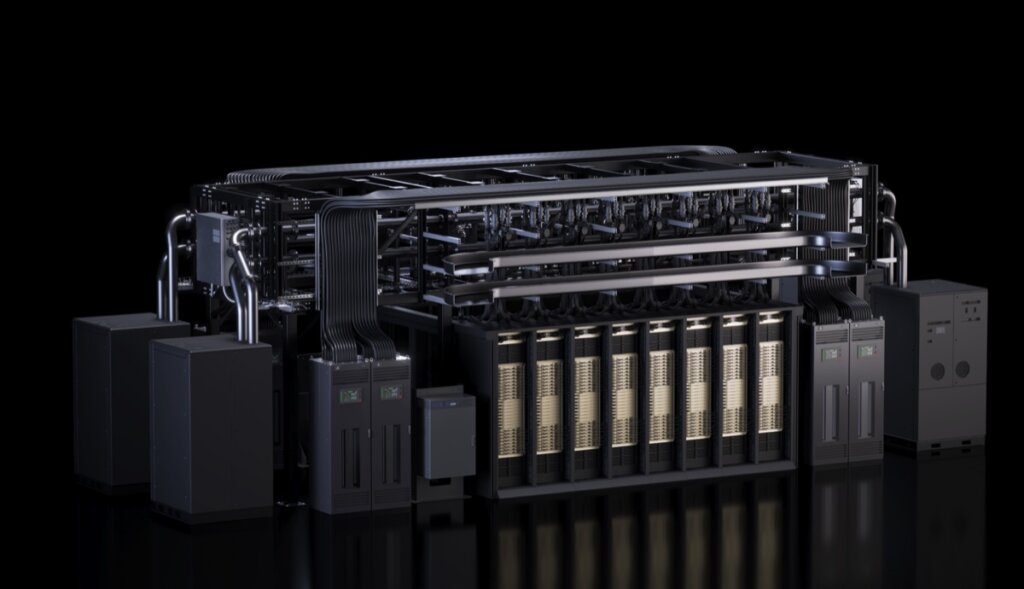
    At the OCP Global Summit in San Jose (October 12-13, 2026), NVIDIA separately contributed Vera Rubin rack and compute-tray designs to the Open Compute Project via MGX 1.2, alongside new networking and power partnerships with Meta, Google, Cisco, and Visionbay.
  • 04.
    Eight named NVIDIA DSX ecosystem partners - Crusoe, Mirantis, Nebius, OpenNebula Systems, Rafay, Saturn Cloud, Spectro Cloud, and vCluster - are integrating the open-sourced platform into their own offerings.

Deep Analysis

What's Actually New: From Partial to Full Open Source

KAI Scheduler, one of Run:ai's four components, has quietly been open source since April 2025 under Apache 2.0 as a CNCF Sandbox project [3]. What changed on October 13, 2026 is the release of the other three pieces as a single platform: the GPU Fractioning Operator, which replaces Run:ai's prior proprietary fractional-GPU code with CUDA 13.4-native fractioning enforced directly by the CUDA driver [2]; KAI Resource Management; and Workload Map, a standalone Go library that treats Kubernetes workload types like PyTorchJob and RayCluster as first-class objects without itself scheduling anything [2]. NVIDIA's own announcement confirms that no paid Run:ai subscription or NVIDIA support entitlement is required to use any of the newly open components [1].
The Strategy: Commoditize Orchestration, Monetize the GPU

The framing that best explains NVIDIA's motive is the idea of closing the scarce layer while opening the abundant one [4]: orchestration software is easy to replicate, so NVIDIA gives it away, while GPUs and paid enterprise support stay scarce and monetized. The competitive backdrop reinforces this - Run:ai's prior commercial list price ran about $2,600 per GPU per year, while free alternatives like Kueue already offered comparable quota-borrowing features, making the paid license increasingly hard to defend [5]. Giving away the code also lets cloud partners package and test it without licensing friction [5], while NVIDIA keeps the GPUs themselves, and paid enterprise support, as the layer it still monetizes [4]. The payoff for partners is already measurable: Nebius reports that fractional GPU allocation can deliver 77% of full-GPU throughput while supporting 86% of the concurrent users a dedicated allocation would, with co-located models pushing combined throughput past 350,000 tokens per second [3].

The Timing: Bundled With an Open-Hardware Push

NVIDIA didn't open-source Run:ai in isolation - it landed inside a broader hardware disclosure at the OCP Global Summit in San Jose on October 12-13, 2026, where NVIDIA contributed Vera Rubin rack and compute-tray designs to the Open Compute Project through the MGX 1.2 architecture, alongside new networking and power partnerships with Meta, Google, Cisco, and Visionbay [6]. NVIDIA framed the hardware side explicitly as a deployment-speed problem, stating the real bottleneck for the industry is how fast the world can manufacture and deploy AI factories [6]. NVIDIA also touted that its new Vera CPUs run roughly twice as fast as the prior Grace generation across several workloads, including a 1.8x gain on Terminal-Bench, a benchmark built around agentic tool-use tasks [6]. Pairing the software giveaway with open rack and networking specs - MGX 1.2's 250 kW racks, Cisco's USFP optics, Spectrum-6 switches - turns one week into a full-stack open-standards pitch rather than a single product announcement [7].

The Skeptical Read: A SchedMD-Shaped Shadow

Run:ai's own founders said at the time of NVIDIA's 2024 acquisition that they wanted the software eventually open-sourced to extend its reach beyond NVIDIA GPUs [9], and NVIDIA completed that acquisition in December 2024 after an eight-month regulatory review [10]. But the goodwill reading sits uneasily next to NVIDIA's separate December 2025 acquisition of SchedMD, maker of the Slurm scheduler used on an estimated 60% of the world's supercomputers [8]. Analysts quoted on that deal are explicitly wary of NVIDIA's expanding footprint across GPU scheduling software generally - one noted that Slurm's open-source foundation offers safeguards such as transparent code, forking ability, and community governance, while another warned that the skepticism that NVIDIA may prioritize its own hardware in future software updates is a feasible outcome [8]- a caution that applies just as easily to a newly-open Run:ai as it does to Slurm.

How the Industry Is Actually Reacting

The strongest external validation for NVIDIA's open-standards framing didn't come from NVIDIA at all - it came from AMD. In a keynote delivered at the same OCP Global Summit, AMD CEO Lisa Su argued that no single company has every answer and that pooling the best of multiple companies is how the industry moves faster, an argument for open collaboration that lines up with NVIDIA's own rationale for handing over Run:ai. NVIDIA's own framing of the stakes leans on efficiency economics rather than altruism: in material describing its DSX AI Factory platform, the company ties AI factory revenue directly to power efficiency, arguing that every unused watt is lost revenue. Grassroots reaction lagged behind the corporate messaging. In the announcement's first day, dedicated discussion of the OCP news stayed close to zero engagement on Reddit, and the only Run:ai-adjacent post to draw real comments was a KAI Scheduler how-to in r/kubernetes focused on a different use case than the announcement itself - a sign the practitioner audience most likely to actually deploy these tools hadn't caught up with the news yet.

Historical Context

2018
Founded in Israel by Omri Geller and Dr. Ronen Dar to build GPU-allocation and orchestration software for AI workloads.
2024-12-30
NVIDIA completed its acquisition of Run:ai after an eight-month US/EU regulatory review; founders said at the time they planned to eventually open-source the software to extend its reach beyond NVIDIA's own GPUs.
2025-04
KAI Scheduler, one of the four Run:ai components, was first open-sourced under Apache 2.0 and became a CNCF Sandbox project, well before the October 2026 full-platform release.
2025-12
NVIDIA separately acquired SchedMD, maker of the Slurm workload manager used on roughly 60% of the world's supercomputers, raising industry concern about NVIDIA's expanding control over GPU and HPC scheduling software broadly.
2026-10-12
At the OCP Global Summit in San Jose, NVIDIA contributed Vera Rubin rack and compute-tray designs to the Open Compute Project via MGX 1.2, and announced networking and power partnerships with Meta, Google, Cisco, and Visionbay.
2026-10-13
NVIDIA announced the full open-sourcing of the Run:ai platform (KAI Scheduler, GPU Fractioning Operator, KAI Resource Management, Workload Map) as part of the DSX AI Factory Platform, roughly two years after acquiring the company.

Power Map

Key Players
Subject

NVIDIA Open-Sources Run:ai and AI Factory Infrastructure at OCP Summit

NV

NVIDIA

Open-sourced the full Run:ai platform and contributed MGX 1.2 / Vera Rubin rack designs to OCP

NE

Nebius

Launch partner offering open-source Run:ai as a one-click application on Nebius AI Cloud / Managed Service for Kubernetes

LA

Lambda

Making open-source Run:ai a first-class managed scheduler option on Lambda Kubernetes Service, after supporting customer-deployed Run:ai since 2022

CR

Crusoe

Integrating Run:ai with Crusoe Managed Kubernetes, pairing GPU orchestration with managed Kubernetes and GPU infrastructure

MI

Mirantis, OpenNebula Systems, Rafay, Saturn Cloud, Spectro Cloud, vCluster

Additional NVIDIA DSX ecosystem partners integrating open-source Run:ai into their own cloud and Kubernetes platforms

ME

Meta, Google, Cisco

Networking partners named in NVIDIA's OCP 2026 announcements - Spectrum-6 adoption, Falcon Transport integration, and joint USFP optics development

Fact Check

10 cited
  1. [1] NVIDIA Run:ai Is Now Open Source as Part of NVIDIA DSX AI Factory Platform
  2. [2] NVIDIA Open Sources Full Run:ai Platform for GPU Orchestration
  3. [3] NVIDIA Run:ai Open Source: Nebius Applications
  4. [4] AI: NVIDIA Makes Its Full Run:ai GPU Platform Free, Open Source
  5. [5] Lambda Readies Open-Source Run:ai Scheduler for Kubernetes Service
  6. [6] NVIDIA Tackles AI Factory Scaling Bottlenecks With Open Rack Designs and Networking Advances
  7. [7] NVIDIA at OCP 2026: Vera Rubin, MGX 1.2, Spectrum-6, USFP
  8. [8] NVIDIA's SchedMD Acquisition Puts Open-Source AI Scheduling Under Scrutiny
  9. [9] Run:ai Founders on NVIDIA's Acquisition and Open-Source Plans
  10. [10] NVIDIA Completes Acquisition of AI Infrastructure Startup Run:ai

Source Articles

Top 5

THE SIGNAL.

Analysts

“Commenting on NVIDIA's separate SchedMD/Slurm acquisition, notes that open-source governance is a safeguard against vendor favoritism - relevant to how NVIDIA's expanding footprint across GPU scheduling (Run:ai plus Slurm) is being watched by the market.”

Manish Rawat, semiconductor analyst, TechNewsInsights
Cautious on NVIDIA's growing control of open-source scheduling software

“Warns that NVIDIA bringing leading Slurm developers in-house could make independent, community-led forks hard to sustain even when the code is nominally open.”

Dr. Danish Faruqui, CEO, Fab Economics
Skeptical that NVIDIA's open-source commitments fully neutralize vendor-lock-in risk

“Describes the move as commoditizing the orchestration software around NVIDIA's GPUs while keeping the GPUs and paid enterprise support as the proprietary, monetized layer.”

Gennaro Cuofano, FourWeekMBA
Frames the Run:ai open-sourcing as deliberate platform strategy, not altruism
The Crowd

“Today, we’re open sourcing the full NVIDIA Run:ai platform as part of the NVIDIA DSX AI Factory Platform. Developers, platform teams, and partners can build on production-grade AI workloads and GPU orchestration to improve GPU utilization, increase workload throughput, and bring”

@@NVIDIAAIInfra273

“NVIDIA just open-sourced the complete NVIDIA Run:ai platform. One-click deployment, live now in Nebius AI Cloud Applications.”

@@nebiusai92

“A layer you can’t inspect is a layer you can’t predict, automate or recover when it fails. That’s why full-stack control matters for anyone operating an AI factory. Mirantis k0rdent AI delivers it through a composable platform that integrates components of NVIDIA DSX OS™, the”

@@MirantisIT138

“OCP Global Summit: Amid Ecosystem Adoption, NVIDIA Opens Vera Rubin Architecture to Help Scale AI Factories Worldwide”

@u/NewMaxx1
Broadcast
How AI Factories Maximize Tokens, Power, and Profit With NVIDIA DSX

How AI Factories Maximize Tokens, Power, and Profit With NVIDIA DSX

Building the Next Era of AI Infrastructure

Building the Next Era of AI Infrastructure

NVIDIA Just Made AI Easier For EVERYONE! Run:ai Open Source Explained

NVIDIA Just Made AI Easier For EVERYONE! Run:ai Open Source Explained

NVIDIA Open-Sources Run:ai and AI Factory Infrastructure at OCP Summit — AI News | Agentic Brew