Public and political backlash against AI data center expansion
TECH

Public and political backlash against AI data center expansion

34+
Signals

Strategic Overview

  • 01.
    President Trump defended AI data center expansion in an interview, saying communities that reject them are making a mistake because they bring jobs and tax revenue.
  • 02.
    A spring 2026 Gallup poll found 71% of Americans oppose data center construction in their community, including 63% of Republicans, 75% of Democrats and 74% of independents.
  • 03.
    A planned 600MW datacentre in Auchtertool, Fife, Scotland has drawn 1,600 objections, more than the village's population, prompting the local MSP to call it the largest planning objection he has seen in 25 years in politics.
  • 04.
    Local opposition helped delay or cancel $156 billion in AI data center projects in 2025, and in the first three months of 2026 alone another 75 projects worth $130 billion were blocked or delayed, matching the entire prior year's pace.

Deep Analysis

The GOP's About-Face

Six months ago, Republican officials were among the loudest boosters of AI data center buildout. Now some are its sharpest critics. Ohio Sen. Jon Husted, once a promoter of the industry, has introduced legislation to shield ratepayers from data center-driven electricity costs as voters turn against data centers ahead of the midterms [1]. Texas Gov. Greg Abbott went further, saying data center companies deserve the backlash they are facing, even as his state paused new projects pending a grid reliability audit [2]. The reversal tracks internal GOP polling showing broad opposition to new data centers, with self-identified Republicans opposing them by wide margins too [3]. Sens. Josh Hawley and Richard Blumenthal, an unlikely bipartisan pair, introduced the GRID Act, which would force new data centers onto their own power sources and require existing ones to migrate off the shared grid within a decade [4]. Hawley has framed the buildout in explicitly anti-monopoly terms: "We are watching a handful of companies assemble a concentration of capital, information, and political power without precedent in the American experience" [5]. On the left, Bernie Sanders and Alexandria Ocasio-Cortez have gone further still, proposing a federal ban on new data centers exceeding 20 megawatts until Congress passes comprehensive AI regulation [6]. Brookings now counts data centers as a top issue for the 2026 midterms, with candidates in both parties running ads against them [3].

Trump's Bet Against the Polls

President Trump has held to one message throughout the backlash: communities that reject data centers are making a mistake, since there's plenty of communities that want them for the jobs and tax revenue they bring [7]. In an August interview he doubled down, arguing the smart ones want data centers and that opposition amounts to short-sightedness [8]. That framing runs directly against the polling: a spring 2026 Gallup survey found 71% of Americans oppose data center construction in their community, more than the 53% who oppose a nuclear plant nearby, and majorities of Republicans (63%), Democrats (75%) and independents (74%) all land in opposition [8]. Not every Republican official is following Trump's unconditional line: in an ABC News segment, Sen. Dave McCormick (R-PA) called for a formal covenant between developers and communities that would protect jobs, water access and energy costs, a middle path distinct from Trump's blanket defense. Meanwhile, the industry is trying to buy itself political insurance: the pro-AI Leading the Future super PAC has raised $140 million, including $50 million each from Andreessen Horowitz and OpenAI president Greg Brockman, to back candidates favorable to buildout [5].

The Economics Don't Match the Sales Pitch

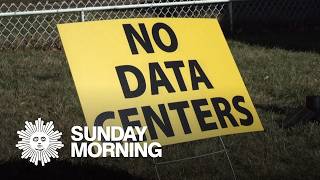
The financial stakes of the backlash are already visible in the market: local opposition helped delay or cancel $156 billion in data center projects in 2025, and in just the first three months of 2026 another 75 projects worth $130 billion were blocked or delayed, matching the entire prior year's pace [9]. The jobs argument that boosters lean on is weaker than advertised, too - Brookings' own analysis found a typical data center creates just 100-200 local jobs depending on facility type, with local wages unchanged while home prices in host counties rise 2-5% [10]. On electricity costs, the industry's central promise - that residents won't foot the bill - relies on Trump's Ratepayer Protection Pledge, under which tech companies commit to covering their own power costs. The White House says the pledge now covers 80% of power delivered to U.S. homes and businesses, protecting 263 million Americans, with more than 200 additional utilities, developers and states signed on [11]. But Brookings notes the pledge carries no enforcement mechanism, and the same signatory companies are simultaneously fighting state-level efforts to make that commitment legally binding [12]. That gap between promise and practice is fueling the loudest anger on the ground: ABC News reported that residents in Granbury, Texas filed recall petitions against local officials after land was annexed for a data center, and CBS Sunday Morning profiled Archbald, Pennsylvania, a town of 7,000 facing a half-dozen proposed data center campuses, where local leaders cite deforestation, rising electric bills and the loss of small-town character. A parallel worry is surfacing in federal rulemaking: a New York Times report, discussed widely on Reddit, described a proposal that would make air-pollution disclosure for data center construction voluntary rather than mandatory, which critics say could let permits advance before residents learn about or object to a project.

Scotland's Parallel Revolt

The backlash isn't confined to the US. In Auchtertool, a village in Fife, Scotland, a proposed 600-megawatt datacentre has drawn 1,600 formal objections - more than the village's entire population - prompting the local MSP to say he has never seen this level of objection to a local plan in 25 years in politics [13]. That local uprising helped push the SNP's National Council to back a motion in July 2026 supporting a moratorium on new hyperscale datacentre development nationwide [14]. Yet the UK's grid operator is still actively recruiting developers to the country: NESO chief executive Fintan Slye told an industry audience that if they have a big datacentre and want to go to Scotland, to come talk to him and his team will help [13]- a split between grid planners chasing investment and communities trying to block it that mirrors the US pattern. The same tension is playing out state by state in America: New York's governor issued a statewide moratorium via executive order in July 2026, and Texas paused new projects pending a grid audit in August [9], while Pennsylvania has imposed restrictions, including a moratorium on hyperscaler data centers [2], producing a patchwork of restrictions with no single federal standard.

Historical Context

2024-06-12
Unanimously denied a data center proposal, an early sign of local resistance
2025-05
Voted 4-1 to remove a data center zoning amendment
2026-04-08
Voters approved the first ballot referendum limiting data centers
2026-07
Backed a motion supporting a moratorium on new hyperscale datacentre developments after the Auchtertool, Fife proposal drew 1,600 objections
2026-07-14
Governor issued a statewide data center construction moratorium via executive order
2026-08-10
Governor Greg Abbott announced a pause on new data center projects pending a grid reliability audit
2026-08-19
Warned AI companies internally that data centers are politically radioactive ahead of the midterms
2026-08-24
Defended AI data center buildout in an interview, said opposing communities are making a mistake and the smart ones want them

Power Map

Key Players
Subject

Public and political backlash against AI data center expansion

PR

President Donald Trump

Defends data center buildout unconditionally, calls opposing communities mistaken, touts jobs, tax revenue and privately-built power plants

GO

Gov. Greg Abbott (R-Texas)

Paused new data center projects pending a grid reliability audit and said companies deserve the backlash they are facing

SE

Sen. Jon Husted (R-Ohio)

Former data center booster now introducing ratepayer-protection legislation as voters turn against data centers ahead of the midterms

SE

Sens. Josh Hawley (R-Mo.) and Richard Blumenthal (D-Conn.)

Co-sponsored the GRID Act requiring new data centers to source their own power and existing ones to migrate off the shared grid within 10 years

SN

SNP National Council

Passed a July 2026 motion backing a moratorium on new hyperscale datacentre developments in Scotland

AM

Amazon, Google, Meta, Microsoft, OpenAI, Oracle, xAI

Signed the Ratepayer Protection Pledge committing to fund their own power infrastructure rather than pass costs to consumers

Fact Check

14 cited
  1. [1] Republicans Scramble to Remake Their Stance on Data Centers
  2. [2] Trump Discusses Data Center Backlash in Wide-Ranging Interview
  3. [3] Why Data Centers Are a Top Issue in the 2026 Midterms
  4. [4] Republicans Turn on Data Centers After GOP Warns of Election Risk
  5. [5] Data Center Backlash Signals a Fight Over AI Power
  6. [6] Bernie Sanders and AOC Introduce Bill to Ban New Data Centers Over 20 Megawatts
  7. [7] Trump Defends AI Data Center Buildout Amid Pushback
  8. [8] Trump Defends AI Data Centers, Says Opposing Them Is A 'Mistake' And 'Smart Ones' Want Them
  9. [9] Opposition to AI Data Centers
  10. [10] New Evidence on Data Center Employment Effects
  11. [11] White House Expands Pledge to Keep Electric Bills Under Control Amid Data Center Boom
  12. [12] The Pledge to Protect Ratepayers From AI Data Center Costs Needs Enforcement
  13. [13] 'Never Seen This Level of Objection': Scotland Pushes Back Against Datacentre Boom
  14. [14] Data Centre Opponents Say Huge Public Support for a Moratorium

Source Articles

Top 5

THE SIGNAL.

Analysts

Frames data center expansion as part of a broader concern about a handful of companies amassing unprecedented capital and political power

Sen. Josh Hawley (R-Mo.)
Warns of unprecedented corporate power concentration tied to AI infrastructure buildout

Argues data center-driven consolidation of tech power threatens democracy and the economy

Sen. Elizabeth Warren (D-Mass.)
Criticizes big tech's economic and political power

The UK grid operator wants to steer developers toward Scotland even as local opposition to specific proposals grows

Fintan Slye, CEO of NESO (UK)
Encourages datacentre developers to bring projects to Scotland

Cites Northern Virginia as a cautionary example of siting data centers directly adjacent to homes

Rep. Byron Donalds (R-Fla.)
Warns against siting data centers too close to residential areas
The Crowd

Trump: "If I were the mayor of a town or the governor or a state, and I had a chance to get a big data center, I would absolutely want it"

@@atrupar599

It's no wonder they want to bring in legislation to stop you questioning Net Zero…. Because there are a lot of questions This is Scotland, absolutely dedicated to Net Zero at almost any cost but erm … really? 23 hyperscale data centres in the pipeline, including this

@@Artemisfornow2356

Trump says communities rejecting data centers are 'making a mistake,' but 61% of U.S. adults—including 54% of Republicans—oppose new local projects. implicator.ai/trump-data-cen

@@MarcusSchuler0

'I've Never Seen This': Massive Collapse in Support for AI Data Centers Captured in New Poll

@u/DukeOfGeek8900
Broadcast
Why communities are revolting against data centers

Why communities are revolting against data centers

Resistance grows nationwide against AI data center boom

Resistance grows nationwide against AI data center boom

Backlash growing against AI data centers

Backlash growing against AI data centers