OpenAI and Anthropic Enterprise Data Retention Policy Changes
TECH

OpenAI and Anthropic Enterprise Data Retention Policy Changes

34+
Signals

Strategic Overview

  • 01.
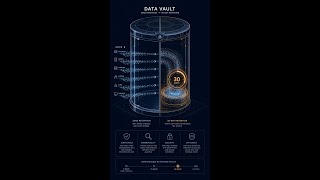
    Anthropic will still require enterprise customers to retain data for 30 days on its frontier models, but will now let them store that data on their own cloud infrastructure instead of Anthropic's servers.
  • 02.
    The revision follows Anthropic's June 9 policy that mandated 30-day retention across Claude Fable 5, Claude Mythos 5 and future frontier models with no opt-outs, voiding prior zero-data-retention agreements customers had already signed.
  • 03.
    Anthropic coordinated the revised, customer-hosted storage approach with more than 100 enterprise customers, including Salesforce.
  • 04.
    OpenAI announced it is testing 'Private Safety Processing,' a system that analyzes patterns across a customer's related interactions for signs of misuse while preserving Zero Data Retention, so customer content is never exposed to OpenAI personnel.
  • 05.
    OpenAI is testing Private Safety Processing with early customers including Databricks and Microsoft, and plans a broader rollout with a technical white paper in September 2026.

Deep Analysis

Two Fixes for One Trust Problem: Storage Location vs Architecture

On August 20, 2026, Bloomberg reported that Anthropic will revise the mandatory 30-day retention policy it imposed on enterprise customers in June, letting them store that required data on their own cloud infrastructure instead of Anthropic's servers [1]. The retention window itself does not shrink - Anthropic still requires 30 days of retention for Claude Fable 5, Claude Mythos 5 and future frontier models [5]. What changes is custody, not duration: Anthropic isn't retreating from retention-for-safety, it's changing who holds the data. Anthropic coordinated the shift with more than 100 enterprise customers, including Salesforce, before finalizing it [2].

That announcement landed one day after OpenAI took a structurally different route. OpenAI's August 19 move keeps Zero Data Retention in place for frontier models and layers on 'Private Safety Processing,' a system that inspects patterns across a customer's related interactions for signs of misuse without exposing the underlying prompts or responses to OpenAI staff [3]. Where OpenAI does offer storage, content is encrypted with keys the customer controls, so OpenAI personnel cannot read it even if they wanted to [4]. Anthropic's fix is custodial - keep the data, but move where it sits. OpenAI's fix is architectural - stop keeping readable data at all, and detect abuse through pattern signals instead. Both target the same enterprise buyer, but only one actually reduces what the vendor itself can see.

Karp's Sovereignty Broadside and the Bill Anthropic Couldn't Ignore

The policy Anthropic is now walking back was itself a hard line. On June 9, Anthropic announced mandatory 30-day retention of all enterprise traffic on its frontier models, with no opt-outs regardless of prior contracts, voiding zero-data-retention agreements customers had already signed [5]. Microsoft responded by restricting employee use of Claude Fable 5 internally while its legal team evaluated the change [5]- a concrete sign that a major partner, not just a vocal critic, treated the policy as a real business risk.

The louder public pressure came from Palantir CEO Alex Karp, who spent early July arguing that OpenAI and Anthropic's token-based pricing model was quietly transferring control of enterprise data, models, and compute to the labs themselves [6]. 'What aligns me with Nvidia, and I think is what the technical customers want, which is control over their compute, their models, their data stack and their alpha. They want to know they own the means of production. It's not being transferred to someone else,' Karp said, framing data custody as a matter of sovereignty rather than a checkbox [7]. Anthropic's internal reasoning validated the concern: the company itself acknowledged the original policy would 'be unpopular with customers who have come to expect zero retention, and pose real risks to our business success (especially if competitors do not follow)' [8]. Weeks after Karp's manifesto, OpenAI didn't follow Anthropic's line - and Anthropic's reversal followed soon after.

The Skepticism Neither Company Has Fully Answered

Not everyone is reading Anthropic's reversal as a pure privacy win. The most-discussed alternate theory is that Anthropic's real motivation is cost, not customer trust: letting enterprises host the required 30 days of data on their own infrastructure also gets it off Anthropic's own cloud bill. Whether or not that's the full story, it points to a real gap in Anthropic's announcement - the company has not detailed independent verification that it stays hands-off customer-hosted data once it no longer physically holds it.

A parallel gap exists on OpenAI's side. Private Safety Processing is designed to flag misuse across a customer's related interactions without OpenAI staff reading the content [3]- but that also means customers have no direct way to audit why a signal fired, or to confirm the detection logic behaves as described, since the underlying prompts stay unreadable by design. And even under Anthropic's original policy, content flagged by trust-and-safety classifiers could be retained far longer than the standard 30 days [3], which cuts against the idea that shorter, tighter retention is unambiguously safer - flagged conversations, the ones most likely to be sensitive, are exactly the ones held longest. Social reaction split along similar lines. On X, OpenAI's official account and Sam Altman's own post about continuing Zero Data Retention while previewing Private Safety Processing drove the strongest engagement of any post on the topic, framing the move as a business-privacy commitment - a Bloomberg post covering Anthropic's parallel change drew comparatively lower engagement by contrast. YouTube commentary sharpened that divide: one widely-viewed video argued OpenAI's retention posture matters because it affects users' ability to control deletion of their own data, while a separate, lower-view video walked through the mechanics of Anthropic's June 9 mandatory 30-day retention for Mythos-class models (Claude Mythos 5, Fable 5) across Console, Bedrock, Google Cloud, and Azure.

The Regulatory Backdrop and What's Actually at Stake

Behind both announcements sits genuine compliance exposure. Anthropic's original no-opt-out retention mandate, applied uniformly across jurisdictions, raised the prospect of scrutiny under GDPR's data-minimization principle, particularly for regulated industries like healthcare, finance, and legal [5]. That is the practical reason 'store it yourself' matters even though it does not reduce total retention: many enterprise compliance regimes care less about whether data is retained somewhere and more about who controls access to it and under which legal jurisdiction it sits.

The stakes are sized by the money now riding on enterprise trust. Anthropic's reported annualized revenue run rate has reached roughly $65 billion [9], and both labs are treating privacy architecture as a competitive lever for that same enterprise budget rather than a settled legal requirement. OpenAI's plan to publish a technical white paper on Private Safety Processing in September will be the first real test of whether 'trust us, we can't see it' survives contact with enterprise security teams used to auditing what they cannot see for themselves.

Historical Context

2026-06-09
Announced mandatory 30-day data retention for Claude Fable 5 and Claude Mythos 5 (and future frontier models), with no opt-outs, voiding prior zero-data-retention agreements.
2026-06-10
Limited employee use of Claude Fable 5 while its legal teams evaluated Anthropic's new data retention requirements.
2026-07-01
Karp publicly criticized OpenAI and Anthropic's token pricing and data practices, publishing an AI sovereignty manifesto.
2026-08-19
Announced Private Safety Processing, previewing it to select early customers including Databricks and Microsoft while maintaining Zero Data Retention for frontier models.
2026-08-20
Reported to be revising its June retention policy to let enterprise customers store the required 30 days of data on their own cloud infrastructure, after coordinating with more than 100 customers including Salesforce.

Power Map

Key Players
Subject

OpenAI and Anthropic Enterprise Data Retention Policy Changes

AN

Anthropic

AI lab revising enterprise data retention policy for Claude Fable 5 / Mythos 5 models to allow customer-hosted storage

OP

OpenAI

AI lab offering Zero Data Retention plus a new Private Safety Processing misuse-detection system for frontier models

SA

Salesforce

One of 100+ enterprise customers Anthropic coordinated with on the new customer-hosted storage option

MI

Microsoft

Major enterprise customer that restricted internal use of Claude Fable 5 over retention concerns and is an early tester of OpenAI's Private Safety Processing

DA

Databricks

Early enterprise tester of OpenAI's Private Safety Processing

AL

Alex Karp / Palantir

Palantir CEO who publicly criticized OpenAI and Anthropic's token-based pricing and data practices, pushing an 'AI sovereignty' stance urging companies to retain control of their own data, models, and compute

Fact Check

9 cited
  1. [1] Anthropic Plans to Change Data Retention Policy for Advanced AI
  2. [2] Anthropic Plans to Change Enterprise Data Retention Policy
  3. [3] OpenAI Chases Anthropic's Biz Customers With Zero Data Retention Pledge
  4. [4] OpenAI Unveils Private Safety Processing
  5. [5] Anthropic Data Retention Policy for Frontier AI
  6. [6] Palantir CEO Alex Karp Criticizes OpenAI, Anthropic Token Pricing
  7. [7] Palantir CEO Alex Karp Criticizes OpenAI and Anthropic
  8. [8] Anthropic's 30-Day Data Policy Exposes Enterprise AI Governance Gaps
  9. [9] OpenAI Seeks to One-Up Anthropic With New Customer Privacy Protections

Source Articles

Top 5

THE SIGNAL.

Analysts

Criticized the token-based pricing model used by OpenAI and Anthropic, arguing enterprise customers were burning money for little value and risking exposure of proprietary data; pushed an 'AI sovereignty' manifesto urging companies to retain ownership of their data, models, compute, and competitive edge.

Alex Karp
CEO, Palantir

Framed data, compute, and model control as central to what technical enterprise customers actually want, contrasting Palantir and Nvidia's approach with the major AI labs.

Alex Karp
CEO, Palantir
The Crowd

We will continue to offer Zero Data Retention for frontier models. As AI takes on longer, more autonomous work and delivers greater value to businesses, safety systems also need to identify risks across related interactions. To help address those risks, we're previewing Private Safety Processing, which is designed to improve safety without giving OpenAI personnel access to the underlying content.

@@OpenAI4262

we support business privacy! Offering Zero Data Retention for frontier models

@@sama4369

Anthropic Plans to Change Data Retention Policy for Advanced AI

@@business158

Both Anthropic and OpenAI are making changes to their data retention policies

@u/TorturedPoet3057
Broadcast
OpenAI's privacy disaster (it isn't their fault)

OpenAI's privacy disaster (it isn't their fault)

Anthropic ends zero data retention for Claude Mythos & Fable 5 #Shorts

Anthropic ends zero data retention for Claude Mythos & Fable 5 #Shorts

The Secure Way to Code With AI Agents (Zero-Data Retention)

The Secure Way to Code With AI Agents (Zero-Data Retention)

OpenAI and Anthropic Enterprise Data Retention Policy Changes — AI News | Agentic Brew