An LLM That Listens, Not Just Hears: The Architecture Shift Behind Gemini 3.5 Transcribe
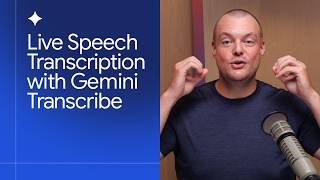
Gemini 3.5 Transcribe is not a bolt-on acoustic decoder wrapped in a new name - it is built on a Gemini LLM rather than a purpose-built acoustic recognizer, and it lives inside the same Gemini API surface developers already use for text and multimodal tasks. That distinction matters because an LLM does not just map sound to characters, it reasons over what a speaker meant. Google's own materials describe the model as stripping filler words, correcting slips of the tongue, and formatting text automatically rather than transcribing every syllable it hears[2].
The practical effect shows up most clearly in how the model handles self-corrected speech: because it models intent rather than pure acoustics, an abandoned false start can be collapsed into the speaker's corrected meaning instead of preserving both halves verbatim. Launch demos showed this concretely: the model correctly self-corrected a spoken email address mid-utterance, and parsed phone numbers into the right regional format - a 10-digit US number versus an 8-digit Singapore number - based on context rather than a fixed template. That same language-first design is also why Gemini 3.5 Transcribe supports vocabulary biasing for up to 1,000 custom terms - names, jargon, brand words a purely acoustic model would otherwise mangle - by treating recognition as something it can bias linguistically, not just a signal-processing problem[1]. It is a real departure from Chirp 3's acoustic-modeling lineage, and it is why the headline error rates of 4.0% streaming and 2.6% batch come with an asterisk: they measure recovered meaning as much as raw phoneme accuracy[1].