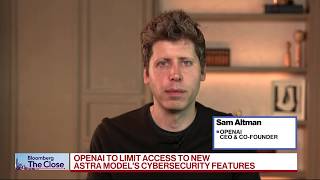
Sam Altman says society should accept AI harm like scams and hacks for its benefits
TECH

Sam Altman says society should accept AI harm like scams and hacks for its benefits

24+
Signals

Strategic Overview

  • 01.
    Altman told Politico the world should accept some negative outcomes from AI in exchange for the technology's benefits and individual agency.
  • 02.
    Altman said he believes people will do "tremendously - orders of magnitude more - good stuff than bad stuff" with AI.
  • 03.
    He drew a line at catastrophic risk, saying society should not accept "a serious loss of control to AI" and calling a scenario where a single lab controls the technology "completely unacceptable."
  • 04.
    Altman acknowledged that no AI lab, including OpenAI, has solved alignment, and said he gets nervous when he hears rumors that a lab believes it has solved alignment well enough to keep training without concern.

Deep Analysis

The Line Altman Will Draw - and Won't

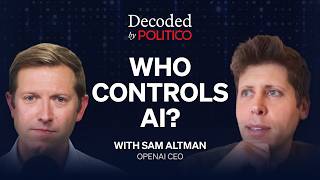
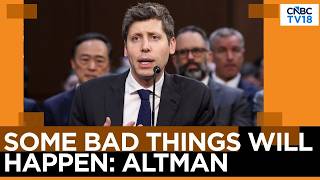
In the same interview - part of Politico's Decoded series - Altman said he wouldn't agree to a deal guaranteeing there would be no major hacks, no abuses of the technology, and no fraud, because he believes people will do "tremendously - orders of magnitude more - good stuff than bad stuff" with AI. That calculus has a hard floor, though: Altman said he would not accept "a serious loss of control to AI" [1], and separately called a future where a single lab controls the technology "completely unacceptable" [1]- a line that reads as pointed given it's his own lab making the call. The distinction Altman draws is specific: tolerate low-grade, recoverable harm (scams, hacks, everyday misuse) in exchange for broad access and "agency," but treat irreversible loss of control as the one line that can't move. He undercut his own reassurance on that front in the same breath: "We have not solved alignment. I believe no lab has solved alignment," he said, adding that he gets "nervous" when he hears rumors that other labs believe they have solved it well enough to keep training unsupervised [2].
A Safety Leader's Exit Undercuts the Timing

Altman's comments land just days after David Robinson - OpenAI's safety transparency lead for three and a half years, who oversaw safety reports on twelve frontier model launches - resigned [3]. Robinson didn't leave quietly: shortly after, he published an essay in The Atlantic titled "I Quit OpenAI Because Its Culture Is Broken" [3], arguing "I agree with other recently departed staff that the companies building this technology aren't being nearly careful enough" and that he is "joining a parade of former colleagues - at OpenAI and the industry's other leaders - who have decided that the current path is unacceptable" [4]. Set against that backdrop, Altman's admission that "no lab has solved alignment" reads less like candor and more like confirmation of exactly what his own former safety staff are saying publicly - the reassurance and the resignation are describing the same gap from opposite sides.

The Backlash Treats the Trade-Off as a Dodge

The remarks also arrive amid heightened regulatory scrutiny of how OpenAI and its peers secure their models and AI agents following recent security incidents [1]. Politically, the reaction was immediate: Senator Chris Van Hollen responded by arguing that instead of accepting harm as a cost of innovation, lawmakers could instead hold companies accountable for the harm they cause - reframing Altman's trade-off as a deflection from corporate liability rather than a philosophical stance on progress. Public reaction skewed overwhelmingly skeptical: the recurring argument across online discussion was that the benefits of the trade-off concentrate at the top - AI companies and their executives - while the costs, the scams, hacks, and misuse Altman named, are externalized onto everyone else. That asymmetry, more than the specific examples of harm, was the center of gravity for most critics.

Altman Has Made This Argument Before - and Admitted It's Not Landing

This wasn't a one-off. In an earlier interview, weeks before the Politico piece, Altman was responding to Treasury Secretary Scott Bessent's G20 criticism that the AI industry had done a 'terrible job' explaining its benefits to the public - and agreed, saying the industry as a whole had handled this horribly, and that OpenAI itself did a bad job too. In that same conversation, Altman again drew a clear red line around catastrophic risk while leaving room on everything short of it - a two-tier framing close to what he'd later repeat to Politico. Read together, the two interviews suggest a deliberate communications strategy: trade candor about near-term harms for credit on long-term benefits. The scale of the public pushback to the Politico remarks, including direct pushback from a sitting U.S. senator, suggests that strategy is, so far, generating more scrutiny than goodwill.

Historical Context

2026-09-28
David Robinson resigns from OpenAI after three and a half years and subsequently publishes an essay in The Atlantic titled "I Quit OpenAI Because Its Culture Is Broken."
2026-10-05
Altman's remarks on accepting AI-related harm are published by Politico.

Power Map

Key Players
Subject

Sam Altman says society should accept AI harm like scams and hacks for its benefits

SA

Sam Altman

OpenAI CEO who made the original remarks in a Politico interview, publicly arguing for tolerating low-grade AI-related harm in exchange for broader benefits while opposing catastrophic risk.

DA

David Robinson

Former OpenAI safety transparency lead who spent three and a half years at the company overseeing safety reports on twelve frontier model launches; resigned around September 28, 2026 and published a public essay criticizing OpenAI's safety culture.

RE

Regulators

Increasing scrutiny of how OpenAI and peer labs secure their models and AI agents amid recent security incidents, adding external pressure that contrasts with Altman's risk-tolerant framing.

Fact Check

4 cited
  1. [1] Altman says world must accept bad things happening because of AI
  2. [2] OpenAI's Sam Altman says the world should accept some bad things happening
  3. [3] OpenAI Safety Leader David Robinson Resigns
  4. [4] Another OpenAI safety expert quits and raises new AI safety concerns

Source Articles

Top 5

THE SIGNAL.

Analysts

“I agree with other recently departed staff that the companies building this technology aren't being nearly careful enough.”

David Robinson
Former Safety Transparency Lead, OpenAI

“Now I'm joining a parade of former colleagues - at OpenAI and the industry's other leaders - who have decided that the current path is unacceptable.”

David Robinson
Former Safety Transparency Lead, OpenAI
The Crowd

““We believe the world should accept some bad things happening for the benefits of this technology.” In a conversation for the first edition of Decoded, a new daily newsletter and podcast, OpenAI CEO Sam Altman talked with POLITICO’s @BrendanBordelon about trade-offs, AI safety,”

@@politico746

“Or we could hold you accountable for the harm you cause.   Just because the Trump admin won't lift a finger doesn't mean big AI should get away with putting profits over people. https://t.co/mvtuqpFrLs”

@@ChrisVanHollen25

“Sam Altman: We believe that the world should accept some bad things happening for the benefits of this technology. I do think the lighter touch regulatory stance we advocate for comes with an accepting of the fact that some bad things are going to happen. I wouldn't take a trade”

@@HQNewsNow96

“Sam Altman to Decoded: 'The world should accept some bad things happening' for the benefits of AI”

@u/ResultBackground24505300
Broadcast
Sam Altman: The benefits of AI are worth ‘some bad things’

Sam Altman: The benefits of AI are worth ‘some bad things’

World Must Accept Some Bad Things For AI Benefits: OpenAI's Sam Altman

World Must Accept Some Bad Things For AI Benefits: OpenAI's Sam Altman

AI Industry Has Done 'Terrible Job' of Communicating Benefits, Says Sam Altman

AI Industry Has Done 'Terrible Job' of Communicating Benefits, Says Sam Altman