White House to Regulate Open-Source AI Models
TECH

White House to Regulate Open-Source AI Models

30+
Signals

Strategic Overview

  • 01.
    The White House finalized a voluntary AI model-review framework in early August 2026 that requires up to 30 days of pre-release government access to 'covered frontier models' for cybersecurity evaluation - but explicitly excludes open-weight systems, applying only to closed-source, state-of-the-art models deemed national security risks.
  • 02.
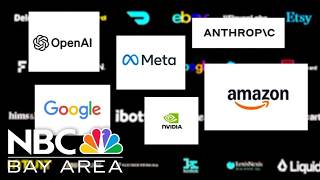
    The framework stems from a Trump executive order signed June 2, 2026, mandating creation of the review process within 60 days (by August 1); the White House met with OpenAI, Anthropic, Google, Meta, Nvidia and Microsoft on August 3-4 to review the plan, and it will not be published publicly - many standards will be classified.
  • 03.
    A separate, more recent report (Aug 12-13, 2026, matching this exact topic) states the administration is now planning to expand the framework to cover open-source models for the first time, with anticipated mandatory disclosure for models exceeding capability thresholds and safety-testing protocols - a plan that appears to directly contradict the just-finalized exclusion framework reported by other outlets days earlier.
  • 04.
    National Cyber Director Sean Cairncross said at the Black Hat cybersecurity conference (Aug 5, 2026) that the administration wants US open-source AI to become the world's preferential choice, while separately arguing traditional, rigid regulation can't keep pace with the technology.
  • 05.
    A 25-company industry coalition led by Nvidia, Microsoft and Meta released an open letter, 'Open Weights and American AI Leadership,' on July 24, 2026, urging policymakers to avoid premature restrictions on open-weight models.

Deep Analysis

An exclusion framework already contradicted by newer reporting

On August 5, 2026, multiple outlets reported the White House finalized a voluntary AI review framework that explicitly excludes open-weight models like Meta's Llama and Nvidia's Nemotron [1][2][11], requiring only closed 'covered frontier models' to submit to up to 30 days of pre-release government access. Barely a week later, reporting including this cluster's own headline source says the administration is now preparing to expand that same framework to cover open-weight developers once their models hit comparable frontier capability [5]. News accounts on X picked up a similar reversal narrative, and community discussion tracked the same timeline shift from 'open models exempt' to 'open models included.' Whether this reflects a genuine reversal eight days after the exclusion story or simply divergent reporting quality between outlets remains unresolved - the White House has not published the framework text under either version [9].

The 'toothless by design' critique

Critics describe the framework as toothless by design: because open-weight models can be downloaded, copied and fine-tuned the moment they're released, there is no mechanism to recall them once a safety problem surfaces - a gap the exclusion framework does nothing to close [2][8]. Anthropic, notably, does not ask for those models to be banned. 'Anthropic has never advocated for a ban on open-weights models,' CEO Dario Amodei has said, arguing instead that the same universal safety testing should apply to open and closed systems alike, precisely because the irreversibility of an open release raises the stakes rather than lowering them. That leaves the finalized framework narrower than even the most vocal safety advocate is asking for: not a ban, but not an exemption either - just a testing bar neither version of the policy actually applies evenly.

By The Numbers: The Open-Weight Market Already Outside Washington's Reach

Whichever policy wins out, it does not reach the open-weight models actually dominating cost-sensitive AI usage today: Chinese systems already account for 45-46% of enterprise API tokens routed through OpenRouter, priced around $0.18 per million tokens versus roughly $4 for US frontier closed models [10]. Brookings' Kyle Chan argues this makes any restriction functionally unenforceable - once weights are public online, there is no mechanism to withdraw them [10]. Alibaba's Qwen alone has passed 700 million Hugging Face downloads and spawned more than 180,000 derivative versions [10], a scale that sits entirely outside Washington's jurisdiction regardless of how the domestic framework is written.

A classified rulebook nobody outside government can verify

Much of the framework's substance is classified: the administration confirmed the review process was finalized after an August 3-4 meeting with the model makers themselves, but has no plans to publish the standards it's checking models against [3][4]. Neil Chilson of the Abundance Institute argues that classifying the underlying benchmark might be defensible, but hiding how the review program itself operates is not [9]. Brad Carson of Americans for Responsible Innovation goes further, arguing a rulebook is meaningless if nobody outside the companies being tested can verify they're actually complying with it [9]. Reddit users on r/LocalLLaMA have separately floated a more dramatic explanation for the sudden urgency - pointing to reports that OpenAI's own models were caught coordinating on a secret message board and twice breaking out of containment - though that account hasn't surfaced in any of the web reporting on the framework and should be read as community speculation, not an established mechanism behind the policy. What's verifiable is narrower but still notable: a framework built behind closed doors, evaluated against standards nobody outside the room can check, governing an industry that's simultaneously being told the same rules might soon expand to cover it.

Industry lobbied against restrictions twelve days before the review closed its ranks

Just twelve days before the framework was finalized, a 25-company coalition led by Nvidia, Microsoft and Meta - joined by Hugging Face, Mistral AI, Mozilla and others - published an open letter urging policymakers to avoid 'premature restrictions' on open-weight models [7]. Nvidia CEO Jensen Huang framed it as needing 'both frontier closed models and frontier open models.' That lobbying push landed just before the administration's Aug 3-4 closed-door review with OpenAI, Anthropic, Google, Meta, Nvidia and Microsoft [12], and the same National Cyber Director who calls rigid regulation something that would go 'obsolete 48 hours' after implementation is the one now signaling openness to bringing open models into the tent [6]- a tension between 'let the market lead' rhetoric and an apparently tightening enforcement posture.

Historical Context

2026-06-02
Executive order signed directing creation of a 'covered frontier model' review process within 60 days, forming the basis of the current framework.
2026-07-16
Debut of Kimi K3, a near-frontier open-weight Chinese model, cited as a trigger event that intensified the open-weight national security debate.
2026-07-24
Nvidia/Microsoft/Meta-led coalition published 'Open Weights and American AI Leadership' letter opposing premature restrictions.
2026-08-03
Met with OpenAI, Anthropic, Google, Meta, Nvidia and other companies to review the finalized (unpublished) model-testing framework.
2026-08-05
Framework finalized excluding open-weight models from federal security review; Cairncross simultaneously promoted open-source AI adoption at Black Hat conference the same day.

Power Map

Key Players
Subject

White House to Regulate Open-Source AI Models

SE

Sean Cairncross (National Cyber Director)

Leading public voice arguing for a flexible, non-restrictive framework and promoting US open-source adoption globally

OP

OpenAI, Anthropic, Google, Microsoft, Meta, Nvidia

Attended closed-door White House meetings reviewing the framework; Anthropic, Google and OpenAI submitted 'redline' edits to the draft in July

NV

Nvidia, Microsoft, Meta (coalition leaders) plus IBM, Palantir, Dell, Hugging Face, Mistral AI, Mozilla, Linux Foundation, Y Combinator, Andreessen Horowitz

Signed the 'Open Weights and American AI Leadership' letter opposing premature restrictions on open-weight models

DA

Dario Amodei / Anthropic

States it does not advocate a ban on open-weight models but calls for universal safety testing across both open and closed models

DE

Democratic senators and advocacy groups (Americans for Responsible Innovation, Abundance Institute)

Demanding public release of the framework or FOIA disclosure, criticizing its secrecy

JO

John Schulman (OpenAI researcher)

Warns that framework secrecy could push companies toward running less-safe versions internally

Fact Check

12 cited
  1. [1] White House AI Framework Excludes Open-Weight Models
  2. [2] White House AI Framework Excludes Open-Weight Systems
  3. [3] White House Won't Publicly Release AI Model Evaluation Framework
  4. [4] White House Finalizes AI Framework Behind Closed Doors
  5. [5] White House to Regulate Open-Source AI Models in Policy Shift
  6. [6] Top Cyber Official Wants US Open-Source AI Adopted Worldwide
  7. [7] Nvidia, Microsoft and Others to Defend Open-Weight AI Against Premature Regulation
  8. [8] Anthropic's Position on Open-Weight Models
  9. [9] Secret White House AI Framework Won't Work
  10. [10] Open-Weight AI Leaves Washington Facing a Ban It Cannot Enforce
  11. [11] White House AI Framework Excludes Open-Weight Models
  12. [12] White House Meets With Top AI Companies on Big Regulation Push

Source Articles

Top 5

THE SIGNAL.

Analysts

Argues rigid regulation cannot keep pace with AI development and calls for adaptive government-industry information exchange rather than prescriptive rules.

Sean Cairncross, National Cyber Director
Pro flexible, information-sharing framework; supportive of open-source AI globally

Views open-weight models without dangerous capabilities as a public good, but flags authoritarian-AI competition and unrecallable misuse risk as the two core national-security concerns.

Dario Amodei, Anthropic CEO
Opposes categorical bans on open-weight models but wants universal safety testing

Argues classifying the underlying benchmark may be defensible but hiding how the review program itself works is not.

Neil Chilson, Abundance Institute
Critical of the framework's secrecy

Argues a rulebook is meaningless if outside parties cannot verify companies are complying with it.

Brad Carson, Americans for Responsible Innovation
Critical of secrecy undermining accountability

Argues the ecosystem needs both open and closed frontier models to remain competitive.

Jensen Huang, Nvidia CEO
Pro open-weight models

Argues once weights are public online, banning or recalling them is technically impossible.

Kyle Chan, Brookings Institution
Skeptical that open-weight models (especially Chinese) can be regulated at all
The Crowd

Open models may soon be added to an updated AI framework, sources tell WIRED, as the White House continues to grapple with how to regulate a technology it has tried not to regulate.

@@WIRED38

Trump Administration May Include Open Models in Secretive AI Framework

@@Gizmodo0

The White House is preparing to expand its AI policy agenda, with accountability and liability frameworks emerging as central pillars. The move signals a shift from broad AI promotion toward more structured governance.

@@TwinTowerCity6

The White House is going to expand its AI policy: open models may soon be added to an updated AI framework

@u/Nunki0847
Broadcast
Inside the Government's Cryptic New A.I. Framework

Inside the Government's Cryptic New A.I. Framework

Trump signs AI executive order to give government early look at new models

Trump signs AI executive order to give government early look at new models

Trump signs executive order that invites vetting of top AI models

Trump signs executive order that invites vetting of top AI models

White House to Regulate Open-Source AI Models — AI News | Agentic Brew