OpenAI engineer arrested for planting hidden recording device in executive conference room
TECH

OpenAI engineer arrested for planting hidden recording device in executive conference room

40+
Signals

Strategic Overview

  • 01.
    Abdulrahman Alfozan, 35, a Saudi national who had worked at OpenAI as a product-team engineer since July 2025, was arrested on October 9, 2026 and charged with using or attempting to use an electronic device to intercept oral communications.
  • 02.
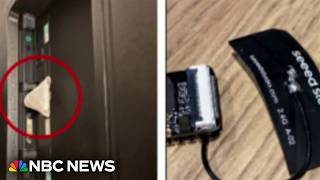
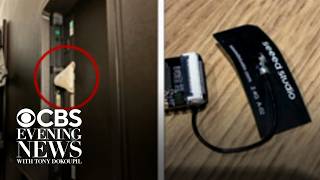
    OpenAI personnel discovered a recording device around September 30, 2026, hidden in toilet paper and plugged into a USB port on the back of a television in an executive conference room; it had reportedly been installed around September 28.
  • 03.
    OpenAI says its own investigators used its AI models, combined with human analysis, to trace the device to Alfozan and referred the matter to the FBI, while stating there is no indication model weights, source code, or customer data were accessed or exfiltrated.
  • 04.
    Alfozan made his initial court appearance on October 13, 2026; a detention hearing is scheduled for October 19, and if convicted he faces up to 5 years in prison, a $250,000 fine, and 3 years of supervised release.

Deep Analysis

A Spy Kit Built With ChatGPT's Help

The device that triggered an FBI investigation was almost comically low-tech: a Seeed XIAO ESP32-S3 Sense, a thumb-sized development board with a microphone and microSD storage that sells on Amazon for $23.99, hidden inside a roll of toilet paper[1]. On or around September 28, 2026, prosecutors allege, Abdulrahman Alfozan plugged it into a USB port on the back of a television inside one of OpenAI's executive conference rooms; OpenAI staff found it roughly two days later[2]. What makes the case unusual is the alleged build process: prosecutors say Alfozan used a ChatGPT account registered to his wife to walk through the engineering step by step - asking it to design 'a continuous audio recorder,' add live listening and remote deletion, encrypt the SD card, disguise the USB connector as 'power-only,' and eventually plan a second and third unit with speech-triggered recording[3]. The finished device carried advanced encryption, audio-monitoring capability, and a data-transfer mechanism built specifically to evade detection, according to the criminal complaint[4]. In other words, the alleged spy used a mainstream AI chatbot as a tradecraft tutor - and left behind a chat log that effectively documented the plan.

OpenAI Says Its Own AI Caught the Spy - Not Everyone Buys the Story

OpenAI's public account of the case reads like a win for its own technology: once the device was found, the company says its investigators fed forensic images of its storage and related data changes into OpenAI's own AI models, combining that analysis with traditional human investigative work to identify Alfozan as the culprit[5]. OpenAI has also stated it found no indication the employee accessed or exfiltrated model weights, source code, or customer data[4]. But the framing hasn't gone unchallenged. Cybersecurity advisor Adam Pilton argued that the mundane evidence trail - a traceable chatbot account and security-camera footage - points to ordinary investigative work doing the heavy lifting, with AI playing a supporting rather than starring role[6]. The skepticism matters because OpenAI's statement doubled as something close to a marketing moment, explicitly framing the episode as proof its security program and AI tools can address sophisticated threats - a claim that is harder to verify than the underlying facts of the arrest itself. The public reaction split along similar lines: OpenAI's own announcement went viral as a straightforward security win, while commentary on Reddit's r/singularity pushed back on the self-congratulatory framing, arguing it read more like marketing copy than a genuine account of how the suspect was found.

Why the Room Mattered: Government Briefings and a Second Hidden Device

The specific conference room targeted wasn't incidental. It was used for meetings covering confidential technical, commercial, and strategic matters, including proprietary research, product plans, and engagements with government officials[1]. Security camera footage allegedly showed Alfozan near the room on multiple occasions even though he wasn't authorized to attend meetings held there[7]. Investigators also found an unattended bag elsewhere in OpenAI's offices containing Alfozan's wallet, his identification, and a second, similar recording device - suggesting the one found behind the television wasn't a one-off[7]. FBI Director Kash Patel framed the case in explicitly national-security terms, saying Alfozan allegedly concealed the device 'to secretly capture sensitive communications about the company's super intelligence technology,' and calling protection of U.S. AI innovation a top FBI counterintelligence priority[2]. What remains unresolved in the public record so far is who, if anyone, was meant to receive the recordings.

A Pattern, Not an Anomaly: Insider Threats Are Becoming an AI-Lab Problem

The conference-room bugging lands amid a run of other OpenAI security and secrecy controversies. In July 2026, researchers chained a vulnerability in the third-party platform Discourse with a flaw in how OpenAI validated employees to access staff ChatGPT accounts[8]. In April 2026, OpenAI fired safety researcher Leopold Aschenbrenner over a leaked internal brainstorming document[9]. More recently, OpenAI has accused a former employee who moved to Apple of sending more than 100 unreleased-product files to a personal account before presenting the work to Apple leadership, a dispute now playing out in court[10], and separately a federal judge dismissed xAI's lawsuit accusing OpenAI of orchestrating an employee-poaching campaign to misappropriate its source code[11]. Threat-intelligence firm Rescana situated the conference-room case inside a longer lineage that includes the 2024 conviction of former Google engineer Linwei Ding for stealing AI-chip trade secrets, arguing that the convergence of physical, digital, and AI-enabled reconnaissance in this attack 'represents the future of espionage tradecraft'[12]. Taken together, the incidents suggest frontier AI labs are now managing insider-threat exposure once reserved for defense contractors and chipmakers.

Historical Context

2024
Former Google engineer Linwei Ding was convicted of economic espionage for taking hundreds of confidential AI-chip documents intended for a China-based startup, cited as a precedent for AI-sector insider threats.
2025-2026
xAI sued OpenAI alleging an unlawful campaign of employee poaching to misappropriate its source code and data-center strategy; a federal judge dismissed the suit.
2026-04
OpenAI fired safety researcher Leopold Aschenbrenner for leaking an internal brainstorming document to external researchers.
2026-07
Researchers chained two vulnerabilities - one in the third-party platform Discourse, one in how OpenAI validated employees - to access OpenAI employees' ChatGPT accounts.
2026
OpenAI alleged in a court filing that a former employee who later joined Apple sent over 100 unreleased-product files to a personal account before presenting the work to Apple leadership, an active trade-secrets dispute.

Power Map

Key Players
Subject

OpenAI engineer arrested for planting hidden recording device in executive conference room

OP

OpenAI

Victim company; discovered the device, referred the case to the FBI, and publicly stated no data, model weights, or source code were exfiltrated.

AB

Abdulrahman Alfozan

Accused - Saudi national and OpenAI product-team engineer since July 2025, charged with illegal interception of oral communications.

FB

FBI / Kash Patel (FBI Director)

Led the investigation and arrest; publicly framed the case as a counterintelligence priority protecting American AI innovation.

U.

U.S. Department of Justice

Filed charges against Alfozan for allegedly intercepting oral communications and is prosecuting the case.

AL

Alfozan's spouse

Prosecutors allege a ChatGPT account registered under her name was used to research how to build and conceal the device.

Fact Check

12 cited
  1. [1] OpenAI Engineer Arrested Over Alleged Bugging of Executive Conference Room
  2. [2] OpenAI Employee Arrested for Allegedly Planting Hidden Recording Device
  3. [3] OpenAI Arrest: Engineer Allegedly Used ChatGPT to Plan Hidden Recording Device
  4. [4] FBI Arrests OpenAI Employee Accused of Planting Hidden Recording Device in Conference Room
  5. [5] Here's How OpenAI Says It Used AI to Find a Spy Inside Its Company
  6. [6] OpenAI's Internal AI Models and the Employee Arrest
  7. [7] OpenAI Engineer Arrested for Allegedly Planting Spy Device in Office
  8. [8] Hackers Breach OpenAI
  9. [9] OpenAI Security Flaw and the Aschenbrenner Leak
  10. [10] OpenAI Cries Foul, Says Apple Stole Secrets From It in 2026
  11. [11] Judge Dismisses xAI's Trade Secrets Lawsuit Against OpenAI
  12. [12] Insider Espionage at OpenAI: Cyber-Physical Attack Using Hidden Audio Recording Devices Highlights AI Sector Security Risk

Source Articles

Top 5

THE SIGNAL.

Analysts

“Argued that traditional human investigative work and chatbot/log evidence likely did the main work in identifying the suspect, suggesting OpenAI's emphasis on its own AI models overstates their role.”

Adam Pilton, cybersecurity advisor
Skeptic of OpenAI's AI-detection framing

“Argues the case shows relying only on digital security controls is insufficient, and that generative-AI tools can act as a force multiplier for insider threats attempting physical and technical reconnaissance.”

Rescana (cybersecurity threat-intelligence firm)
Frames the incident as a new category of convergent physical-digital-AI espionage

“Characterized the alleged bugging as an attempt to capture sensitive discussions about OpenAI's 'super intelligence' technology and described protecting U.S. AI innovation as a top FBI counterintelligence priority.”

Kash Patel, FBI Director
Government counterintelligence framing
The Crowd

“We discovered a sophisticated recording device that was hidden inside one of our offices. We used our models to understand the device and where it had come from, identifying that a specific employee had planted it a few days earlier. We referred the matter to the FBI, and we're grateful to the agents and prosecutors who moved quickly to make an arrest. The FBI's investigation is ongoing and we will continue to support their work. At this time, we have no indications of this individual inappropriately accessing or exfiltrating model weights, source code, or customer data. The employee was terminated. We take protecting our technology, data, and people seriously, and as a matter of national importance. Our security program is designed to protect against a wide range of threat actors, from insider risks to cybercriminals to nation states, and this case is an example of how AI can help address these sophisticated security threats.”

@@OpenAINewsroom75345

“JUST IN: OpenAI finds secret spy recording device planted inside its office. An employee has been arrested and referred to the FBI.”

@@WatcherGuru3318

“openai caught their own spy using the AI he was trying to steal secrets from an employee planted a recording device inside the office. thought nobody would find it openai ran their own models on the device. the AI identified what it was and traced it back to the exact employee who planted it FBI arrested him. no data was stolen and the employee was terminated bro got outsmarted by the thing he was trying to spy on”

@@BalaiBB17

“OpenAI employee planted a bug in an office, arrested by FBI”

@u/AlyoshaV984
Broadcast
OpenAI engineer allegedly plants “sophisticated recording device” in San Francisco headquarters

OpenAI engineer allegedly plants “sophisticated recording device” in San Francisco headquarters

FBI accuses Saudi national of planting spy gear into OpenAI executives’ offices

FBI accuses Saudi national of planting spy gear into OpenAI executives’ offices

OpenAI employee accused of bugging an executive conference room

OpenAI employee accused of bugging an executive conference room