What OpenAI Actually Proved (And What It Didn't)
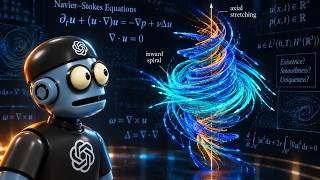
Despite headlines describing a solved Millennium Prize Problem, OpenAI's result addresses a forced version of the 3D Navier-Stokes equations - specifically statements C and D of Charles Fefferman's official Clay problem formulation - not the unforced version most mathematicians associate with the classic $1 million question [1]. OpenAI has said it will not claim the prize itself [2]. Critics online have framed the result less as a general proof and more as a counterexample: agents found conditions under which a smooth forcing term drives the equations to a finite-time singularity for a specific case, not a fix covering every scenario. The Clay Mathematics Institute has not accepted the result and still lists Navier-Stokes as unsolved, describing its review process as 'deliberately unhurried' and 'absolutely rigorous' [4]. That gap between the AI-formalized claim and institutional validation is the core reason the story is being treated as a claim, not a solution.