Frontier AI Labs' Trillion-Dollar Compute Spending Race
TECH

Frontier AI Labs' Trillion-Dollar Compute Spending Race

21+
Signals

Strategic Overview

  • 01.
    SemiAnalysis founder Dylan Patel says frontier labs are scaling from tens of billions of dollars a year in compute spend to hundreds of billions, and are now forecasting trillions of dollars a year by the end of the decade.
  • 02.
    OpenAI raised its planned compute spending through 2030 to roughly $750 billion, up about 25% from the roughly $600 billion figure it set earlier in 2026, as it shifts from renting cloud capacity to owning data centers.
  • 03.
    Big Tech hyperscalers' combined AI infrastructure capex is on track to approach $700 billion this year, up sharply from about $410 billion the prior year, with analysts saying there is no clear end point to the buildout.
  • 04.
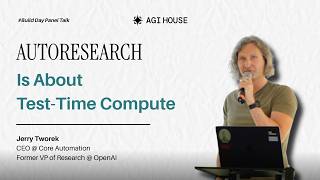
    Former OpenAI VP of Research Jerry Tworek says AI coding agents are approaching the point where they can automate AI research itself, and has floated that current frontier models may be the last generation humans design largely unaided.

Deep Analysis

The Trillion-Dollar Trajectory

SemiAnalysis founder Dylan Patel frames the AI buildout as a two-step jump: labs went from spending tens of billions of dollars a year to hundreds of billions, and are now forecasting trillions of dollars a year by the end of the decade [1]. The aggregate numbers back up the trajectory. Total AI industry capex is approaching roughly $1 trillion annualized in 2026, about 1 percent of gross world product and 3 percent of US GDP, and Patel projects it will cross $2 trillion by 2028 [4]. OpenAI alone just raised its planned compute spending through 2030 to roughly $750 billion, a 25 percent jump from the approximately $600 billion figure it had set earlier in the year, as it shifts from renting cloud capacity from Azure, Oracle, and CoreWeave to owning data centers outright [5]. Big Tech's hyperscalers are on a similar curve - combined AI infrastructure capex is on track to approach $700 billion this year, up from about $410 billion the year before, roughly $200 billion in 2024, and just $162 billion in 2022 [6][7]. McKinsey has put the cumulative worldwide AI capex bill needed by 2030 at $6.7 trillion [6]. Patel laid out the trajectory in a podcast conversation with Dwarkesh Patel, which also drew commentary on X tying the spending directly to US GDP growth.

When AI Starts Building AI

The spending forecasts arrive alongside a parallel claim: that AI is close to automating the research that justifies the spending. Jerry Tworek, who led OpenAI's reasoning-model research for nearly seven years before departing in January 2026, says coding agents are so good right now it's getting them to the moment where they can automate AI research, and then have the models research better models [2]. He has gone further, raising the possibility that current frontier models may be the last generation humans design largely unaided - 'maybe we are at the last model that humans could have figured out' [2]. Tworek left OpenAI saying this kind of fundamental research was no longer possible there, and founded Core Automation, a startup explicitly aimed at building the most automated AI lab in the world [3]. Clips of Tworek describing the shift circulated widely on X, with one summarizing his view that AI researchers now tell each other they have only days of meaningful work left, and that he gives it about two years before humans stop being a meaningful part of AI research - a claim that read across social platforms as alarm rather than skepticism, in contrast to the more mocking tone reserved for the spending numbers themselves.

The Financing Web: Renting From Rivals

Patel's numbers imply a further consequence: that OpenAI and Anthropic could end up controlling most of the world's usable compute by 2028 [1]. Getting there has produced an unusual tangle of cross-competitor dependencies. Anthropic, whose gigawatt capacity is growing from under 2GW to above 5GW within a year per Patel's tracking [1], is paying rival xAI $1.25 billion a month for Colossus capacity through May 2029, has signed a 20-year, $19 billion lease with TeraWulf, and has committed $50 billion to custom US infrastructure with Fluidstack [7]. Compute suppliers are scaling to match: Oracle's capex jumped from $21.2 billion in fiscal 2025 to $55.7 billion in fiscal 2026, and it is guiding to roughly $70 billion in fiscal 2027 [7]. A podcast conversation between Dylan Patel and Dwarkesh Patel walking through this dynamic - labs racing to lock up compute even from direct competitors - drew significant engagement on X, reflecting how much attention the mechanics of compute concentration are now getting relative to the headline dollar figures.

Show Me the Revenue

Not everyone is convinced the spending curve is sustainable. Some analysts, including at Goldman Sachs, JPMorgan, and Wedbush, argue current AI investment levels are justified by expected productivity gains, while others point out that AI revenue run-rates remain far below the roughly $650 billion in annual revenue that would be needed to justify current capex at a modest 10 percent return [8]. That gap is where skepticism concentrates most visibly: on Reddit, threads tallying the multi-year compute commitments piling up across suppliers against current annual revenue treated the trillion-dollar framing with open mockery rather than alarm, and a widely upvoted thread reacting to a frontier lab's own long-run revenue projections argued the figures implied a share of global GDP no single company's product could plausibly capture. The recurring theme across that skepticism is not that the spending isn't happening - the dollar figures above are not in dispute - but that normal return-on-investment math may not apply to an arms race where falling behind on compute is treated as the bigger risk than overspending on it.

Historical Context

2022
Combined AI-related capex among major hyperscalers was around $162 billion.
2024
The four biggest hyperscalers' combined capex was just over $200 billion, marking the start of the current AI infrastructure arms race.
2026-01
Tworek departed OpenAI after nearly seven years as VP of Research, later founding Core Automation to pursue automated AI research.
2026
OpenAI's planned 2030 compute spend rose from roughly $600 billion earlier in the year to roughly $750 billion, a 25% increase, as it moves toward owning data-center capacity.
2026
Total AI capex is on track to approach $1 trillion annualized, roughly 1% of gross world product and 3% of US GDP, on a trajectory Dylan Patel projects will exceed $2 trillion by 2028.

Power Map

Key Players
Subject

Frontier AI Labs' Trillion-Dollar Compute Spending Race

DY

Dylan Patel (SemiAnalysis founder)

Semiconductor/compute-supply-chain analyst whose capex and gigawatt-tracking forecasts frame how much frontier labs will need to spend to keep scaling models; his projections are widely cited by investors and press covering the AI buildout.

JE

Jerry Tworek (former OpenAI VP of Research, founder of Core Automation)

Led reasoning-model research at OpenAI for nearly seven years before departing in January 2026 to found Core Automation, a startup aiming to automate AI research itself; his comments on AI-automating-AI-research shape debate over how long human researchers stay central to the field.

OP

OpenAI

Raised its planned compute spend through 2030 to roughly $750 billion and is shifting from renting cloud capacity (Azure, Oracle, CoreWeave) to owning data-center infrastructure directly, driving a large share of frontier-lab capex growth.

AN

Anthropic

Rapidly scaling compute footprint (gigawatt capacity growing from under 2GW to above 5GW within a year per Patel) via diversified deals including a $1.25B/month agreement with xAI, a 20-year $19B TeraWulf lease, and a $50B Fluidstack infrastructure commitment.

HY

Hyperscalers (Amazon, Alphabet, Microsoft, Meta, Oracle)

Fund and build the physical data-center/compute capacity frontier labs consume; combined capex projected to approach $700 billion in 2026, up from roughly $410 billion the prior year and roughly $200 billion in 2024.

OR

Oracle

Compute infrastructure supplier scaling capex sharply ($55.7B in fiscal 2026, up from $21.2B) and guiding to roughly $70B in fiscal 2027, underscoring how compute-supply players are also scaling with frontier-lab demand.

Fact Check

8 cited
  1. [1] Dylan Patel interview (Dwarkesh Podcast)
  2. [2] It's possible we've already created the best models humans could - ex-OpenAI researcher Jerry Tworek
  3. [3] Ex-OpenAI researcher Jerry Tworek launches Core Automation to build the most automated AI lab in the world
  4. [4] Frontier labs don't use most AI compute (Epoch AI Gradient Updates)
  5. [5] OpenAI $750B 2030 compute spending forecast
  6. [6] Big Tech will spend nearly $700 billion on AI this year, no one knows where the buildout ends
  7. [7] Frontier AI labs are renting compute from their competitors
  8. [8] AI bubble fears, tech selloff, and the investment vs. consumer demand gap (CBS News)

Source Articles

Top 1

THE SIGNAL.

Analysts

Argues frontier labs, chiefly OpenAI and Anthropic, will control most of the world's usable compute by 2028, with industry-wide capex crossing $2 trillion that year, en route to labs spending trillions annually by decade's end.

Dylan Patel
Founder, SemiAnalysis

Believes AI coding agents are approaching the point where they can automate AI research itself, potentially making current frontier models the last generation substantially designed by humans; left OpenAI saying the fundamental research he wanted to pursue was no longer possible there.

Jerry Tworek
Former VP of Research, OpenAI; founder, Core Automation
The Crowd

FULL INTERVIEW: Jerry Tworek says AI researchers now tell each other they have a last few days of work left, so work while you still can. He gives it two years before humans stop being a meaningful part of AI research. @MillionInt spent 7 years at @OpenAI, where he led o1 and o3...

@@MTSlive254

Had a lot of fun chatting again with my twin brother @dylan522p. We went through lab economics over the next few years - the shift from inference to training as RSI draws near; and how Anthropic and OpenAI are on track to control most of the world's usable FLOPs within the next...

@@dwarkesh_sp1328

Dylan Patel says OpenAI and Anthropic will be spending trillions of dollars a year on compute by 2030. "Most of GDP growth in America was just AI infrastructure. About a third of the compute coming online is for the labs, for OpenAI and Anthropic." "We're at a little bit over a..."

@@dnapway22

Anthropic to Tell Investors It Sees Over $30 Trillion in Potential Revenue

@u/wotton3271
Broadcast
Why One of OpenAI's Top Researchers Walked Away - EP 53 Jerry Tworek

Why One of OpenAI's Top Researchers Walked Away - EP 53 Jerry Tworek

Can AI Automate AI Research? Jerry Tworek on What's Still Missing

Can AI Automate AI Research? Jerry Tworek on What's Still Missing

Dylan Patel on GPT-5's Router Moment, GPUs vs TPUs, Monetization

Dylan Patel on GPT-5's Router Moment, GPUs vs TPUs, Monetization