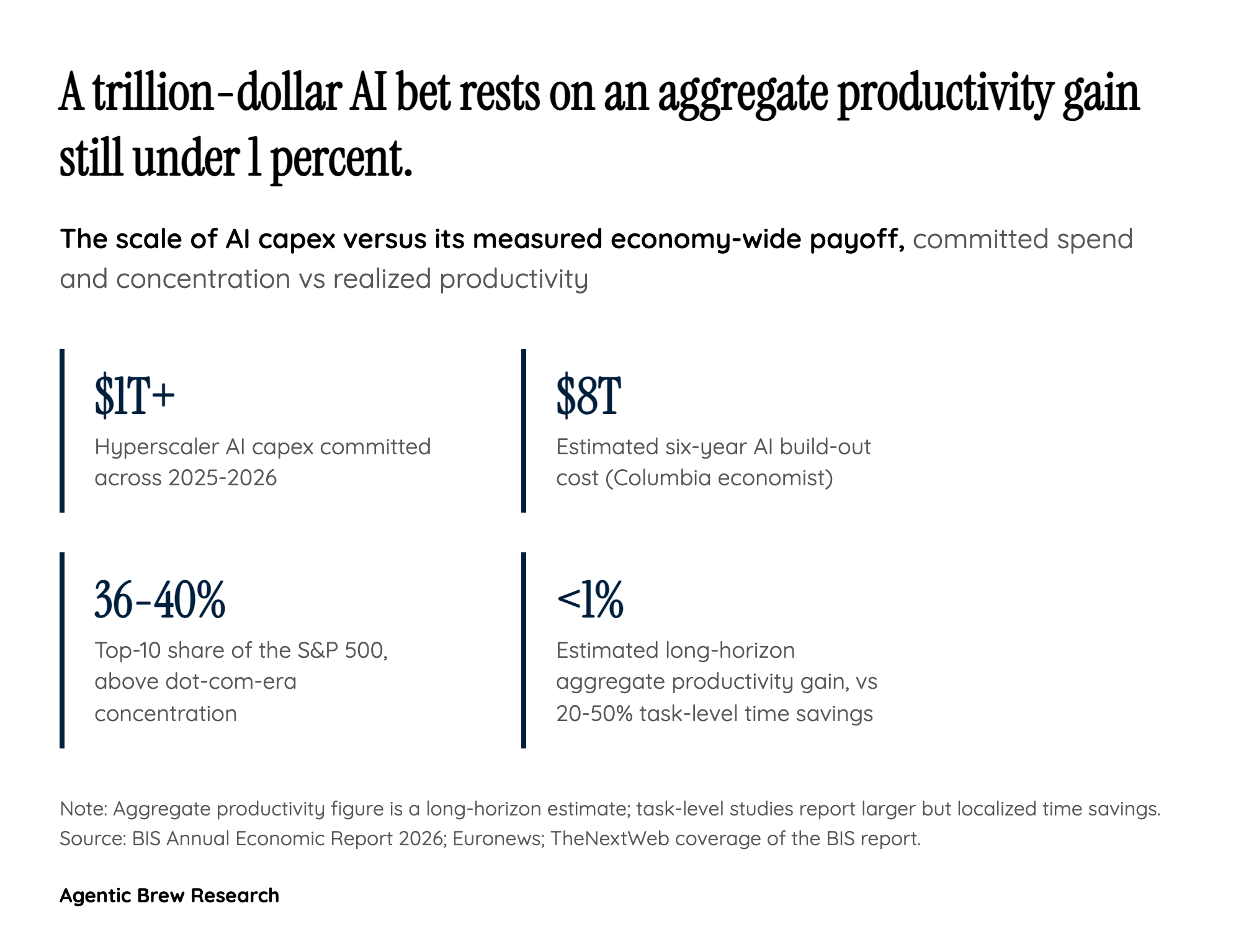
The Risk Isn't That AI Fails - It's How AI Is Being Funded
The most important thing about the BIS warning is what it is not about. The central banks' bank is not predicting that AI will stop working. It is warning about the financial plumbing wrapped around the buildout - and that distinction is the whole story. The report stresses that the financing of AI is increasingly leveraged, featuring complex interactions within the AI supply chain [1]. In plain terms: the companies pouring money into data centers can no longer pay for it out of the cash their businesses generate, so they have turned to debt, private credit funds and hedge funds to keep building [2].
The mechanism the BIS flags most pointedly is circular financing. Chipmakers and hyperscalers take equity stakes in the AI labs and neocloud providers, who then turn around and commit to multi-year purchases of those same companies' chips and compute [3]. Data-center construction is outsourced and leased back on long-term contracts with embedded exit clauses, and the terms are poorly disclosed - to the point that the same asset can be pledged more than once. The danger is not that any single deal is fraudulent; it is that returns flow in a loop, obscuring how much of the demand is real versus engineered, and how much risk is genuinely diversified versus the same exposure counted twice. If realized returns disappoint, the BIS warns, the financing sustaining the boom could be pulled suddenly, turning a capex boom into a protracted investment bust [2].
That is why this reads less like a technology forecast and more like a credit-market warning. The fragility lives in the funding structure - debt-funded capex on returns that are still unproven - not in whether the models are useful.