Apple's iPhone Duo Foldable and Siri AI Overhaul
TECH

Apple's iPhone Duo Foldable and Siri AI Overhaul

46+
Signals

Strategic Overview

  • 01.
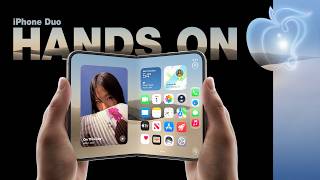
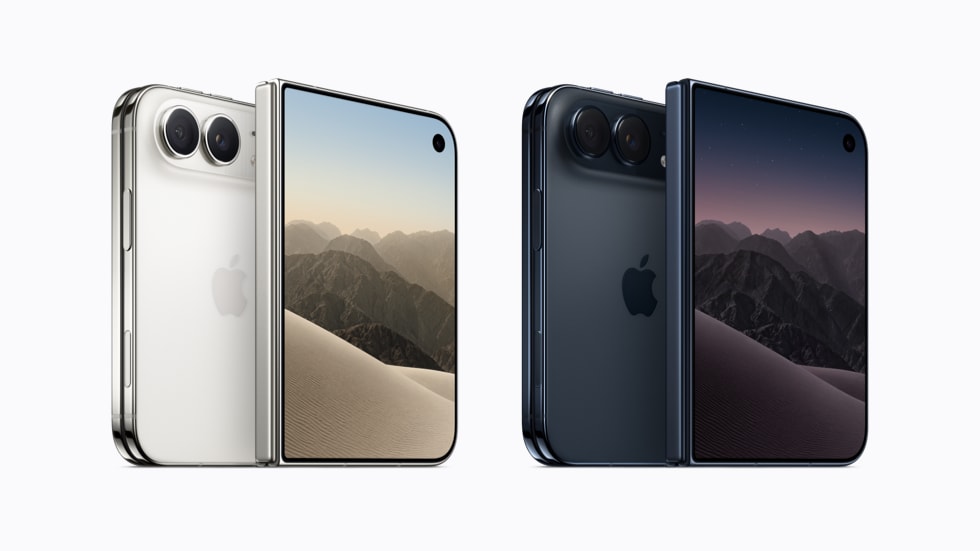
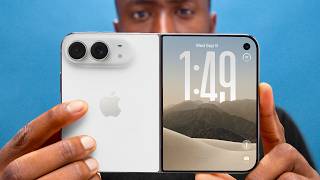
    The iPhone Duo is Apple's first foldable iPhone, with a continuous 7.6-inch inner display and a 5.4-inch outer display, and is the thinnest iPhone Apple has produced at 254 grams.
  • 02.
    The redesigned Siri AI can hold conversations, reference on-screen content, and take actions across more than 300,000 third-party apps, but runs in part on Google's Gemini technology under a licensing deal reportedly worth about $1 billion a year, blended with Apple's own on-device models and Private Cloud Compute; it will be unavailable at launch in the European Union.
  • 03.
    The A20 Pro is Apple's first smartphone chip on TSMC's 2-nanometer process, with a 20% faster CPU, 40% faster GPU, 50% more memory bandwidth, and a doubled dual 32-core Neural Engine that powers on-device Siri AI processing; separately, the Apple Watch's Audio Intelligence features (Live Rewind, Siri Recap) process audio entirely inside the Secure Exclave on the S11 chip.
  • 04.
    The iPhone Duo starts at $1,999 for 256GB and tops out near $3,000 for 2TB, shipping in October, a month after the rest of the iPhone 18 lineup.

Deep Analysis

The A20 Pro Is the Real Story: A Doubled Neural Engine Made On-Device AI Possible

Buried under the iPhone Duo's headline hinge engineering is a chip generation that did more work than any Apple chip in years. The A20 Pro is Apple's first smartphone processor built on TSMC's 2-nanometer process, and the spec sheet reads like a quiet reset: a six-core CPU that is 20% faster, a seven-core GPU that is 40% faster, 50% more memory bandwidth, and a new vapor-chamber cooling system to keep it fed under sustained load [1]. The number that matters most for AI, though, is the Neural Engine - Apple doubled it to a dual 32-core design after three straight generations stuck at 16 cores [1]. That jump is a large part of why the rebuilt Siri AI can run substantial personal-context processing locally instead of shipping every request to a server. It also explains why the chip is scarce: TSMC is reportedly sitting on roughly $1 billion worth of finished A20 Pro chips that cannot move to the next production stage because there is not enough DRAM available to pair with them [2]. In other words, the AI story and the supply-chain story are the same story - Apple built a chip ambitious enough that even its foundry partner cannot feed it fast enough.

Apple's Most Private AI Depends on Its Biggest Rival

The rebuilt Siri AI is arguably the event's most consequential software announcement - it can hold a conversation, reference whatever is on screen, and take actions across more than 300,000 third-party apps. What did not make the keynote slides is who actually built the model underneath it: Siri AI is powered in part by Google's Gemini technology, under a deal reportedly worth about $1 billion a year [1]. Apple blends that Gemini foundation with its own on-device models and Private Cloud Compute for heavier requests, so the branding stays Apple Intelligence even though a competitor's model is doing real work under the hood [1]. The arrangement also carries a regulatory asterisk: Siri AI will not be available at launch in the European Union [1]. For a company that has spent a decade marketing privacy and self-reliance as core to its identity, leaning on Google for its flagship assistant - while being unable to ship that assistant in one of its largest regulated markets - is the kind of tension that undercuts the keynote's clean narrative even as it makes commercial sense for both companies.

Secure Exclave vs. the Ambient-Listening Question

Apple's answer to whether its devices are now always listening is architectural rather than promotional. Audio Intelligence features like Live Rewind and Siri Recap process audio entirely inside the Secure Exclave, a hardware-isolated buffer on the S11 chip; old audio is continuously overwritten so nothing accumulates, and speech detection for Siri Recap does not begin transcribing until a conversation is actually detected [3]. Apple Reference Image applies a parallel logic to photos: the iPhone 18 Pro's camera signs sensor data at the moment of capture in a dedicated mode, sends that signed raw data to Private Cloud Compute for processing into an image that cannot be altered afterward, and pairs it with metadata and forthcoming SynthID support so viewers can verify authenticity even after a screenshot or recompression [5]. Both designs are genuinely more private than simply recording and storing everything. But critics argue the engineering answers the wrong question - once wearing a watch that might be summarizing a conversation becomes a background assumption, the mere possibility of being overheard changes social behavior on its own, regardless of what is technically stored [4]. Apple built a system that cannot leak your audio; it did not necessarily build one that removes the feeling of being monitored.

Wall Street's Split Verdict, and a $1 Undercut on Samsung

Reaction from analysts split almost perfectly along a hardware-versus-AI fault line. Citi (Buy, $365 price target) called the Duo Apple's biggest new hardware category since the Apple Watch and AirPods [6]. Goldman Sachs was constructive on Apple's decision to raise Pro-model prices by $100 and delay the Duo to October, arguing it should support average-selling-price growth [7]. Oppenheimer expects the Duo to become the best-selling foldable on the market but warned supply is likely capped at 8 to 10 million units this year [6]. Needham's Laura Martin was the outlier, calling Apple's AI integration too little, too late and arguing a bigger folding screen does not fix Apple's deeper competitive problems [7]. Pricing tells its own story: at $1,999 for the base 256GB model, Apple landed $100 above Samsung's $1,899 Galaxy Z Fold 8 but $1 below the pricier Galaxy Fold7, a deliberate wedge into Samsung's territory rather than a premium-only play [8]. The Duo is also heavier, at 254 grams versus 201 grams for the Fold 8 [8]. Counterpoint Research still expects Apple to reach roughly 25% global foldable share in 2026, second place behind Samsung, with Samsung retaining what Counterpoint calls a clear advantage in product maturity, channel reach, and foldable user experience [9].

Historical Context

2021-09
Apple analyst first claimed a folding iPhone would arrive in 2024, a prediction that did not pan out.
2024-02
Reports claimed Apple initially wanted to release the folding iPhone in 2026 but had to delay the launch, part of years of slipping foldable timelines going back to 2018.
2026-06
Apple previewed the new Siri AI at its June developer conference before releasing the iOS 27 public beta on July 14, 2026, giving users a working look at the assistant months ahead of the foldable hardware launch.
2026-07
Samsung launched the Galaxy Z Fold8 Ultra, its most advanced book-style foldable, ahead of Apple's foldable entry.

Power Map

Key Players
Subject

Apple's iPhone Duo Foldable and Siri AI Overhaul

GO

Google

Supplies the Gemini technology underlying the redesigned Siri AI under a licensing deal reportedly worth about $1 billion a year, giving Google indirect reach into hundreds of millions of iPhones while Apple keeps the on-device layer and branding.

TS

TSMC

Sole fab for the A20 Pro on its new 2nm process; reportedly holding about $1 billion of finished A20 Pro chips that cannot move to the next production stage pending sufficient DRAM supply, a potential constraint on iPhone Duo and 18 Pro volume.

SA

Samsung

Incumbent foldable market leader with the Galaxy Z Fold8 Ultra (launched July 2026); now faces direct premium competition, with the Duo undercutting Samsung's pricier Galaxy Fold7 by $1 even as it lands $100 above the base Galaxy Z Fold8, while Counterpoint expects Apple to reach about 25% global foldable share in 2026 and overtake Samsung by 2027.

WA

Wall Street analysts (Citi, Goldman Sachs, Oppenheimer, Needham)

Split reaction shapes near-term sentiment: Citi and Goldman Sachs are bullish on the new hardware category and average-selling-price growth, Oppenheimer sees strong demand capped by an 8-10 million unit supply limit, and Needham's Laura Martin is skeptical of the AI strategy and near-term unit sales.

CO

Counterpoint Research

Market research firm forecasting Apple's foldable trajectory: about 25% global share in 2026 (second place behind Samsung), 46% share in North America, and a projection that Apple overtakes Samsung's share by 2027.

Fact Check

9 cited
  1. [1] Apple's Redesigned Siri AI Debuts With A20 Pro Chip
  2. [2] TSMC Is Reportedly Holding $1 Billion of Apple A20 Pro Chips Amid a DRAM Delay
  3. [3] Apple Details How Apple Watch's New Audio Intelligence Features Work in Privacy Paper
  4. [4] Apple Watch Audio Intelligence and the Privacy Question
  5. [5] Apple Reference Image: How the iPhone Will Prove a Photo Is Real
  6. [6] Analysts Split on Apple After Foldable iPhone Duo Debut
  7. [7] Analysts Split on Apple Foldable iPhone
  8. [8] iPhone Duo vs Samsung Galaxy Z Fold8 Ultra: Foldables Compared
  9. [9] Apple Will Quickly Become a Dominant Player in Folding Phones: Counterpoint

Source Articles

Top 5

THE SIGNAL.

Analysts

Frames the iPhone Duo as the most transformational change to iPhone since the original device, emphasizing integrated hardware and software engineering.

John Ternus
CEO, Apple

Argues a bigger foldable screen does not solve Apple's deeper competitive problems and calls Apple's AI integration too little too late.

Laura Martin
Analyst, Needham (Hold rating on AAPL)

Call the Duo Apple's biggest new hardware category since the Apple Watch and AirPods.

Citi analysts
Equity Research, Citi (Buy rating, $365 price target)

Says Apple's foldable entry will lift consumer awareness and raise the premium-foldable benchmark industrywide, but that Samsung retains a clear edge in product maturity, channel reach, and foldable user experience.

Liz Lee
Associate Director, Counterpoint Research

Sees Apple's entry increasing premium-tier competition, but notes foldables remain a small slice of overall smartphone volume, leaving room for category growth.

Tarun Pathak
Director, Counterpoint Research
The Crowd

Details of foldable iPhone Duo hinge wild. There are over 100 tiny components and Apple uses an AI algorithm during manufacturing to precisely place each part with “best-fit housing for perfect alignment”. This is why Apple only manufacturing a few 100 a day right now.

@@TrungTPhan464

The iPhone Duo, reimagined with AI. Built the product visuals with GPT Image 2.5, then turned them into a cinematic product showcase with MiniMax H3. Both are now available inside MiniMax Design. GPT Image 2.5 × MiniMax H3 = a pretty wild setup for product content.

@@tylerrwayne147

Apple just announced the new iPhone “Duo” It’s their first foldable phone with a 80% larger screen and AI integrations

@@RoundtableSpace33

Apple A20 Pro debuts with 7-core GPU, 32-core Neural Engine and 50% more memory bandwidth (~115 GB/s)

@u/Balance-478
Broadcast
Apple Event September 9 2026: Introducing iPhone Duo and more

Apple Event September 9 2026: Introducing iPhone Duo and more

iPhone 18 Pro/Duo Impressions: Mogged

iPhone 18 Pro/Duo Impressions: Mogged

iPhone Duo Hands-On: I'm VERY Impressed

iPhone Duo Hands-On: I'm VERY Impressed