The harness becomes a swappable Lego block: Omnigent's bet on a standard interface
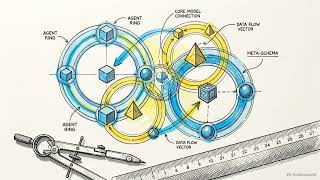
Omnigent's central move is deceptively simple. Every coding agent today bundles a model with a particular interface, but underneath they all do the same thing: messages and files go in, text streams and tool calls come out. Omnigent standardizes that interface so harnesses become swappable [3]. The payoff is that you can combine multiple models, harnesses, and techniques without rewriting code, and switch between Claude Code, Codex, Pi, and your own agents with one-line changes [1]. The harness — historically the thing that locks you into a vendor — is demoted to a component you can hot-swap.
This is why observers reached for the Kubernetes analogy: just as Kubernetes abstracted away the underlying servers, the meta-harness layer is framed as the next evolutionary step for working with agents, eliminating the silos that today's agent harnesses create [4]. The strategic consequence for developers is reduced lock-in — if every harness is interchangeable, the question shifts from 'which agent do I commit to?' to 'which agent is best for this specific subtask, right now?' That reframing is the whole point, and it is what separates Omnigent from being just another IDE or coding assistant: it is an orchestration layer that sits across agents rather than a competitor to any one of them [1].