California's No Robo Bosses Act for Workplace AI
TECH

California's No Robo Bosses Act for Workplace AI

32+
Signals

Strategic Overview

  • 01.
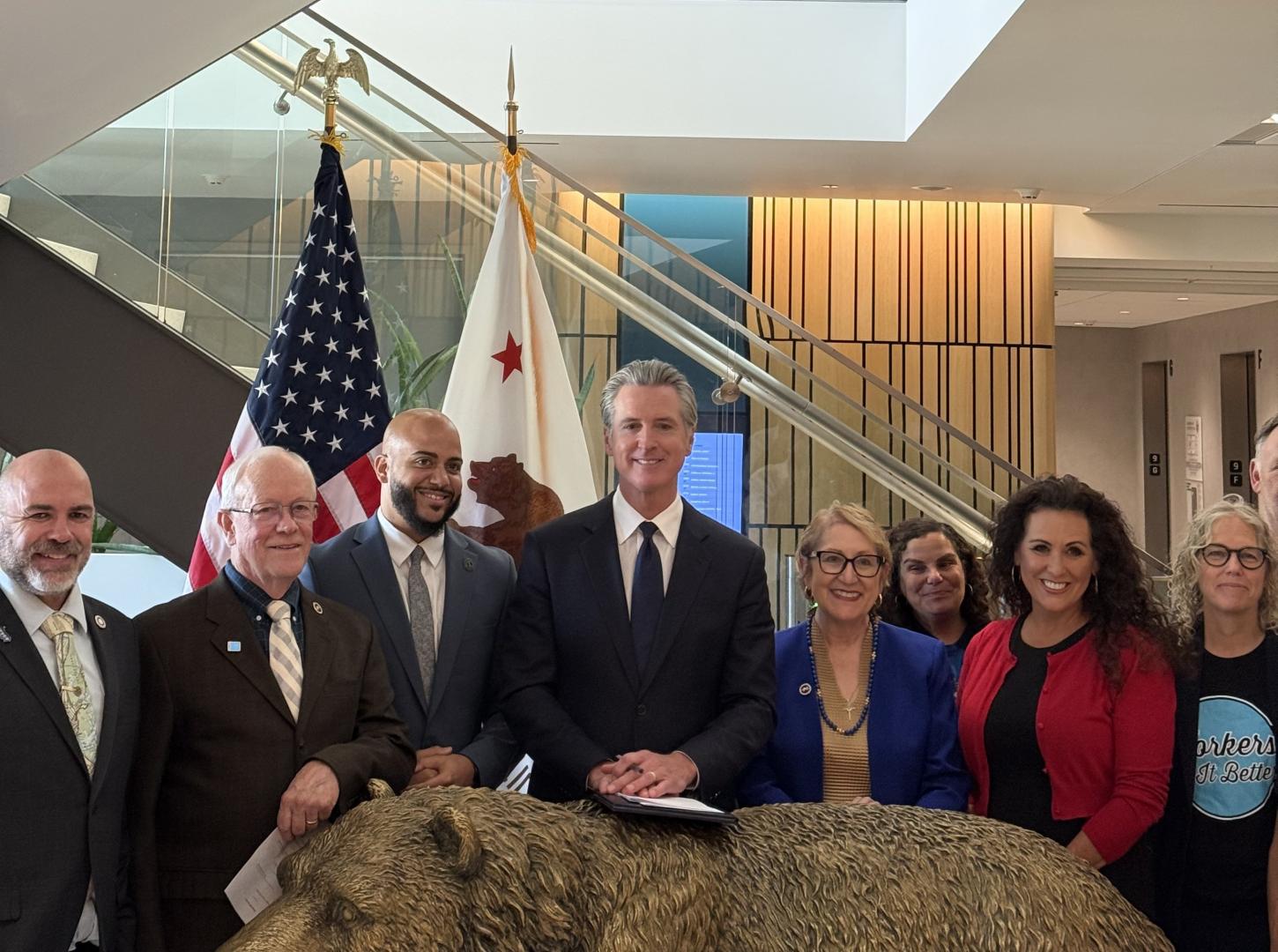
    Governor Gavin Newsom signed SB 947, the No Robo Bosses Act, on September 30, 2026, prohibiting employers from relying solely on an automated decision system to fire or discipline a worker; the law takes effect July 1, 2027. Newsom said: "No worker should ever be fired or disciplined by a robo boss. Artificial intelligence systems have the potential to increase productivity, but they've also been prone to errors, bias, and misjudgments."
  • 02.
    If an automated decision system is the primary basis for discipline or termination, a human reviewer must independently corroborate the output using additional evidence such as managerial evaluations, peer reviews, or personnel files, and the affected worker must receive written notice.
  • 03.
    Newsom signed two companion bills the same day: AB 1883, which restricts employer use of video and audio monitoring, time-trackers, geolocation, and electromagnetic tracking tools if they use AI to collect neural data or recognize employees' emotions, and AB 1331, which bans AI-capable bathroom surveillance.
  • 04.
    All three laws carry civil penalties up to $500 per violation, enforceable by the labor commissioner, public prosecutors, and through California's Private Attorney General Act; SB 947 also allows for punitive damages and attorney's fees via a private right of action.

Deep Analysis

What 'Relying Solely on AI' Actually Forbids

On September 30, 2026, Governor Gavin Newsom signed SB 947, the No Robo Bosses Act, making California the first state to bar employers from relying solely on an automated decision system to fire or discipline a worker [1]. Newsom framed the law bluntly: "No worker should ever be fired or disciplined by a robo boss. Artificial intelligence systems have the potential to increase productivity, but they've also been prone to errors, bias, and misjudgments" [1]. The law takes effect July 1, 2027, giving employers roughly nine months to build compliant review processes.

The mechanism is narrower than an outright AI ban. If an automated decision system is the primary basis for a firing or discipline decision, a human reviewer must independently corroborate that output using additional evidence such as managerial evaluations, peer reviews, or personnel files, and the affected worker must receive written notice [2]. As one law firm's client alert put it, the statute "would require meaningful human involvement and corroborating evidence" rather than simply disclosing that AI was used [3]. Enforcement runs through the labor commissioner and a private right of action, with violations carrying $500 per instance plus the possibility of punitive damages and attorney's fees [3]. The same signing session added AB 1883, which bans employer use of AI to infer emotions or collect neural data through workplace monitoring tools, and AB 1331, which bars AI-capable surveillance in restrooms and similar private spaces [2][4].

From Veto to Signature: What Changed in a Year

This is not California's first attempt. Newsom vetoed a nearly identical bill, then numbered SB 7, on October 14, 2025, citing overly broad notification requirements, duplication with existing California Privacy Protection Agency rules, and the risk of significant economic harm to small employers [5]. Business groups, including the California Chamber of Commerce, Consumer Technology Association, and Chamber of Progress, had estimated the earlier version could cost California employers more than $1 billion in compliance [5].

What changed by September 2026 appears to be less about the bill's substance and more about political momentum: the California Federation of Labor Unions, AFL-CIO, which sponsored both versions, kept pushing, framing it as workers "demanding that our state lead the way in regulating AI in our workplaces" [1]. The core ambiguity that worried opponents did not disappear, though. The term "primarily relies on AI" remains undefined, a gap flagged by employer-side attorneys and echoed in Newsom's own signing statement urging legislators to clarify the scope of AB 1883 [4][5]. California's move also lands after New York City's 2023 Local Law 144 required bias audits for automated hiring tools [6], and alongside Illinois Human Rights Act amendments that added AI-specific notice obligations earlier in 2026 [7]; unlike those hiring-focused rules, SB 947 is the first US law aimed specifically at AI-driven firing and discipline.

The Meta Lawsuit: The Harm This Law Is Aimed At

The law's sponsors point to concrete cases like Meta's as the problem it is meant to address. In May 2026, Meta laid off roughly 8,000 employees, about 10 percent of its workforce [8]. Twenty-six of those former employees later sued, alleging the company's internal "Metamate" AI assistant and associated scoring tools disproportionately targeted workers for layoff, including some on protected medical or pregnancy leave [8][9].

Meta has denied the claims outright: "These claims lack merit and are not based on facts. Workforce management and organizational decisions were and are made by people, not AI" [8]. The dispute sits inside a broader pattern: AI or automation was cited as a factor in 56 percent of tracked 2026 layoff events, affecting roughly 156,270 workers across about 150 companies [10]. SB 947's human-corroboration requirement is written almost directly against this kind of allegation, since it would force an employer to document independent, non-algorithmic evidence before a termination tied to an automated score could stand up to scrutiny.

Does This Protect Workers, or Just Middle Management?

Not everyone reading the bill sees a worker-protection law. Online discussion of the bill's earlier Senate-passage stage was notably more skeptical than the celebratory tone coming from labor advocates, with a recurring argument that mandating human sign-off, rather than banning algorithmic firing outright, mainly preserves a review role for middle management rather than stopping the underlying harms, such as AI systems that auto-reject job applicants or flag "dissatisfaction" in employee communications. A competing view in that same discussion held that a well-documented AI system could in theory be more consistent than a human manager, though critics countered that the opacity of large-model decision logic makes that consistency impossible to audit regardless of performance.

Supporters frame the stakes differently. The Electronic Frontier Foundation backed the bill specifically because "a boss cannot fire or punish a worker based solely on ADS," pointing to a track record of employment algorithms that discriminate and that have reportedly been used to flag union-organizing activity [11]. The underlying adoption curve suggests the stakes will keep growing: 39 percent of organizations had adopted AI in HR functions by December 2025, up from 26 percent in 2024, with adoption at 60 percent among organizations with 5,000 or more employees versus 33 percent among those with 2 to 99 employees [12]. Whether SB 947's corroboration requirement meaningfully slows that curve, or simply adds a documentation step around it, is likely to be the question California regulators and litigants test first.

Reaction outside that debate was quieter and more procedural. Labor-advocacy accounts on X treated both the Senate passage and the eventual signing as a clear win, while mainstream outlets covered the story as straightforward policy news, with no visible public backlash in either case. YouTube coverage stayed closer to the mechanics, walking through what counts as "primarily relying" on AI and who has to sign off on a termination, rather than taking a side in the fairness debate playing out among commenters elsewhere.

Historical Context

2023-01-01
NYC Local Law 144 becomes the first US law regulating AI in hiring, requiring bias audits for Automated Employment Decision Tools.
2025-10-14
Vetoes the earlier version of the bill, then SB 7, despite it clearing both chambers, citing overly broad notice requirements, overlap with CPPA rules, and cost concerns for small employers.
2026-01-01
Illinois Human Rights Act amendments take effect, adding AI-specific notice obligations and anti-discrimination liability for AI employment tools.
2026-05
Lays off roughly 8,000 employees, about 10 percent of its workforce, the layoff later at the center of the Metamate AI-targeting lawsuit.
2026-09-30
Signs SB 947, AB 1883, and AB 1331 together as part of a broader package of AI-related bills covering workplaces, health care, online content, and genetic research.

Power Map

Key Players
Subject

California's No Robo Bosses Act for Workplace AI

GO

Gov. Gavin Newsom

Signed SB 947, AB 1883, and AB 1331 on September 30, 2026, after vetoing a near-identical bill (then SB 7) in October 2025 over scope and cost concerns

SE

Sen. Jerry McNerney (D)

Author of SB 947, the No Robo Bosses Act

CA

California Federation of Labor Unions, AFL-CIO

Sponsor of SB 947, framing it as a worker-driven demand for AI regulation in the workplace

CA

California Chamber of Commerce, Consumer Technology Association, Chamber of Progress

Opposed the bill, citing an estimated $1 billion-plus compliance cost and an undefined "primarily relies on AI" standard

ME

Meta Platforms

Faces a lawsuit from 26 former employees alleging its "Metamate" AI tools targeted workers, including those on protected leave, for its May 2026 layoffs; Meta denies AI made the decisions

EL

Electronic Frontier Foundation (EFF)

Publicly supported the bill, citing algorithmic hiring bias and the use of employment algorithms to detect union organizing

Fact Check

12 cited
  1. [1] Newsom Signs McNerney's 'No Robo Bosses Act' 2026, Requiring Human Oversight of AI in the Workplace
  2. [2] California Governor Signs 3 Bills Targeting AI and Workplace Surveillance
  3. [3] California SB 947 'No Robo Bosses Act': New Guardrails on Use of Automated Decision Systems in Employer Discipline and Termination Decisions
  4. [4] Newsom Signs Ban on Using AI to Monitor Worker Brain Activity
  5. [5] California Governor Vetoes 'No Robo Bosses Act'
  6. [6] Automated Employment Decision Tools: A Guide to NYC Local Law 144
  7. [7] Current Regulations on AI in Employment Decisions
  8. [8] Meta Sued by 26 Workers Over AI-Assisted Layoff Targeting
  9. [9] Meta Faces Discrimination Lawsuit Over AI Use in Mass Layoffs
  10. [10] AI Now Drives 56% of 2026's Layoffs
  11. [11] Yes, California's No Robo Bosses Act Is a Win for Workers
  12. [12] AI Recruitment Statistics

Source Articles

Top 5

THE SIGNAL.

Analysts

“AI must remain a tool controlled by humans, not the other way around.”

Sen. Jerry McNerney
Bill author

“A boss cannot fire or punish a worker based solely on ADS.”

Electronic Frontier Foundation
Supportive of SB 947

“The law would require meaningful human involvement and corroborating evidence.”

Crowell & Moring (law firm client alert)
Neutral legal analysis

“Before enacting new legislation in this space, we should assess the efficacy of these regulations.”

Fisher Phillips (employer-side law firm)
Cautionary, referencing the 2025 veto reasoning

“These claims lack merit and are not based on facts. Workforce management and organizational decisions were and are made by people, not AI.”

Meta Platforms
Denies the lawsuit's claims
The Crowd

“The California Senate has passed the No Robo Bosses Act, which prohibits employers from using AI for automated decision systems in firing or disciplining their workers.”

@@MorePerfectUS5498

“California Gov. Gavin Newsom bans AI 'robo bosses' in landmark state law, reversing his earlier veto”

@@CNBC26

“THIS IS HUGE! California lawmakers just passed SB 7, the No Robo Bosses Act, and soon it will go to the governor's desk! This bill is the first of its kind & would be the strongest AI guardrails in the nation taking on the new threat of robobosses.”

@@CaliforniaLabor27

“California's 'No Robo Bosses Act' advances, taking aim at AI in the workplace”

@u/katxwoods1800
Broadcast
Breaking Job News: 60% of Companies Plan Layoffs by 2026 and California's "No Robo Bosses Act"

Breaking Job News: 60% of Companies Plan Layoffs by 2026 and California's "No Robo Bosses Act"

CA eyes AI regulation as Newsom orders new workforce protections amid job shifts, mass layoffs

CA eyes AI regulation as Newsom orders new workforce protections amid job shifts, mass layoffs

California enacts No Robo Bosses Act, barring AI-only firing and discipline

California enacts No Robo Bosses Act, barring AI-only firing and discipline

California's No Robo Bosses Act for Workplace AI — AI News | Agentic Brew