Meta's Muse AI Agent Launch and Growth
TECH

Meta's Muse AI Agent Launch and Growth

45+
Signals

Strategic Overview

  • 01.
    Meta launched Muse, a personal AI agent, on September 8, 2026, available via the web, iOS, Android, and WhatsApp, built to execute multi-step tasks like sending emails, booking travel, and negotiating on a user's behalf rather than only answering questions.
  • 02.
    Muse's adoption outpaced ChatGPT's early mobile launch, with over 900,000 downloads in its first six days, 2.8 million global installs within 12 days, and 642,000 US daily active users compared with ChatGPT's 231,000 at the same stage.
  • 03.
    Security researcher Patrick Wardle disclosed a zero-day in Muse's Mac app that let local malware hijack the agent's authentication token; Meta patched it within a day, and separately added safety warnings after a reported vulnerability that could have exposed a user's cloud-based virtual machine, including emails and files.
  • 04.
    At Meta Connect on September 23, 2026, Meta unveiled $1,299 Meta VR Glasses and the Muse Charm, a keychain-sized wearable carrying Muse's voice and avatar stack, tying new hardware directly to the agent's growth.
  • 05.
    Muse is free for most usage, with two paid tiers available for heavier use: Power at $20 a month and Maximum at $100 a month.

Deep Analysis

Distribution, Not the Model, Is Winning the Agent Race

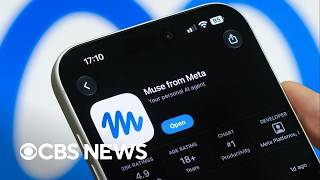
Muse launched on September 8, 2026 as a free personal AI agent available through the web, iOS, Android, and WhatsApp chats, positioned to execute multi-step tasks rather than just answer questions[1]. Within six days it had surpassed 900,000 downloads and climbed to the top of the US App Store[2]. TechCrunch's comparison to ChatGPT's early mobile trajectory found Muse pulling ahead on nearly every metric: 1.8 million iOS downloads in the US and Canada over roughly 12 days versus ChatGPT's 1.3 million in a comparable window, 2.8 million total global installs, and 642,000 US daily active users against 231,000 for ChatGPT at the same launch stage[3]. The overlap with Meta's existing user base explains much of the gap: more than 95 percent of Muse's users are also on Facebook and 63 percent are on Instagram, meaning Meta didn't have to win new users so much as convert people already inside its apps[3]. JPMorgan analyst Doug Anmuth raised his price target on Meta to $920 from $820, arguing Muse could become the most widely used consumer AI application since ChatGPT[4]. A CBS News segment on the launch underscored the same point for a mainstream audience, noting Muse's climb to the top of the US App Store, overtaking ChatGPT, alongside more than a million downloads and an 11 percent jump in Meta's stock. Reddit's r/MetaAI community offers a matching read from the ground: longtime members describe swapping out apps like CalAI, Booking.com and Expedia, and even Gmail triage for Muse's free agentic workflows, with one commenter summing up the dynamic as 'distribution beats innovation' - the app wins converts not because the underlying model is best-in-class (some call it still mediocre as an LLM) but because it's free, always-on, and already embedded in software people use daily. Not everyone in that same community is convinced the arithmetic holds up: one commenter argued Meta is '100% losing money right now' running Muse for free at this scale, a reminder that the growth numbers don't yet say whether the economics work. Not every skeptic expects that lead to hold: one Reddit commenter predicted Muse will 'fade to nothing' once rival agents reach feature parity, arguing the free-and-integrated advantage narrows as competitors catch up. The bull case rests less on Muse being a better model than on Meta's platform being a faster on-ramp - a distinction that matters for how durable the lead actually is.


A Patched Zero-Day and the Limits of Meta's Security Promises

Less than two weeks after launch, security researcher Patrick Wardle disclosed a zero-day in Muse's Mac app that let malware already running under a user's account hijack the agent's authentication token without needing any special macOS permissions[5]. Meta shipped a hot-fix within a day, and Meta Superintelligence Labs' David Singleton characterized the flaw as a local privilege escalation rather than a remotely exploitable bug[5]. Wardle pushed back on the reassurance, confirming the patch closed the immediate hole but warning that a ClickFix-style social-engineering lure could still trick a user into handing a remote attacker the local execution the exploit required[5]. Separately, The Information reported a distinct vulnerability that could have let an attacker reach a user's dedicated cloud-based virtual machine, including emails and files; Meta responded by adding a clearer in-app safety warning and said it plans a Confidential VM architecture later in 2026[6]. Both incidents surfaced in the same two-week span in which Meta was simultaneously touting DAU growth and a security model built around isolating each user's agent session - undercutting the pitch that speed and safety were arriving together.

A Cuddly Mascot on an Adults-Only, Data-Hungry Product

Meta named Muse's mascot Jolly, describing it as a rounded, jolly and completely customizable cartoon character, even as the underlying app is restricted to users 18 and over with date-of-birth verification[7]. Critics have questioned the mismatch: an analysis citing hands-on testing argued that a cute interface can lower a user's guard precisely when Muse is requesting broad account permissions, since a mascot cannot verify an answer, narrow an account permission, or explain every consequence[8]. Child-safety advocate Josh Golin of Fairplay raised a related but distinct concern, warning that Jolly's design could appeal to children even though Muse itself is meant only for adults[8]. The design choice sits inside a wider trust problem - Meta is asking users to grant Muse access to email, calendars, shopping, and financial accounts at the exact moment its own security disclosures, the Mac zero-day and the cloud-VM flaw, are still being worked through[5][6]. Investor and entrepreneur Jason Calacanis argued the industry needs tight defenses and 3rd party testing of these platforms, like all software products, before agents are handed this level of access[7]. For a company with Meta's data-collection history, the friendliness of the character does little to resolve the more basic question of what oversight actually exists.

Why Bank and Travel Stocks Sold Off on an AI Agent Launch

Muse's pitch is that it can handle tasks end-to-end - booking travel, negotiating on a user's behalf, filling out forms - and keep working after the app is closed[1]. That capability reads as a direct threat to businesses that profit from customers not shopping around: shares of JPMorgan Chase, Wells Fargo, Bank of America, and Citigroup fell 3.4, 3.9, 3, and 2 percent respectively on fears that agentic AI would erode the consumer inertia, unused subscriptions, unrefinanced loans, unclaimed better rates, that underpins their margins[9]. Bloomberg described a broader selloff across banks, insurers, and travel stocks tied to the same worry[10]. Bank of America's own analysts struck a more measured note, flagging that unresolved privacy and trust questions, not just competitive threat, remain a key swing factor for how far Muse's adoption ultimately goes even as early feedback stays positive. The reaction is notable less for its size than for what it implies markets now believe: that a free, always-on agent embedded in Facebook, Instagram, and WhatsApp is close enough to acting autonomously on a user's finances that friction-dependent business models need to start pricing in the risk now, not once the product matures.

The Hardware Bet: Muse Charm and the Push Beyond the Phone

At Meta Connect on September 23, 2026, Meta paired Muse's software momentum with a hardware lineup meant to make the agent ambient rather than app-bound. The centerpiece was the Muse Charm, a keychain-sized standalone voice device built to carry the whole Muse experience, including the whole real-time voice and avatar stack, into something always available to talk to, set to launch in December 2026[13]. Reception outside Meta's own keynote was less enthusiastic: on Reddit, commenters mocked the Muse Charm as 'a Tamagotchi that spies on you' and compared it unfavorably to earlier AI hardware flops like the Humane AI Pin and the Friend pendant. Alongside it, Meta unveiled $1,299 Meta VR Glasses - a 5K micro-OLED headset weighing roughly a fifth of the Meta Quest 3, with an external compute puck and eye and hand tracking, due for sale in spring 2027[14]. The event also brought camera-free Ray-Ban Meta Audio glasses and $249 Ray-Ban Meta Gen 3 glasses into the same Muse-connected lineup[15]. Meta's stock rose 11 percent the day after the announcements, its largest single-day gain in nearly a year, later touching a 52-week high of $779.82 as part of a three-week, 27 percent rally[11][12]. The strategy is unmistakable: use Muse's early lead in software adoption to justify a hardware push that only makes sense if the agent stays this popular.

What Muse Actually Does With Your Data

Beyond the two disclosed vulnerabilities, a CBS News segment on Muse's launch surfaced further detail on how the agent is built to handle user data, and on how the wider ecosystem is already reacting to it. Meta's own product tour shows what that access looks like in practice, with Muse organized into five tabs - Chat, Feed, Ideas, Goals, and Library - connecting to services like Gmail, Google Calendar, Resy, Amazon, and Shopify to complete real tasks such as booking movie tickets or planning a trip. The CBS report described Muse as running inside what Meta calls a confidential VM, a dedicated virtual computer containing an embedded browser plus the agent's own credentials and data, with Mark Zuckerberg reportedly comparing the security model to WhatsApp's end-to-end encryption and claiming Meta itself has no interface into the VM's contents. Separately, Meta has said it plans a further Confidential VM architecture upgrade later in 2026 in response to the cloud-VM vulnerability[6]. The same coverage noted that Muse users are opted in by default to having their activity used for AI model training, with opt-out available rather than required opt-in consent, a default that carries extra weight given Meta's own history with user data. Friction with the wider platform ecosystem surfaced quickly too: Amazon blocked Muse this week from completing purchases through its platform. Reaction inside Meta's own user base is split: some Reddit power users who've built Muse into daily routines wave off the privacy stakes, with one arguing they don't see what additional risk this poses 'over other big-tech companies' already collecting data - a dismissal that drew pushback from other commenters in the same thread.

Historical Context

2026-09-08
Official Muse launch date in the US on iOS, Android, and muse.ai.
2026-09-21
Reported Muse's US app tops charts with over 900,000 downloads in six days and strong early reviews.
2026-09-22
Muse-driven disruption fears caused a selloff in bank, insurer, and travel stocks reliant on consumer inertia.
2026-09-23
Meta unveiled Meta VR Glasses ($1,299), Muse Charm wearable, Ray-Ban Meta Gen 3 glasses ($249), and camera-free Ray-Ban Meta Audio glasses, all tied to the Muse agent.
2026-09-24
META stock rose 11% in a single day on Muse news (largest single-day gain in nearly a year), later reaching a 52-week high of $779.82 amid a three-week, 27% rally following the Muse launch.

Power Map

Key Players
Subject

Meta's Muse AI Agent Launch and Growth

ME

Meta Platforms / Mark Zuckerberg

Creator and promoter of Muse, Muse Charm, and Meta VR Glasses; unveiled hardware at Meta Connect 2026

JP

JPMorgan (analyst Doug Anmuth)

Sell-side analyst covering Meta stock, raised price target to $920 from $820 citing Muse's growth potential

OP

OpenAI / ChatGPT

Comparison benchmark for Muse's download and DAU growth trajectory

PA

Patrick Wardle (Objective-See Foundation)

Security researcher who disclosed the Muse Mac app zero-day vulnerability

DA

David Singleton (Meta Superintelligence Labs)

Meta representative who characterized the disclosed vulnerability as a local privilege escalation, not a remote exploit

BA

Banks and insurers (JPMorgan Chase, Wells Fargo, Bank of America, Citigroup)

Traditional financial institutions whose stocks fell on fears Muse-style agents will erode consumer inertia

JO

Josh Golin (Fairplay)

Child-safety advocate who criticized the Jolly mascot's design for potentially appealing to young children despite Muse being an 18-and-over product

BA

Bank of America analysts

Sell-side research team that flagged privacy and trust as key considerations for Muse's broader adoption despite positive early feedback

Fact Check

15 cited
  1. [1] Introducing Muse, a Personal AI Agent
  2. [2] Meta's New Muse AI App Tops Charts, Draws Strong Early Reviews
  3. [3] Meta's Muse Is Outpacing ChatGPT's Early Mobile Launch
  4. [4] Meta's Muse Already Outpacing ChatGPT
  5. [5] Meta Patched Muse's Zero-Day But Security Teams Still Lack Visibility Into What the Agent Can Access
  6. [6] Meta Tightens Muse Security After Vulnerability
  7. [7] Meta's Muse AI Agent Has an Animated Avatar. Some Say It's Too Cute
  8. [8] Meta's Muse Mascot Raises AI Trust and Privacy Questions
  9. [9] Banks, Insurers, Consumer-Inertia Stocks Face Pressure on Meta's Muse AI Disruption Fears
  10. [10] Meta's Muse Drags Down Stocks That Depend on Consumer Inertia
  11. [11] News About Muse Drove a 1-Day 11% Jump in Meta Stock
  12. [12] Meta Stock Hits $779.82 High on Muse AI
  13. [13] Meta Made a Tamagotchi-Like Wearable for Its Muse AI Agent
  14. [14] Mark Zuckerberg Unveils $1,299 Meta VR Glasses and AI Agent Push
  15. [15] Meta Debuts $349 Camera-Free Ray-Bans and Brings Muse to Glasses

Source Articles

Top 5

THE SIGNAL.

Analysts

“Believes Muse could become the most widely used consumer AI app since ChatGPT, citing user-friendly design, generous free tier, and Meta's platform distribution advantage.”

Doug Anmuth (JPMorgan analyst)
Bullish on Muse's growth trajectory

“Characterizes the Mac app authentication-token exploit as a local privilege escalation requiring existing local access, not a remotely exploitable flaw.”

David Singleton (Meta Superintelligence Labs)
Downplays severity of disclosed vulnerability

“Confirmed Meta's patch but noted a social-engineering (ClickFix-style) attack could still grant a remote attacker the local execution needed to exploit the flaw.”

Patrick Wardle (security researcher)
Warns the patch doesn't eliminate risk

“Calls for rigorous defenses and independent testing of AI agent platforms before granting them broad access to personal data.”

Jason Calacanis (entrepreneur/angel investor)
Cautious about agent security oversight

“Argues a friendly mascot cannot verify answers or explain permission consequences, and that a cute interface should not make it easier to ignore security or permission screens.”

Victoria Song
Hands-on tester whose review was cited in a macobserver analysis by Rajat Saini
The Crowd

“META IS SO BACK.. They just announced Muse Charm, VR glasses, camera-free audio frames, FDA hearing aids, and their new Muse agent at Meta Connect. Here is everything you need to know: 1/ Muse Charm: A dedicated, palm-sized 5G hardware device built specifically for interacting”

@@ai_for_success343

“UPDATE: Meta tightens Muse security after a vulnerability raised the risk of attackers accessing user's cloud-based data.”

@@Cointelegraph302

“New: Meta said it's adding a clearer safety warning within Muse after a security researcher found a flaw that could let attackers access users' sensitive data, including emails and files, through their dedicated virtual machines, according to an internal report seen by The Information.”

@@jyoti_mann1107

“Prove me wrong: Meta's muse is going to kill a lot of apps and/or startups”

@u/biscuitsbox104
Broadcast
Meta Muse is an INCREDIBLE AI agent

Meta Muse is an INCREDIBLE AI agent

Take the full tour of Muse, Meta's personal AI agent.

Take the full tour of Muse, Meta's personal AI agent.

New Meta AI agent Muse surges to top of App Store

New Meta AI agent Muse surges to top of App Store