Taiwan Indicts Nine in Nvidia B300 AI Server Smuggling Case
TECH

Taiwan Indicts Nine in Nvidia B300 AI Server Smuggling Case

30+
Signals

Strategic Overview

  • 01.
    Taiwan's Keelung District Prosecutors' Office indicted nine individuals on August 24-25, 2026 over the alleged illegal export of Nvidia B300 AI servers to China.
  • 02.
    The defendants include an Nvidia Taiwan distribution/sales manager, two Super Micro Taiwan sales managers, the general manager of Super Micro distributor Albatron Technology, and an employee of Chief Telecom.
  • 03.
    Of 130 Nvidia B300 servers ordered, 74 were smuggled out - 50 transshipped through Indonesia, 16 sent directly to China, and 8 routed via Japan then Hong Kong - while the remaining 56, declared for Japan, were seized at Taiwan's border.
  • 04.
    Eight of nine defendants face breach-of-trust and document-forgery charges, three also face embezzlement charges, and prosecutors are seeking sentences of up to five years for seven defendants described as profit-driven.

Deep Analysis

Inside the Five-Point Evasion Playbook

The indictment lays out a five-step mechanism designed to defeat Taiwan's export whitelist system from the inside. A front company, Flying Tiger Tech, first secured 'whitelist' status that let it buy the servers under the pretense they'd stay on the island [1]. Purchases were then routed through Super Micro distributor Albatron Technology to obscure who the real buyer was [1]. When inspectors came calling, the scheme allegedly produced fake colocation lease quotations from data-center provider Chief Telecom instead of real leases, so it looked like the servers had a legitimate home in Taiwan [1]. None of that would have worked without insiders - employees at Nvidia Taiwan and Super Micro Taiwan are accused of coaching Flying Tiger Tech through the inspection process itself [1]. Only then did the physical diversion happen: of 130 B300 servers ordered, 74 left the island - 50 transshipped through Indonesia, 16 sent directly to China, and 8 routed via Japan then Hong Kong - while the remaining 56, declared for Japan, were caught at Taiwan's border [2].

The Economics of Betrayal, and a Side Hustle Inside the Smuggling Ring

The arbitrage behind this scheme was large enough to matter: B300 servers reportedly fetched close to double their US price once they reached China's black market [1], the kind of margin that turns ordinary supply-chain access into temptation. Prosecutors put the scheme's total illicit profit at roughly $21.21 million [1]. The case also reveals the smuggling wasn't the only scam running - some of the same defendants are accused of a parallel NT$39 million fraudulent billing scheme for installation work that was never actually performed [1], suggesting the network treated the export-control breach as one revenue stream among several rather than a one-off. Prosecutors are seeking up to five years for the seven defendants they describe as profit-driven, with more lenient terms recommended for two who confessed and cooperated [3]. On social media, that five-year ceiling for a scheme of this scale drew open mockery as disproportionately light.

Who's the Fall Guy? Nvidia, Super Micro, and the Self-Policing Question

Both companies moved fast to distance themselves from their own employees. Nvidia said only that it 'will work with the Taiwan authorities to help them resolve the allegations as quickly as possible' [2], while Super Micro stressed it is 'not a target' of the investigation and 'has not been accused of any wrongdoing' as a company [3]. That corporate-versus-individual framing is exactly where public reaction splits. On Reddit, the instinctive read from many commenters was that a company as large as Nvidia must have known about or tacitly enabled the diversion, treating the indicted employees as scapegoats - but several highly upvoted contrarian replies pushed back, arguing that a roughly $21 million, 130-unit scheme is immaterial to a company of Nvidia's size and that a genuinely corporate-directed operation would have moved far more volume before getting caught. That skepticism about self-policing has institutional backing too: Senators Elizabeth Warren and Jim Banks argued that if Nvidia 'could not detect and prohibit non-China customers from allegedly illegally diverting GPUs bound for Southeast Asia to China, it is extremely implausible that it can meet existing end user/use control requirement' [4], and a Foundation for Defense of Democracies analysis went further, saying cases like this one 'show the limits of industry self-policing' [5]. Commentary around the case has separately framed Nvidia as effectively pushing responsibility for supply-chain leakage downstream onto Super Micro - a tension neither company's statement really resolves.

A Legal Loophole, and What Comes Next

One detail explains why this indictment reads like a fraud case rather than a smuggling case: violating the US export-control regime is not itself a criminal offense under Taiwanese law, so prosecutors had to build the case on breach of trust, document forgery, and embezzlement statutes instead [3]. Prosecutors said the scheme 'increased corporate compliance costs' and 'severely damaged the nation's international image' [3]- language aimed as much at Taiwan's reputation as a manufacturing hub as at the defendants themselves. That legal gap is reportedly why Taiwan is now weighing new legislation that would restrict AI chip sales to every customer in China, not just blacklisted firms like Huawei and SMIC, which would let prosecutors charge future smuggling directly as an export crime [6]. This indictment also isn't an isolated incident - it follows a widening enforcement pattern that includes a Hao Global executive's US guilty plea over roughly $160 million in H100 and H200 GPUs diverted to China [7], and separate Justice Department cases against Chinese nationals attempting similar diversions [8]. Taken together, the pattern suggests chip-diversion enforcement is still catching up to a black market that keeps finding new transshipment routes faster than any single country can close them.

Historical Context

2022
Imposed export controls requiring licenses for sales of advanced Nvidia AI chips to China - the legal backdrop this smuggling scheme allegedly circumvented.
2025-12-31
A Hao Global executive pleaded guilty in the first-ever U.S. conviction for AI chip smuggling, involving roughly $160 million in H100 and H200 GPUs diverted to China - a separate case illustrating the broader enforcement pattern.
2026-01
First shipment of 16 B300 servers was allegedly sent directly to China as part of a three-tranche approval scheme (2, 64, 64 units).
2026-05-21
Taiwan moved to detain three individuals in an initial crackdown after suspecting Nvidia chips were smuggled to China - the first public case of its kind in Taiwan.
2026-06-29
Taiwan raided Super Micro's Taiwan office and two supply-chain partner sites as the investigation widened, with nine sites hit and six people summoned for questioning.
2026-07-01
Taiwan detained Super Micro workers as part of the expanding probe into Nvidia chip smuggling to China.
2026-07-28
An Nvidia staff member was detained by Taiwan authorities as part of the chip-smuggling investigation.
2026-08-24
Nine individuals were formally indicted, culminating the months-long investigation into the B300 server diversion scheme.

Power Map

Key Players
Subject

Taiwan Indicts Nine in Nvidia B300 AI Server Smuggling Case

NV

Nvidia Corporation (Taiwan office)

Employer of an indicted distribution/sales manager accused of facilitating the diversion scheme from inside the company.

SU

Super Micro Computer Inc. (Taiwan branch)

Manufacturer of the AI servers containing Nvidia B300 GPUs; two Taiwan sales managers were indicted for allegedly coaching the front company through export inspections.

AL

Albatron Technology

Taiwan-listed Super Micro distributor whose general manager was indicted; allegedly used as an intermediary to obscure the real buyer of the servers.

CH

Chief Telecom

Colocation/data-center provider allegedly used to present fake lease quotations to inspectors rather than real leases, to make it look like the servers would stay in Taiwan.

FL

Flying Tiger Tech

Alleged front company that obtained 'whitelist' status to purchase the B300 servers under false pretenses that they would remain in Taiwan.

KE

Keelung District Prosecutors' Office

Taiwanese prosecuting authority that led the investigation and filed the indictment against the nine defendants.

Fact Check

8 cited
  1. [1] Nine Indicted by Taiwan Over Illegal Export of Nvidia B300 GPUs to China: Five-Point Strategy Revealed - Tom's Hardware
  2. [2] Taiwan Charges 9 Over Illegal AI Server Exports to China, Including Nvidia and Super Micro Staffers - PBS NewsHour
  3. [3] Nvidia, Supermicro Employees Charged Over Export of AI Servers to China - Al Jazeera
  4. [4] Taiwan Indicts Nvidia Manager Following Chip Smuggling Probe - Bloomberg
  5. [5] Exposure of Major Chinese-Linked Chip Smuggling Operations Shows Limits of Industry Self-Policing - FDD
  6. [6] Taiwan Raids Super Micro and Two Supply-Chain Partners in Widening Nvidia Smuggling Probe - Tom's Hardware
  7. [7] $160 Million in Export-Controlled Nvidia GPUs Allegedly Smuggled to China - CNBC
  8. [8] US Justice Department Accuses Two Chinese Men of Trying to Smuggle Nvidia Chips - MarketScreener

Source Articles

Top 5

THE SIGNAL.

Analysts

Argued that if Nvidia cannot detect and stop non-China customers from diverting GPUs bound for Southeast Asia into China, it is implausible the company can meet existing end-user/end-use control requirements.

Senators Elizabeth Warren and Jim Banks
Skeptical that Nvidia can self-police GPU diversion

Argues that exposure of major Chinese-linked chip smuggling operations shows the limits of relying on companies to police their own distribution chains, pointing to systemic vulnerabilities in distributor oversight.

Foundation for Defense of Democracies (FDD)
Industry self-policing is insufficient to stop chip smuggling networks
The Crowd

JUST IN: Taiwan charges 9 people, including former Nvidia & Super Micro employees, over alleged smuggling of advanced AI servers to China.

@@Polymarket1716

Taiwan prosecutors said they indicted nine people, including employees of Nvidia and Super Micro, accused of illegal export of artificial intelligence servers to China. Taiwan indicts nine over alleged illegal export of AI servers to China (reuters.com)

@@Reuters169

Taiwanese prosecutors just indicted nine people, including an Nvidia manager and two Super Micro employees, after uncovering a $21.2 million smuggling ring that funneled restricted B300 AI servers directly to China. Operatives forged end-user paperwork and staged fake data centers.

@@Unveiled_ChinaX76

Nvidia worker among 9 charged in Taiwan chip smuggling case

@u/Hob-999158
Broadcast
Taiwan Indicts Nine Over AI Server Exports; AI Servers Allegedly Diverted to China | World DNA

Taiwan Indicts Nine Over AI Server Exports; AI Servers Allegedly Diverted to China | World DNA

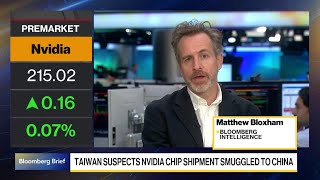
Taiwan Suspects Nvidia AI Chip Shipment Smuggled to China

Taiwan Suspects Nvidia AI Chip Shipment Smuggled to China

Taiwan Detains Nvidia Staffer In China AI Chip Smuggling Probe

Taiwan Detains Nvidia Staffer In China AI Chip Smuggling Probe

Taiwan Indicts Nine in Nvidia B300 AI Server Smuggling Case — AI News | Agentic Brew