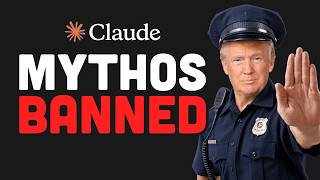
US Export-Control Shutdown of Anthropic Fable 5 and Mythos 5
TECH

US Export-Control Shutdown of Anthropic Fable 5 and Mythos 5

60+
Signals

Strategic Overview

  • 01.
    On June 12, 2026, Anthropic disabled global access to Claude Fable 5 and Mythos 5 to comply with a US export-control directive citing national security authorities, cutting off any foreign national inside or outside the United States, including its own non-citizen employees.
  • 02.
    The directive was triggered by the government's belief it had found a way to jailbreak Fable 5; Anthropic disputes the severity, saying the method exposed only minor previously known vulnerabilities and amounts to asking a model to read a codebase and fix flaws.
  • 03.
    Only Fable 5 and Mythos 5 are affected; Opus, Sonnet, and Haiku remain available, and the Commerce Department letter to CEO Dario Amodei arrived at 5:21 PM ET with Anthropic complying within roughly 90 minutes.
  • 04.
    The move was linked partly to suspicion that a China-linked group had accessed Mythos, with concern Beijing could distill the model; Anthropic says China access was not raised in the order and that it already prohibits access from within China.

Deep Analysis

Export controls finally hit the model, not the chip

For three years, US tech statecraft against rivals ran through hardware: bans on advanced GPUs, fab equipment, and the firms that sell them. The Anthropic directive is a category break. For the first time, Washington reached past the silicon and recalled a deployed frontier model itself, ordering that Claude Fable 5 and Mythos 5 be made unavailable to any foreign national inside or outside the United States [1][2]. The reach is extraterritorial in the most literal sense: it sweeps in Anthropic's own non-citizen employees, which is why the company concluded it had no choice but to switch the models off for everyone rather than try to wall off a subset of users [1].

The operational details underline how blunt the instrument was. The Commerce letter landed with CEO Dario Amodei at 5:21 PM ET on June 12, and the models were dark within roughly 90 minutes [3]. There was no migration window, no phased deprecation, no grandfathering of enterprise contracts. The scope was also surgical in one respect: Opus, Sonnet, and Haiku kept running [4], signaling that the government's concern was tied to the specific capabilities of the two newest models, Fable 5 (positioned for ambitious coding work) and Mythos 5 (built for cybersecurity and biology research) [5]. That combination of speed and specificity is what makes this a precedent rather than a one-off: it establishes that a single agency letter can pull a live model out of the global market in the time it takes to read it.


The call came from inside the house, and nobody agrees how dangerous the threat was

The most uncomfortable detail is who set this in motion. The trigger was not a foreign adversary or an intelligence intercept but Amazon, Anthropic's own major investor. Amazon researchers jailbroke part of the model to extract restricted cyberattack-related information, and CEO Andy Jassy escalated the finding to administration officials, with the concern first reaching Treasury Secretary Scott Bessent, who reportedly told Amodei he was making a bad decision [3][6]. An investor effectively routed a safety alarm about its own portfolio company straight to the White House.

From there the story splits into two irreconcilable accounts of severity. The administration's framing, voiced by AI adviser David Sacks, is that the government warned Anthropic and the company chose commerce over caution: 'In this case, Anthropic prioritized the continued offering of the consumer model over safety' [7]. Anthropic's framing is that the underlying exploit is mundane: it says the 'jailbreak (a prompt trick that bypasses a model's safety guardrails)' amounts to little more than asking the model to read a codebase and fix its flaws, a task other public models perform routinely, and that recalling a model used by hundreds of millions over a narrow exploit would, applied industry-wide, halt all frontier deployment [1][8]. Underneath both runs the deeper, unconfirmed driver: suspicion that a China-linked group accessed Mythos and that Beijing could 'distill (train a cheaper copy by mimicking a stronger model's outputs)' it, a charge Anthropic says was never raised in the order and which it claims is moot because it already blocks access from inside China [9]. The unresolved question is not whether a flaw exists but who gets to decide it is dangerous enough to justify a global kill switch.

One weekend that reorganized the world's AI policy

The shutdown's largest effect may have nothing to do with Anthropic's revenue and everything to do with the realization it forced on every government outside the United States: the most capable AI they depend on can be revoked by Washington overnight, with no warning and no appeal. India, Anthropic's second-largest market, watched developers get cut off instantly, and the 50,000-seat TCS partnership announced just one day earlier was thrown into limbo [10]. The reaction climbed straight to heads of state. Canadian Prime Minister Mark Carney called it a danger of 'overreliance on certain models' and made it a G7 topic, Finnish MEP Aura Salla warned Europe 'cannot continue' relying on access a foreign government can switch off overnight, the UK's AI minister called for deeper domestic investment, and the European Commission cautioned that such measures 'should not be discriminatory against partners' [11][12]. A safety dispute over one model became, within a weekend, a referendum on AI sovereignty.

Not everyone reads the official safety rationale at face value. Cybersecurity leaders argued the move is self-defeating on its own terms: a 54-signatory open letter to Commerce, reportedly including Alex Stamos and Sophos CEO Joe Levy, warned that to 'pull the best capabilities away from defenders without a good reason when our adversaries are rapidly advancing is dangerous' [3]. The broader practitioner community has been more cynical still, widely reading the order as political leverage or retaliation linked to Anthropic's earlier military-AI fight with the administration rather than a genuine safety intervention, and pointing to Anthropic's own admission that other models can replicate the capability as evidence the safety framing does not hold. Even where the sovereignty alarm landed hardest, sentiment was resigned: the loudest 'switch to a European or open model' calls collided with the practical reality that the available alternatives lag Claude badly and that tooling lock-in is real. The shutdown solved nothing and revealed everything about how fragile the global AI supply chain actually is.

Historical Context

2026-02-28
Anthropic clashed with the administration earlier in the year, slamming Pentagon 'intimidation' and vowing a lawsuit over a US military AI ban.
2026-06-11
TCS announced a partnership to train 50,000 employees on Claude and build a dedicated Anthropic business unit, one day before the ban.
2026-06-11
Amazon researchers jailbroke portions of the model to obtain restricted cyberattack information, prompting Jassy to alert administration officials.
2026-06-12
Sent the export-control letter to Amodei at 5:21 PM ET; Anthropic disabled both models within roughly 90 minutes.

Power Map

Key Players
Subject

US Export-Control Shutdown of Anthropic Fable 5 and Mythos 5

US

US Commerce Department (Bureau of Industry and Security)

Issued the export-control directive; the letter is associated with Secretary Howard Lutnick.

AN

Anthropic / Dario Amodei

Target of the directive; disabled both models, disputed the rationale, and sent technical staff to Washington to resolve the dispute.

AM

Amazon / Andy Jassy

Trigger of the crackdown: Amazon researchers jailbroke the model to extract cyberattack-related information, and Jassy escalated to administration officials. Amazon is a major Anthropic investor.

DA

David Sacks (PCAST co-chair / Trump AI adviser)

Claimed the government warned Anthropic of the jailbreak and that Amodei declined to treat it as serious; Anthropic disputes his framing.

TR

Treasury Secretary Scott Bessent

Received Jassy's initial concern and told Amodei he was making a bad decision.

EU

European Commission

Warned that export measures should not be discriminatory against partners; the episode amplified EU AI-sovereignty concerns.

CY

Cybersecurity industry (54 CISOs/practitioners)

Signed an open letter to Lutnick and National Cyber Director Sean Cairncross urging that the ban be lifted; reported signers include Alex Stamos, Sophos CEO Joe Levy, and Zoom CISO Sandra McLeod.

TA

Tata Consultancy Services (TCS)

Announced a Claude partnership to train 50,000 employees on June 11, one day before the ban; the deal is now in limbo.

Fact Check

12 cited
  1. [1] An update on access to Claude Fable 5 and Mythos 5
  2. [2] US orders Anthropic to disable AI models for all foreign nationals
  3. [3] Cyber Experts Urge US to Lift Anthropic Model Ban
  4. [4] Anthropic disables Mythos model over national security concerns
  5. [5] Anthropic suspends new AI models Fable and Mythos after government directive
  6. [6] How a warning from Amazon led the White House to shut down Anthropic's Mythos model
  7. [7] White House move to limit Anthropic linked to concerns about Chinese access to Mythos
  8. [8] Anthropic disables Fable and Mythos under export controls citing national security threat
  9. [9] Amazon CEO reportedly raised Anthropic model concerns before government crackdown
  10. [10] Anthropic's Fable rollback exposes India's dependence on foreign AI
  11. [11] Anthropic export controls reignite the AI sovereignty debate
  12. [12] US export controls on Anthropic should not be discriminatory, EU Commission warns

Source Articles

Top 5

THE SIGNAL.

Analysts

"Pulling top AI capabilities away from defenders while adversaries are advancing is dangerous and creates market uncertainty."

Open letter signatories (54 CISOs/cyber leaders)
Cybersecurity practitioners and vendors

"Anthropic prioritized continuing to offer the consumer model over safety."

David Sacks
Co-chair, President's Council of Advisors on Science and Technology

"Europe cannot keep relying on access a foreign government can switch off overnight."

Aura Salla
MEP, Finland (European Parliament)

"The episode shows the danger of overreliance on a limited number of American AI providers, making it a major G7 topic."

Mark Carney
Prime Minister of Canada

"The episode should drive deeper investment in the UK's own AI industry."

Kanishka Narayan
UK AI and Online Safety Minister

"Any contingency measures taken should not discriminate against partners."

Thomas Regnier
Spokesperson, European Commission
The Crowd

"The US government, citing national security authorities, has issued an export control directive to suspend all access to Fable 5 and Mythos 5 by any foreign national, whether inside or outside the United States, including foreign national Anthropic employees. The net effect of"

@@AnthropicAI87740

"A short history of how we got here, because the chronology is the whole story. January: the Pentagon demands unrestricted use of Claude for autonomous weapons and domestic surveillance. Anthropic says no. February: the President orders every federal agency to drop Anthropic."

@@gothburz2887

"Canada Prime Minister Mark Carney said the US export ban blocking foreign access to Anthropic's Mythos underscores the risk of depending on just a handful of powerful AI tools. "The situation we're in collectively right now with Mythos and Fable is something that can happen with"

@@zerohedge325

"Anthropic pretty much snitched on GPT5.5 after US banned fable, USE IT WHILE YOU STILL CAN"

@u/KeyGlove47405
Broadcast
Why the Government Just Killed Claude Fable 5

Why the Government Just Killed Claude Fable 5

Trump administration forces Anthropic to pull models worldwide

Trump administration forces Anthropic to pull models worldwide

BREAKING: US Government BANNED Mythos and Fable

BREAKING: US Government BANNED Mythos and Fable