Two Different Machines, Two Different Kinds of Bias
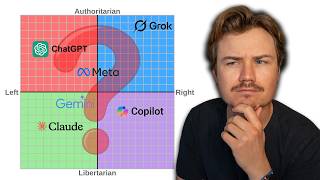
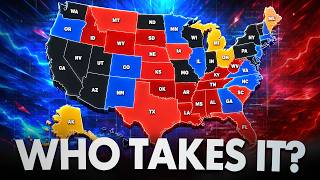
Convovo's test forced Grok 4.7 and GPT-6.1 Sol to name a single winner in nearly 500 upcoming midterm races, with no hedging allowed. Grok named the Republican candidate in 92% of its answers, GPT named the Democrat in 97% of its answers, and the two models agreed on the same candidate less than 10% of the time [1]. Neither model treated local political reality as a limit: GPT picked the Democrat in 57 of 67 heavily Republican districts, and Grok picked the Republican in 47 of 72 deep-blue districts [1], meaning each model's pick tracked its own internal pattern more than the makeup of the race itself.
The researchers isolated where that pattern comes from by rerunning a 30-race subset with live web search switched off. GPT still picked the Democrat in 24 of 30 races relying on training data alone, while Grok refused to pick a candidate at all in 27 of 30 races without search [2]. Parikh summarized the split as a difference in mechanism, not just outcome: "For GPT, it has mostly decided already...it's in the weights. For Grok, it really is the search pattern - the terms and the sources - that determine the result" [1].