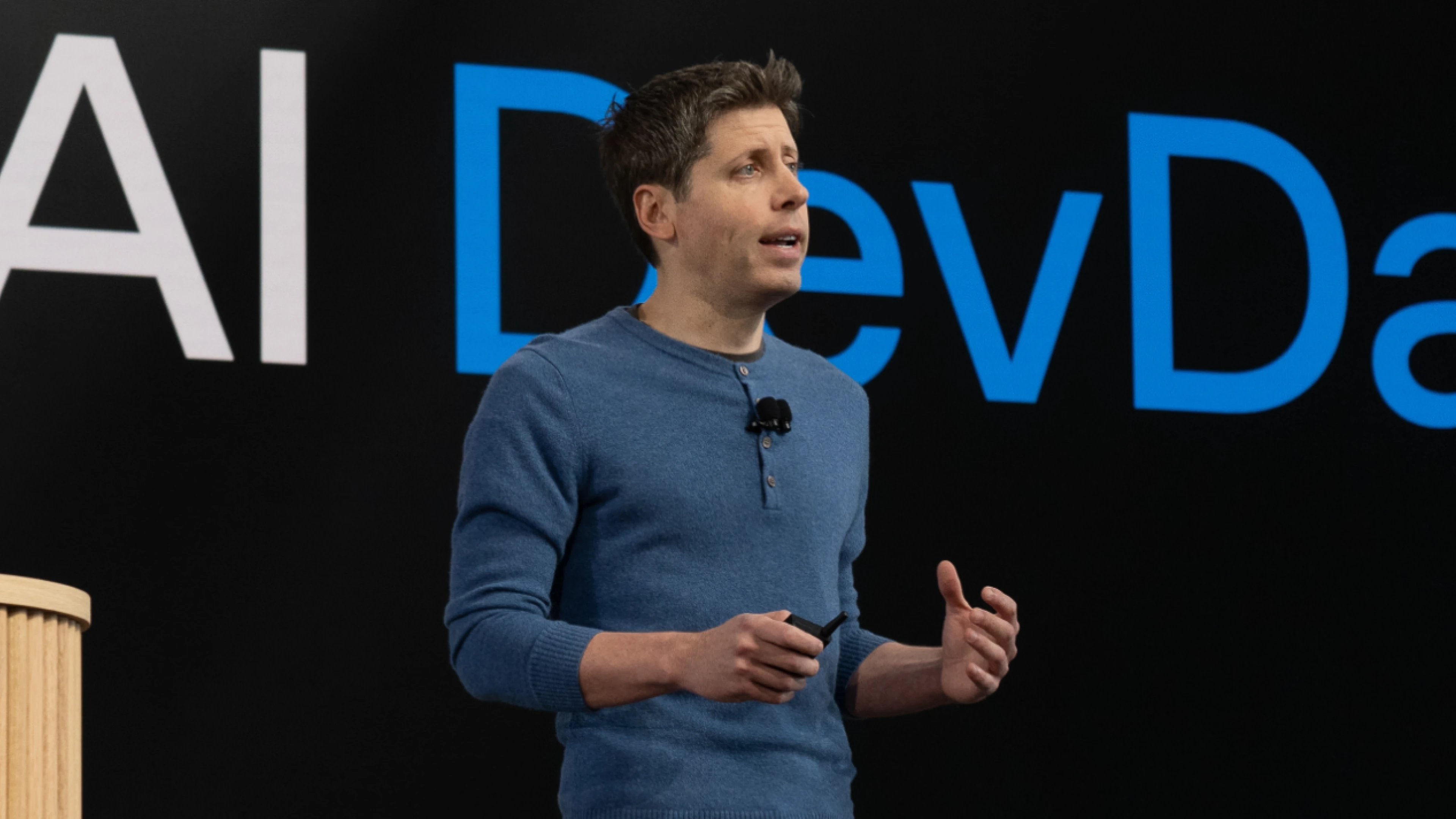
OpenAI to stagger GPT-5.6 release over security concerns
TECH

OpenAI to stagger GPT-5.6 release over security concerns

31+
Signals

Strategic Overview

  • 01.
    The Trump administration asked OpenAI to stagger the release of GPT-5.6, sending the model to a small group of partners in a limited preview rather than a public launch.
  • 02.
    During the preview period the US government will approve enterprise access to GPT-5.6 on a customer-by-customer basis.
  • 03.
    The request originated from two White House offices, the Office of the National Cyber Director and the Office of Science and Technology Policy.
  • 04.
    Sam Altman told staff he hoped a broader rollout could follow roughly a couple of weeks after the preview if the security review went well.

Deep Analysis

Washington Now Sits Between OpenAI and Its Buyers

The detail that makes this release unlike any before it is not the delay - it is who is holding the gate. Rather than ship GPT-5.6 to the public, OpenAI is handing it to a small group of partners in a limited preview, and during that window the federal government approves each enterprise customer one at a time [1]. Sam Altman relayed the plan to staff and said he hoped a broader rollout could follow roughly a couple of weeks later if the review went well [2].

The request did not come from a regulator with an obvious consumer-tech remit. It came from two White House offices, the Office of the National Cyber Director and the Office of Science and Technology Policy [3]. That pairing matters: it frames GPT-5.6 less as a software product and more as a national-security asset whose distribution has to be cleared, buyer by buyer. Reporting describes this as the first time the US government has preemptively asked an American AI company to restrict a model's launch before it ships [3]. For enterprises, the practical effect is blunt - access to a frontier model is now contingent on a federal sign-off they cannot see or appeal.
Anthropic Got Hit Harder - and That's the Tell

GPT-5.6's gated preview looks restrained next to what happened to Anthropic two weeks earlier. On June 12 a Commerce Department export-control directive barred non-Americans, including Anthropic's own non-citizen employees, from accessing its Fable 5 and Mythos 5 models, and the company disabled both [5]. Where Anthropic was forced to cut off entire categories of users, OpenAI is being allowed to keep selling, just through a federal turnstile [4].

The contrast is the story. Analysts now describe a government 'permission layer' that is no longer specific to one lab but applied across the frontier [4]. Yet the treatment is uneven: OpenAI negotiates a customer-by-customer preview while Anthropic absorbs a blunt foreign-access ban, an arrangement reporting has framed as more permissive for OpenAI than the directive imposed on Anthropic [4]. That asymmetry turns government relations into a product variable - a dimension labs did not have to manage a year ago - and hands a real competitive edge to whoever draws the lighter touch. The earlier Anthropic ban also reached beyond US borders, with reporting that the foreign-access restrictions strained relationships with allies [7].

'Voluntary' on Paper, Licensing in Practice

There is a contradiction at the center of this. The administration's own AI executive order frames the new-model review process as voluntary, not a licensing or pre-clearance regime. In practice, a voluntary request from the National Cyber Director that decides who can buy your model is hard to distinguish from a license. The security rationale is concrete - officials worry that a model capable of finding software vulnerabilities or breaking into systems could reach nation-state actors or criminals before defenses catch up, and GPT-5.6 has been described as carrying that class of capability [2].

The Anthropic episode shows how quickly a safety rationale hardens into policy. Security researchers questioned whether the triggering risk could even be patched - one noted the flagged behavior cannot meaningfully be fixed without weakening the model's defensive value [6]. Whether or not the threat is overstated, the machinery being built around it is real: OSTP is assembling a framework to test and evaluate frontier models before deployment [3]. Once that framework exists, 'voluntary' becomes the polite word for a step no serious lab can skip.

Why the Open-Weight Crowd Is Already Backing Up Models

The sharpest reaction did not come from policy circles - it came from builders who read customer-by-customer approval as the thin end of a wedge. On developer forums the dominant instinct was preservation: archive useful open-weight models now, line up non-US mirrors, and assume access could narrow further. That anxiety is less about GPT-5.6 specifically, which was never going to be open-weight, and more about the precedent that a government can decide, case by case, who is allowed to run a model.

A second camp reads the whole thing as manufactured scarcity, arguing the security framing doubles as marketing for a model that is now, by definition, exclusive. Both reactions point at the same nerve: the shift from 'download it and go' to 'apply and wait.' On X the framing split between reporters treating the customer-by-customer mechanism as a genuinely unusual regulatory turn and commentators warning it could hobble the very industry it claims to protect. The throughline across platforms is unease at a new default - that the most capable models now arrive with a gatekeeper attached.

Historical Context

2026-02
Trump ordered federal agencies to stop using Anthropic's models after the company refused the Pentagon's preferred contract terms.
2026-06-12
An export-control directive barred non-Americans from accessing Fable 5 and Mythos 5 over national security, and Anthropic disabled both models.
2026-06-19
Reporting noted the export ban on Anthropic's models, which blocked foreign nationals, further strained US relationships with allies.
2026-06-25
ONCD and OSTP asked OpenAI to stagger GPT-5.6's release with customer-by-customer government approval, the first preemptive US restriction on an American model before launch.

Power Map

Key Players
Subject

OpenAI to stagger GPT-5.6 release over security concerns

OP

OpenAI / Sam Altman

Model developer that agreed to the gated limited-preview rollout and communicated it internally, framing the staggered approach as the fastest path to a broad release.

OF

Office of the National Cyber Director (ONCD)

One of two White House offices that requested the staggered release; its cybersecurity mandate gives it leverage to treat frontier-model distribution as a national-security matter.

OF

Office of Science and Technology Policy (OSTP)

Co-requesting White House office that is building a framework to test and evaluate the security of new frontier models before deployment.

AN

Anthropic

The precedent case: the government forced it to disable Fable 5 and Mythos 5 under an export-control directive, making OpenAI's gated rollout part of an industry-wide pattern.

EN

Enterprise customers

The affected buyers whose access is gated and approved individually by the federal government during the preview, delaying availability and adding regulatory uncertainty.

Fact Check

7 cited
  1. [1] Trump Administration Asks OpenAI to Stagger Release of New Model Over Security Concerns
  2. [2] OpenAI staggers GPT-5.6 rollout for government vetting, eyes 2027 IPO
  3. [3] Trump administration asks OpenAI to stagger release of new model over security concerns
  4. [4] Trump, OpenAI, and the GPT-5.6 Staggered Release
  5. [5] Anthropic disables Fable and Mythos after export controls flag national security threat
  6. [6] The US government's Anthropic models ban was never about an AI jailbreak
  7. [7] US export ban on Anthropic's AI models further strains alliances

Source Articles

Top 5

THE SIGNAL.

Analysts

"Told staff the staggered, government-approved preview was the best path to releasing GPT-5.6 broadly as soon as possible."

Sam Altman
CEO, OpenAI

"Expects customer-by-customer government approval to become the norm for all frontier models from all labs going forward."

Andrew Curran
AI journalist and commentator

"Argues the government 'permission layer' is no longer Anthropic-specific but has become industry-wide, now applying to OpenAI as well."

FourWeekMBA
Business strategy analysis outlet

"On the Anthropic precedent, said the flagged behavior cannot meaningfully be fixed and that any attempt would only weaken the model's defensive value."

Katie Moussouris
Security expert, cited on the Anthropic ban
The Crowd

"JUST IN: 🇺🇸 US tells OpenAI to limit GPT 5.6 release while the government reviews it, The Information reports. CEO Sam Altman: "we've made clear to the US government that this is not our preferred long term model.""

@@WatcherGuru2760

"New w/ @leomschwartz @amir: The Trump admin has asked OpenAI to stagger the release of GPT-5.6 over security concerns. On Thursday, CEO Sam Altman told staff that the government will be approving access to GPT-5.6 customer by customer, a highly unusual approach."

@@steph_palazzolo1030

"The US government is going to destroy the American AI industry. OpenAI just confirmed that GPT 5.6 will release in a limited preview to a small group of partners. The government is approving access customer by customer. Anthropic got hit harder. Fable 5 and Mythos were"

@@bridgemindai1011

"US Govt to individually approve who gets GPT 5.6."

@u/AtlanticHM363
Broadcast
EXPOSED: Why GPT 5.6 Got Delayed

EXPOSED: Why GPT 5.6 Got Delayed

OpenAI's GPT-5.6 Is Real, And They Don't Want You To See This..

OpenAI's GPT-5.6 Is Real, And They Don't Want You To See This..

GPT-5.6 Is Coming And A Price War Just Started!

GPT-5.6 Is Coming And A Price War Just Started!