Inside the Mechanism: How a Data Center Learns to Flex
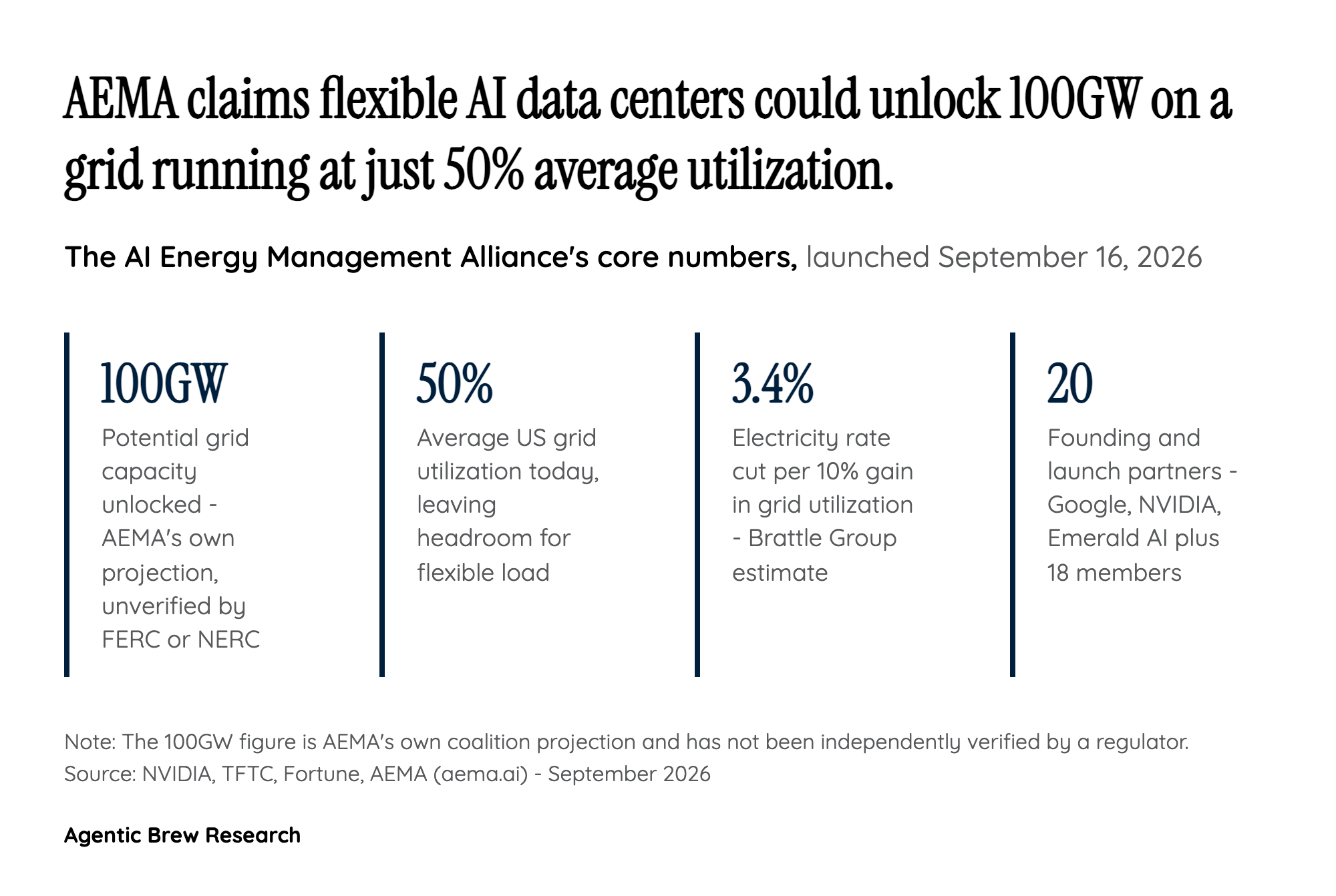
AEMA's technical backbone is NVIDIA's DSX Flex software library, built into the Vera Rubin DSX AI Factory reference design, which connects AI infrastructure to grid-balancing signals in real time [1]. The alliance's operating principles are meant to turn that software into an industry standard: define ride-through, curtailment, and contingency-response obligations before a facility ever connects to the grid, standardize the technical requirements and performance metrics operators report, and create faster, risk-adjusted interconnection pathways for facilities that make credible, verifiable flexibility commitments [1]. Google, NVIDIA, and Emerald AI are already testing the idea outside the press release - a nearly 100-megawatt power-flexible AI factory is under construction in Virginia with Digital Realty, expected to go live in late 2026 [2]. Field demonstrations described in video coverage of the launch suggest the mechanics already work at smaller scale: a Silicon Valley Power facility running thousands of GPUs has automatically dropped its draw when a utility demand signal arrived, deprioritizing lower-priority compute while critical jobs kept running, and a separate Phoenix trial cut a GPU cluster's power use by roughly a quarter for several hours without breaking service agreements. Those pilots suggest AEMA's flexibility pitch isn't purely theoretical, even if it isn't yet a binding industry standard.