The Switch Nobody Remembers Flipping
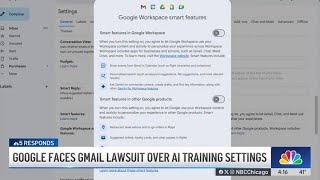
The Gmail lawsuit hinges on a single alleged date: October 10, 2025, when Google is said to have moved Gemini's 'Smart features' from an opt-in setting to default-enabled across Gmail, Chat, and Meet [1]. The Thele v. Google LLC complaint, filed a month later in the Northern District of California, argues this was not a neutral product update but a quiet redefinition of consent - users who never affirmatively agreed to AI analysis of their private messages suddenly had to go looking for a toggle to turn it off [2]. The complaint frames this as more than a UX complaint, invoking California's Invasion of Privacy Act, the Stored Communications Act, and the state's Computer Data Access and Fraud Act - statutes built for wiretapping and unauthorized computer access, now being tested against a generative-AI assistant reading a user's inbox [5].
The dispute over what counts as genuine consent is where the two sides diverge sharply. One privacy commentator described the default-on switch as 'a profound breach of the user's trust,' arguing that privacy should be the default state a user has to opt out of, not a setting they have to discover and disable [3]. Google's position is the mirror image: it maintains the Smart Features and Gemini settings are long-standing, optional, and fully within the user's control, and separately denies using Gmail content to train its AI models at all [4]. Both things can be true in a narrow technical sense - the toggle exists - while still leaving the practical question unresolved: how many users ever knew it needed flipping.