The Mechanism: Turning GPUs Into Bonds
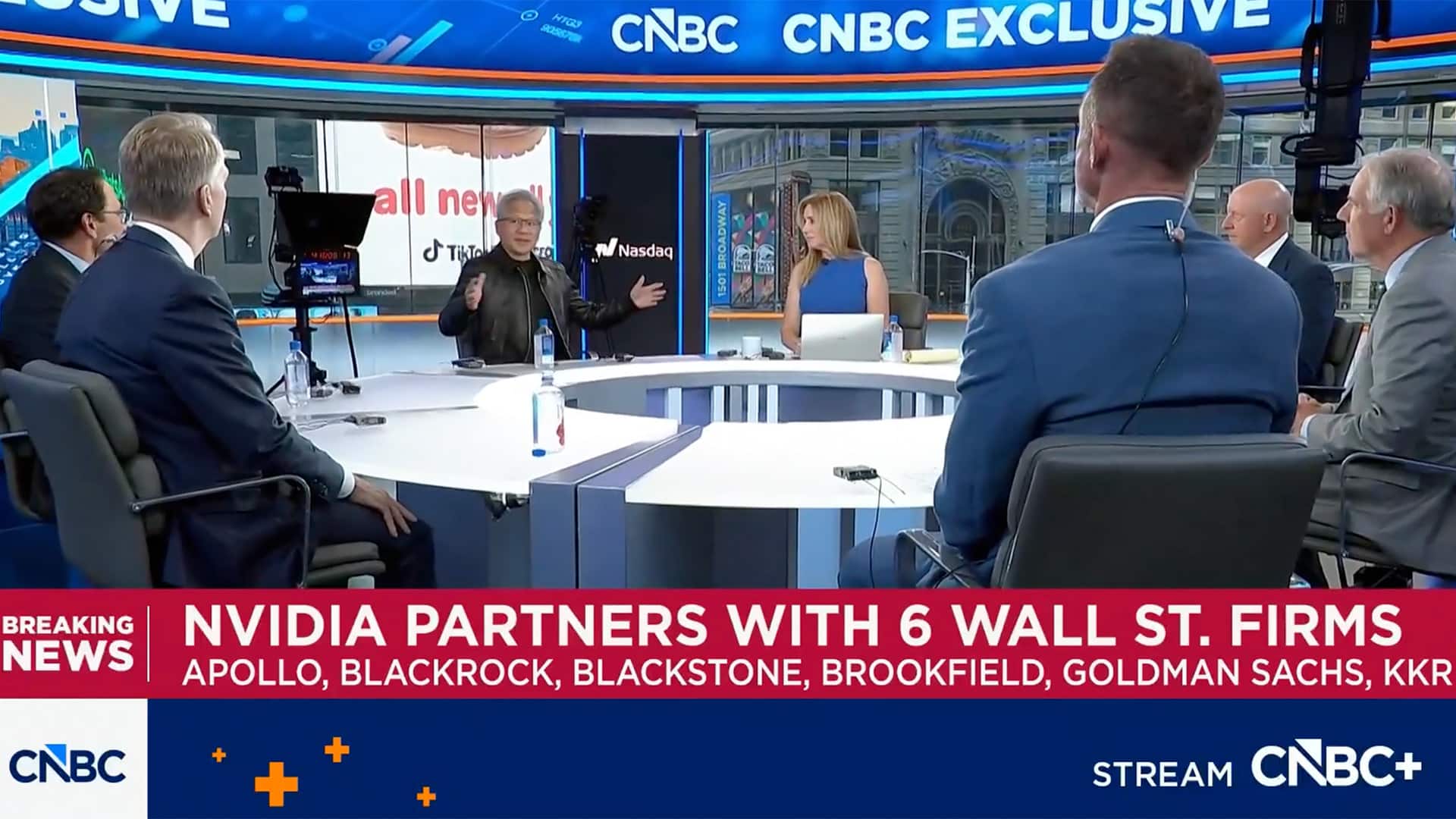
On August 10, 2026, Nvidia signed memorandums of understanding with six of the largest names in private capital - Apollo, BlackRock, Blackstone, Brookfield, Goldman Sachs, and KKR - to mobilize more than $500 billion in third-party financing for AI data centers, power, and infrastructure [1]. The agreements are non-binding MOUs, not committed capital, and are structured so outside investors, not Nvidia, fund the buildout, keeping the exposure off Nvidia's own balance sheet [2].
The actual plumbing runs through special-purpose entities (SPEs) that issue asset-backed bonds collateralized by Nvidia GPU compute, with Goldman Sachs acting as lead bookrunner - structuring, pricing, and distributing the bonds to institutional buyers [4]. To make GPUs credible collateral in the first place, Nvidia is offering residual-value support on up to 25% of some deals, effectively insuring lenders against a chip's resale value falling short at the end of a financing term [3]. Underpinning both is Nvidia's DSX reference design, a standardized AI-factory blueprint that lets banks underwrite facilities and appraisers value them consistently - the fungibility that structured credit requires [5].