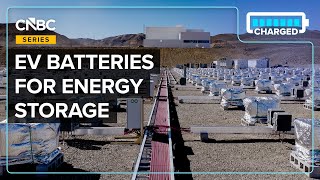
Two bets on one problem: a new chemistry and a fleet that already exists
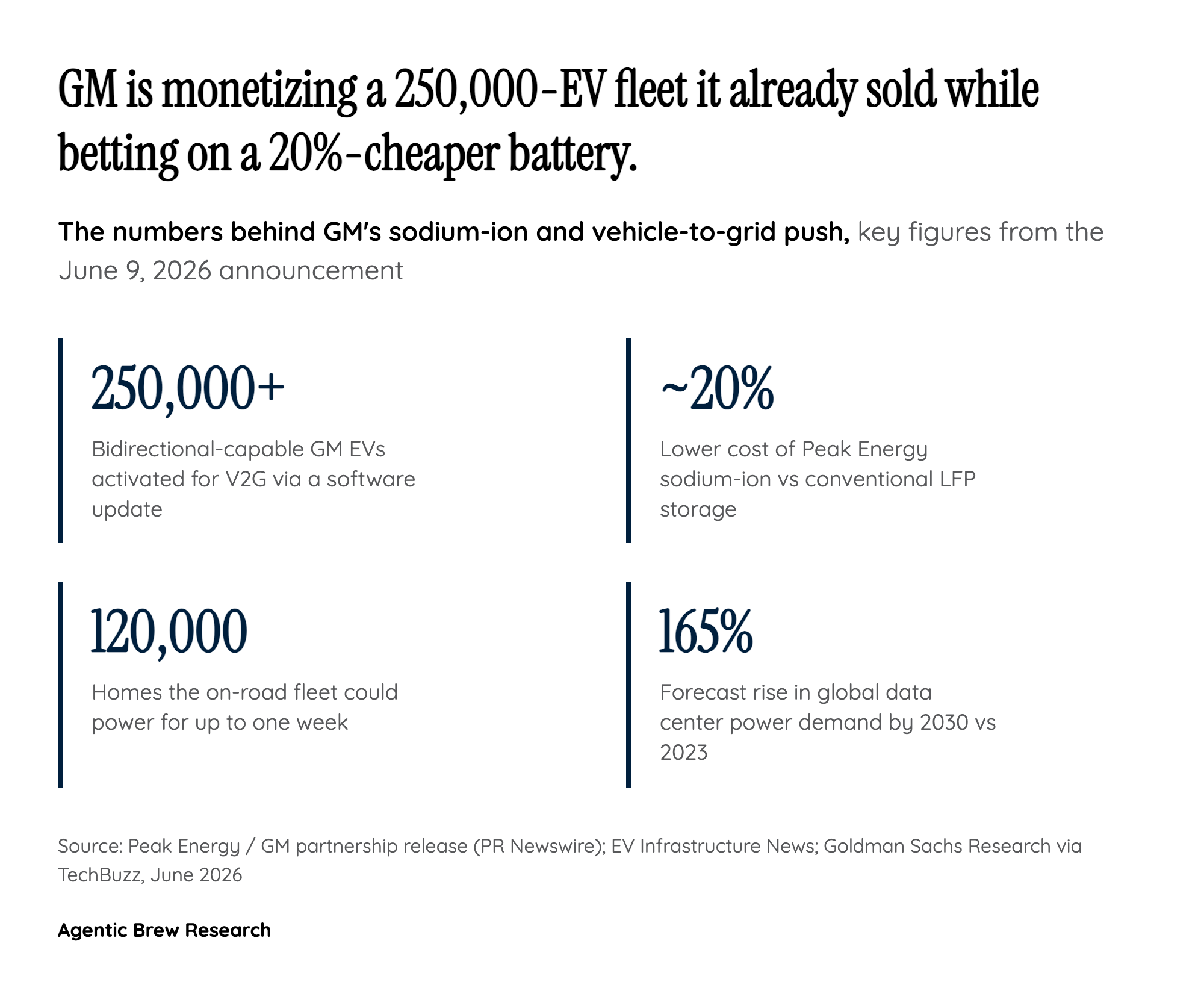
GM's announcement is really two moves stapled to the same thesis - that AI data centers will need vastly more power, fast. Goldman Sachs Research projects a 165% rise in global data center power demand by 2030 versus 2023 [6], and GM is offering supply from both a battery it will build and a fleet it already sold.
The first bet is sodium-ion. The chemistry swaps scarce lithium for abundant salt, sidestepping the supply-chain bottlenecks and price swings of lithium, nickel, and cobalt [3]. Its energy density is too low for cars, but on a stationary grid pad, weight barely matters - which is why GM VP Kurt Kelty argues that 'the application should determine the battery, and for grid-scale stationary storage, sodium-ion is the right solution' [3]. The cleverest part is what the design omits: because sodium-ion runs cooler and carries less overheating risk, Peak Energy builds its systems without active cooling infrastructure or fire suppression. GM's Paul Menson frames this as subtractive engineering - 'the hardest part to engineer is no part at all. Eliminate the part, eliminate the problem' [2]. Removing that hardware is where Peak's claimed ~20% cost reduction versus conventional LFP systems, plus 99%+ uptime, comes from [1]. Peak also estimates that swapping U.S. LFP storage for its passively cooled design could cut up to 2 TWh per year of energy waste [1].
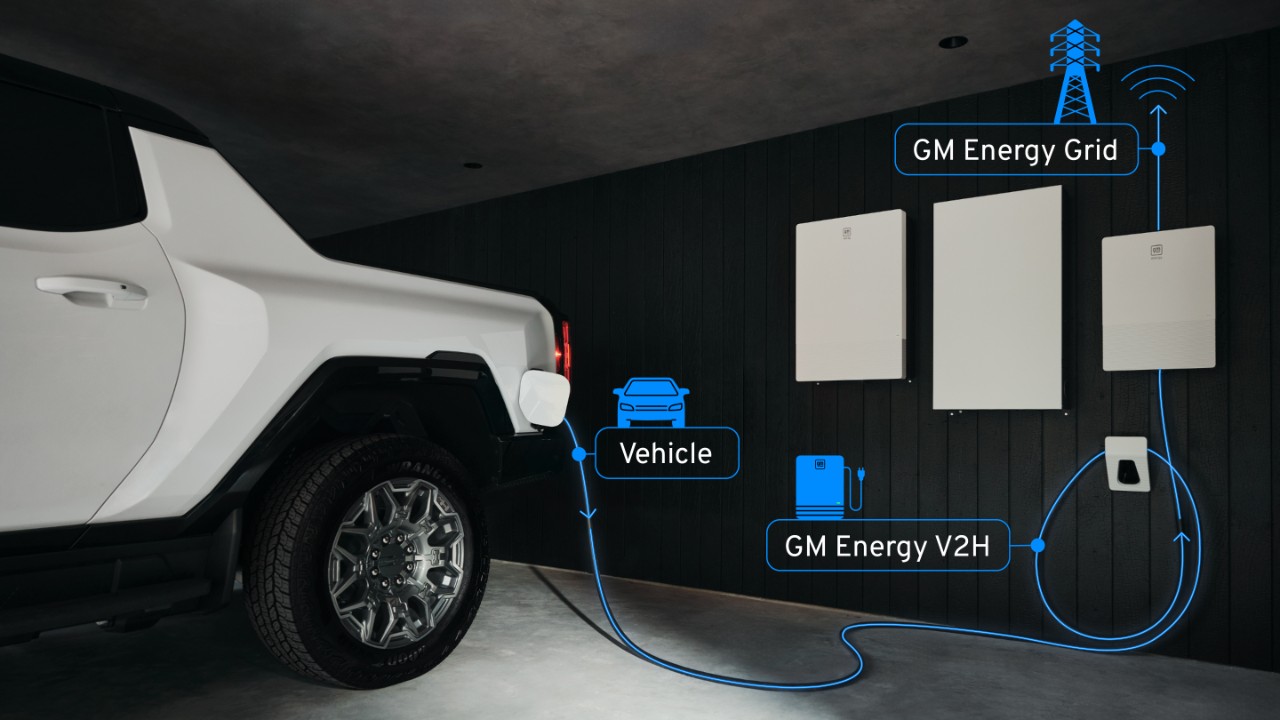
The second bet - vehicle-to-grid (V2G) - needs no new factory at all. More than 250,000 GM EVs already on the road carry bidirectional-capable hardware; a firmware update flips them into two-way power devices that can feed electricity back to the grid [4]. GM Energy's Wade Sheffer puts the latent capacity bluntly: that fleet could 'help power 120,000 homes for up to one week' [4]. The first real test is with PG&E in Northern California, targeting up to 52,000 GM vehicles in grid-balancing by 2030 out of a projected local fleet of 130,000, with DTE Energy in Michigan refining the technology [4]. GM has committed $900 million to commercialize new chemistries, with its first sodium-ion cells expected in trial production by 2028 [2]- so the V2G software unlock is, for now, the part that scales today while the cells are still years out.