Bill Gates' AI warning essay
TECH

Bill Gates' AI warning essay

25+
Signals

Strategic Overview

  • 01.
    Bill Gates published a nearly 6,000-word essay on his personal site, Gates Notes, warning that AI could be either 'the greatest equalizer ever invented, or the worst source of injustice.'
  • 02.
    Gates says there is no coordinated global plan for the social, political, and economic upheaval AI is about to cause.
  • 03.
    Gates argues AI has already crossed dangerous thresholds across bio, cyber, psychosocial, job-market-destruction, and control capabilities, and now rates bioterrorism risk at roughly 50 times that of a natural pandemic.
  • 04.
    Gates proposes a 'robot tax' and an 'AI token tax' to offset the tax-code bias toward automation over hiring, plus 'Human Reserved' jobs kept off-limits to AI.
  • 05.
    Gates also warns of harms beyond jobs: AI companions substituting for children's real relationships, and AI lowering the skill barrier for large-scale crime and fraud.
  • 06.
    The essay is the first in a planned series; a future installment will focus specifically on AI-driven biological weapons risk.

Deep Analysis

The Five Thresholds Gates Says AI Has Already Crossed

Gates' essay opens with an unusually blunt diagnosis: there is no coordinated global plan for the disruption AI is about to cause [1]. He argues the industry has already crossed thresholds that AI researchers themselves once flagged as dangerous warning signs - not one, but five: bio-capabilities, cyber-capabilities, psychosocial capabilities, job-market-destruction capabilities, and a broader lack of control [2]. The bio-risk claim is the starkest: Gates says he now views bioterrorism as roughly 50 times more likely than a natural pandemic [2]. He extends the same logic to children, warning that an always-available, non-confrontational AI companion 'never gets mad at you' and could substitute for the pushback kids need from real relationships [3], and to crime, arguing AI will let 'criminals with very limited skills' target individuals, companies, and governments at a scale that once required organized resources [3]. Threaded through all five is Gates' core claim - 'AI will either be the greatest equalizer ever invented, or the worst source of injustice' [4]- and his insistence that entry-level and young workers will feel the job-destruction threshold first, as many roles 'disappear forever' faster than new ones are created [5].
The Tax-Code Asymmetry Behind the Robot Tax and 'Human Reserved' Jobs

Gates' policy fix targets a specific mechanical incentive, not AI capability itself: current tax law lets an employer write off a robot purchase as a business expense almost immediately, while hiring a human triggers payroll taxes [6]. That asymmetry, he argues, tilts automation decisions toward machines even when the productivity case is marginal - so he wants a 'robot tax' and an 'AI token tax' to close the gap. His companion idea is 'Human Reserved' jobs: roles set aside for people even where AI or robots could technically do them - 'because allowing machines to take over a certain role will displace a large number of people who can't easily change jobs' [6]. In its most aggressive form, Gates has floated protecting as much as 40% of jobs this way [7]- a figure that signals how much of the labor market he believes is genuinely at risk, not just symbolically threatened.

Right Diagnosis, Wrong Prescription: The Pushback From Etzioni and the Robotics Industry

The sharpest technical critique comes from Oren Etzioni, founding CEO of the Allen Institute for AI, who publicly agrees with Gates' read of the risks but rejects the token tax specifically: 'I think that taxing tokens is like taxing keystrokes on a typewriter. It doesn't make sense. It measures effort, not displacement of workers' [8]. Etzioni's second objection is competitive rather than technical - a token tax on American AI use, he warns, could simply push activity toward untaxed Chinese models: 'if we tax American tokens, then what happens when people use Chinese models? Are we shipping AI use offshore with these taxes?' [8]. The International Federation of Robotics goes further, rejecting the entire premise: taxing automation, it says, would 'solve a problem that does not exist' while raising costs and hurting manufacturing competitiveness and job creation [9]. Notably, none of Gates' critics dispute that AI is displacing workers - the fight is entirely over which lever, tokens or robots, actually captures that displacement without being trivially routed around.

A Warning the Public Believes, From a Messenger It Doesn't Trust

The gap between how seriously people take Gates' warning and how much they trust Gates personally is the most striking pattern in the public reaction. Mainstream broadcast coverage amplified the essay's framing largely at face value, and the underlying substance - that there is no plan for AI-driven mass unemployment - drew broad agreement even in famously skeptical corners of the internet. But that same agreement came wrapped in pointed distrust of the messenger: commenters challenged why a billionaire who has profited from decades of technology upheaval is now the one sounding the alarm, and a recurring counter-narrative argued that concentrated tech-industry power, not AI itself, is the real danger. Some pushed back on the severity of the warning altogether, predicting the AI buildout would falter commercially before it ever displaced a meaningful share of jobs, while others worried specifically that an AI token tax could disproportionately burden open-source developers. The result is a public conversation that has absorbed Gates' diagnosis of the problem far more readily than his standing to prescribe the cure.

Historical Context

2017-12-15
Gates first floated the idea of taxing robots that replace human workers, years before this 2026 essay revived and expanded the idea into an AI token tax.
2026-08-26
Gates published the essay on Gates Notes and gave a series of interviews to promote the warning and policy proposals the same day.

Power Map

Key Players
Subject

Bill Gates' AI warning essay

BI

Bill Gates

Microsoft co-founder and Gates Foundation chair, using his public platform to push for AI policy responses (robot/token tax, Human Reserved jobs) ahead of anticipated rising unemployment.

OR

Oren Etzioni

Professor emeritus, University of Washington computer science, and founding CEO of the Allen Institute for Artificial Intelligence. Agrees with Gates' diagnosis of AI risk but disputes the AI token tax as unenforceable, while supporting a robot-replacement tax instead.

IN

International Federation of Robotics

Global robotics industry trade group; rejects Gates' robot/AI tax proposal as addressing a non-existent problem and warns it would hurt manufacturing competitiveness and employment.

Fact Check

9 cited
  1. [1] I Am Very Concerned: Bill Gates Says the World Needs a Plan to Deal With AI
  2. [2] Bill Gates: AI Has Crossed the Danger Threshold
  3. [3] Bill Gates Warns AI Poses Risks as Well as Benefits, Urges World Leaders to Act
  4. [4] Bill Gates Issues Artificial Intelligence Warning
  5. [5] Bill Gates Calls for 'Human Reserved' Jobs to Protect Labour Force From AI
  6. [6] Bill Gates Wants to See a Robot Tax and 'Human Reserved' Jobs to Mitigate Harms From AI
  7. [7] Bill Gates Wants 40% of Jobs Kept 'Human Reserved'
  8. [8] Etzioni on AI: Bill Gates Has the Right Diagnosis but the Wrong Prescription
  9. [9] Bill Gates: Tax Robots, AI Tokens to Slow Human Labor Replacement

Source Articles

Top 5

THE SIGNAL.

Analysts

Agrees with Gates' underlying diagnosis of AI's risks but calls the AI token tax the wrong prescription: 'I think that taxing tokens is like taxing keystrokes on a typewriter. It doesn't make sense. It measures effort, not displacement of workers.' He also warns a token tax could push AI activity offshore: 'if we tax American tokens, then what happens when people use Chinese models? Are we shipping AI use offshore with these taxes?' He favors a robot-replacement tax instead.

Oren Etzioni
Professor emeritus, University of Washington; founding CEO, Allen Institute for AI

Argues Gates' robot/AI tax proposal would 'solve a problem that does not exist' and would hurt manufacturing competitiveness and job creation from automation.

International Federation of Robotics
Global robotics industry trade association
The Crowd

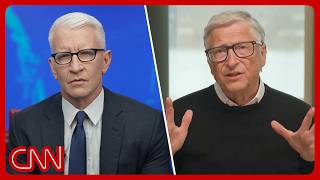
In an exclusive television interview, Microsoft co-founder Bill Gates is sounding the alarm about artificial intelligence, saying "the turbulent AI era is here." He warns that AI models are "now capable of causing cyberattack risk, bioterrorism risk, and psychosocial risk."

@@AC360589

Bill Gates Says AI Will Cause Massive Job Loss & Blocking Data Centers Won't Stop It. "It's across every sector of the economy — initially with white collar but then as the humanoid robots come along, blue collar as well … I'm staking my reputation completely on that."

@@TheChiefNerd129

BILL GATES WARNS THE WORLD HAS NO PLAN FOR WHAT AI IS ABOUT TO DO. He is calling for certain roles to be kept "human reserved" and proposing taxes on AI systems and robots to help fund worker retraining. Bill Gates says artificial intelligence could permanently eliminate jobs

@@Exec_report2

Even Bill Gates is admitting that corporations have 'no plan' for the mass unemployment AI is about to cause.

@u/unconventionalbook6100
Broadcast
Bill Gates stakes reputation: AI is not like past tech

Bill Gates stakes reputation: AI is not like past tech

The turbulent era of artificial intelligence is here

The turbulent era of artificial intelligence is here

Bill Gates issues CHILLING warning on AI's dangerous risks

Bill Gates issues CHILLING warning on AI's dangerous risks

Bill Gates' AI warning essay — AI News | Agentic Brew