The transparency reckoning: what private markets ignored, an S-1 cannot hide
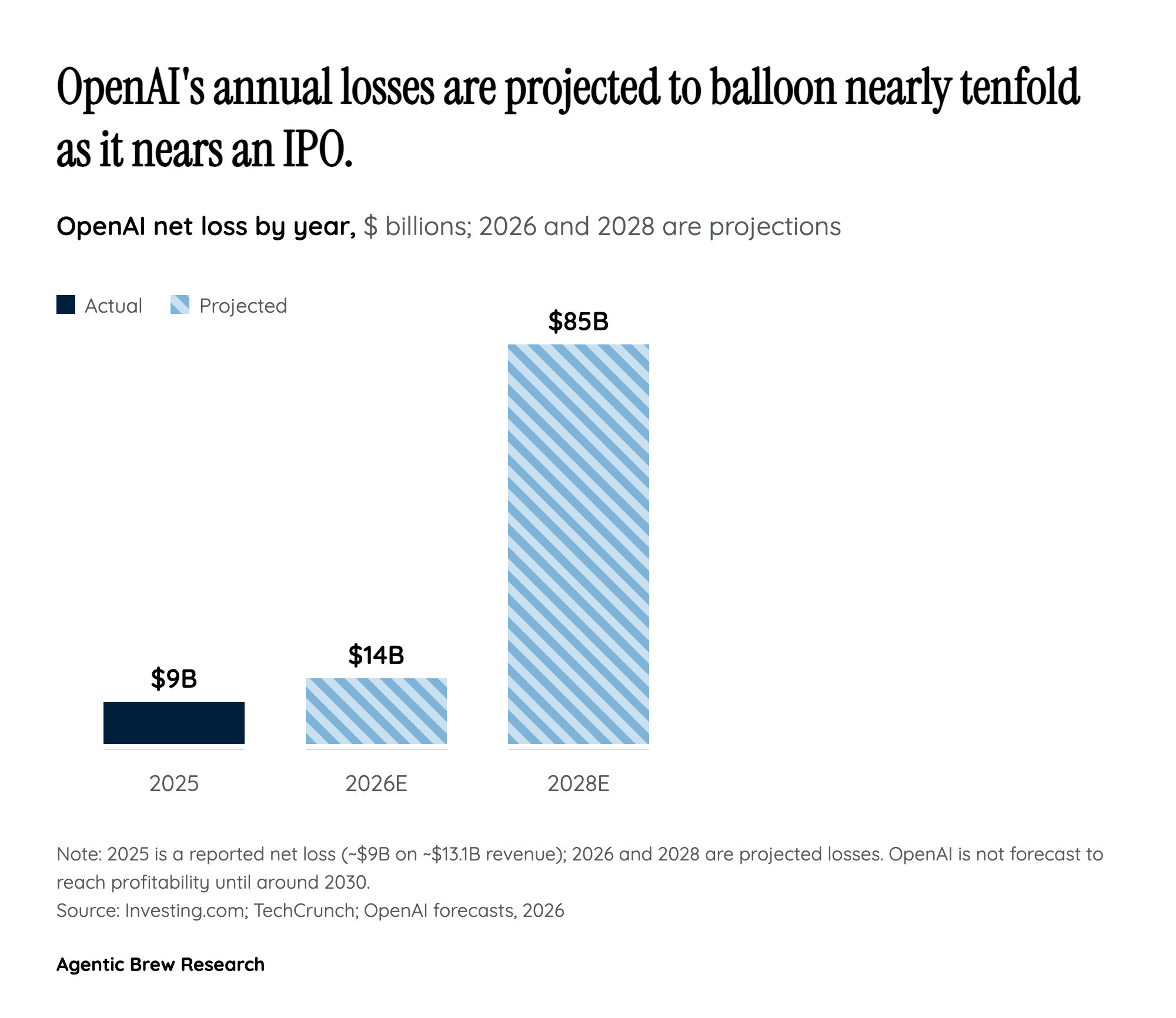
For years OpenAI raised on narrative, not numbers. A draft S-1 changes the terms of engagement. Markets contributor Khasay Hashimov argues the real risk isn't whether investors show up — it's what the document forces OpenAI to show [4]. The crux is an accounting one: under FASB Topic 730, research and development must be 'charged to expense when incurred,' which means the colossal cost of training frontier models cannot be quietly capitalized as a long-lived asset [4]. That single rule reframes the spending story from 'building durable infrastructure' to 'burning cash now.' The figures already in the public record sketch the trajectory: a roughly $9 billion net loss on $13.1 billion of revenue in 2025, a projected ~$14 billion loss in 2026, and profitability not forecast until around 2030 [4][6]. CFO Sarah Friar reportedly urged waiting until 2027, cautioning the company isn't yet ready to be public [4]. A confidential filing buys time — it lets OpenAI iterate privately with the SEC before any of this hits the public eye [1]— but it does not change what eventually must be disclosed.