Nvidia's Q2 FY2027 Earnings Blowout and the Circular-Financing Debate
TECH

Nvidia's Q2 FY2027 Earnings Blowout and the Circular-Financing Debate

58+
Signals

Strategic Overview

  • 01.
    Nvidia reported Q2 FY2027 revenue of $96.2 billion, up 106% year-over-year and 18% sequentially, beating Wall Street estimates of roughly $92-92.3 billion.
  • 02.
    Data center revenue reached $89.0 billion, up 117% year-over-year, and now accounts for more than 92% of total revenue.
  • 03.
    Nvidia guided Q3 FY2027 revenue to $108.0 billion and, for the first time, issued a full fiscal-year-ahead forecast of roughly 70% revenue growth for fiscal 2028, above the ~44-45% analysts had expected.
  • 04.
    Nvidia's supply and component commitments, largely tied to memory procurement, more than doubled quarter-over-quarter, from $119 billion to $279 billion.

Deep Analysis

The Beat Wasn't the Story, the Year-Ahead Guide Was

Nvidia's headline numbers alone would have been a blowout in any quarter: revenue of $96.2 billion for the quarter ended July 26, 2026, up 106 percent year-over-year and 18 percent sequentially, comfortably ahead of Wall Street's roughly $92-92.3 billion estimate [1]. Data center revenue, the engine of the whole story, hit $89.0 billion, up 117 percent year-over-year and now more than 92 percent of total sales, helped by Nvidia's newest Vera Rubin chip platform moving into full production during the quarter [4].

What actually moved the stock further was something Nvidia has never done before: a full fiscal-year-ahead forecast. Management guided to roughly 70 percent revenue growth for fiscal 2028, well above the mid-40s percent analysts had modeled [2]. CEO Jensen Huang was explicit that the number understates real appetite for Nvidia's chips: "Even though our demand is much greater than 70%, our supply allows us to confidently deliver 70%," he said, framing supply, not demand, as the binding constraint [2]. Elsewhere, he leaned into a simpler framing: AI has "reached its inflection point," doing "productive and profitable" work that converts directly into revenue [3].

The 75-Percent, SaaS-Level Margin That's About to Shrink

Nvidia posted a 75.0 percent gross margin in Q2, a figure more associated with software companies than chipmakers [1]. That number is already scheduled to erode: guidance calls for 74.0 percent in Q3, with management pointing to a trough of 71-72 percent in Q4 FY2027 before a recovery toward 72-73 percent in fiscal 2028 [5].

The mechanism is memory. Nvidia's supply and component commitments, overwhelmingly tied to memory procurement, more than doubled quarter-over-quarter, from $119 billion to $279 billion [6]. CFO Colette Kress described the pricing environment in blunt terms: "We are experiencing extreme pricing conditions in memory. The magnitude of the price increase has exceeded our prior expectations and are headed even higher into next year" [6]. Notably, Kress framed this as a symptom of Nvidia's own success rather than a pure external headwind: "Memory scarcity today is being driven in large part by the AI build-out itself" [7]- the same boom fueling Nvidia's data center revenue is now also inflating its input costs.

Circular Financing, the OpenAI Guarantee, and Nvidia's Cisco Ghost

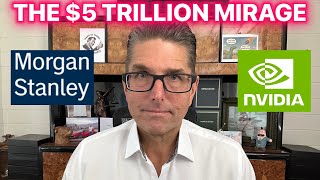
The skepticism around Nvidia's numbers predates the earnings call. Days before the report, Wall Street was already circulating 'circular financing' accusations tied to Nvidia's investments in the AI labs and cloud providers that buy its chips [8]. The specific worry: Nvidia has invested billions in AI labs like Anthropic and put capital into cloud providers like CoreWeave, reportedly discussed guaranteeing up to $250 billion in Ohio data-center capacity tied to OpenAI, and struck financing arrangements with Apollo and Blackstone worth roughly half a trillion dollars for customer buildouts - deals that ultimately route back into Nvidia chip purchases [9]. Reports of the OpenAI capacity guarantee alone repriced Nvidia's five-year credit-default-swap risk from 40 to 82 basis points [2].

Kress addressed the criticism head-on rather than ignoring it: "We recognize the scale of this support, and we know some will call this circular financing. We see it differently," she said, insisting "independent capital still underwrites every deal on its own merits. We're not making loans" [2]. Commentators drew an unflattering historical parallel: Cisco Systems ran similar vendor-financing arrangements for its customers during the dot-com era, which inflated its reported revenue before its stock collapsed from $77 in 2000 to $12 by late 2001 [9]. The comparison is not proof of a repeat, but it explains why sophisticated observers are watching Nvidia's balance sheet as closely as its income statement.

Two Audiences Flagged the Same Risk Before the Price Reaction

What stands out about this quarter is how consistently the same skeptical read surfaced independently across two very different audiences before the rally even started. A credit-analyst warning about Nvidia's supplier commitments and extended payment terms surfaced in trading-focused YouTube coverage the day before the print, essentially pre-loading a 'financing the customer' narrative that the earnings numbers went on to confirm rather than dispel. On community trading forums, the same instinct showed up in balance-sheet terms: rising days-sales-outstanding, receivables growing faster than revenue, and the observation that a chunk of reported profit growth reflected unrealized gains on marketable securities rather than cash - alongside a repeated joke that Nvidia's 75 percent gross margin now looks 'SaaS-level' for a hardware company.

None of that skepticism was new to this earnings cycle in isolation - Nvidia's stock had already fallen for four consecutive quarters after beating estimates, treating 'beat consensus' as table stakes rather than a catalyst [10]. What's different this time is that the credit-risk story (supplier commitments, receivables, circular financing) and the growth story (a 70 percent forward guide, a genuine Wall Street inflection) are now running in parallel, forcing the market to hold both readings at once rather than pick one narrative.

The Market's Verdict: Roughly $440 Billion in a Day

Despite the credit-risk chatter, the market's answer was unambiguous. Nvidia shares jumped roughly 7.6 to 10 percent on the results, adding on the order of $400-440 billion in market value and pushing Nvidia's valuation back above the $5 trillion mark [11]. Sell-side coverage remained overwhelmingly bullish: 58 of 61 analysts tracked rate the stock Buy or Strong Buy [12]. Nvidia also kept returning cash at scale, with roughly $26.0 billion in buybacks and dividends paid out during the quarter alone [1].

The combination - a supply-constrained demand story, a margin squeeze the company is absorbing rather than hiding, and a financing web drawing genuine scrutiny - is why this quarter reads less like a routine beat-and-raise and more like a stress test of how much circular-financing risk a market will tolerate in exchange for AI-scale growth.

Historical Context

2001
Ran vendor-financing deals for customers during the dot-com era that inflated reported revenue; its stock fell from $77 in 2000 to $12 by late 2001 after the bubble burst - the historical parallel critics now raise against Nvidia's financing arrangements.
2026-05
Reported Q1 FY2027 revenue of $81.6 billion, up 85% year-over-year and ahead of estimates, yet the stock fell in the following days, the fourth consecutive post-earnings decline despite a beat.
2026-08-11
Was already fielding Wall Street 'circular financing' accusations tied to its AI-lab investments and supplier commitments ahead of the Q2 report.

Power Map

Key Players
Subject

Nvidia's Q2 FY2027 Earnings Blowout and the Circular-Financing Debate

NV

Nvidia

AI chip and data center hardware maker whose blowout quarter and first-ever year-ahead guidance drove the rally and now anchors Wall Street's read on the whole AI infrastructure buildout.

JE

Jensen Huang

Nvidia founder and CEO who framed AI demand as supply-constrained rather than demand-constrained and pushed the unprecedented year-ahead guidance.

CO

Colette Kress

Nvidia CFO who laid out the margin trajectory driven by memory pricing and personally rebutted circular-financing criticism on the earnings call.

OP

OpenAI

AI lab reportedly the subject of an up-to-$250 billion Nvidia capacity guarantee for an Ohio data center, a central example in circular-financing criticism of Nvidia.

AN

Anthropic and CoreWeave

AI lab and cloud provider central to the financing-ecosystem scrutiny around Nvidia's customer base; Anthropic has received billions in Nvidia investment, and CoreWeave is another cloud-computing firm Nvidia has invested in.

WA

Wall Street analysts

Sell-side coverage remains overwhelmingly bullish, with 58 of 61 analysts tracked rating Nvidia Buy or Strong Buy despite the credit-risk questions.

Fact Check

12 cited
  1. [1] NVIDIA Announces Financial Results for Second Quarter Fiscal 2027
  2. [2] Nvidia Gave Its First-Ever Year-Ahead Forecast
  3. [3] Nvidia Q2 Earnings Results
  4. [4] Nvidia Q2 FY2027: Data Center, Vera Rubin, AI Infrastructure
  5. [5] Nvidia Q2 FY2027 Earnings: Gross Margin Guidance
  6. [6] Nvidia's Real Story Isn't The Beat, It's What Kress Said About 2028
  7. [7] Nvidia CFO Kress on Memory Scarcity and the AI Build-Out
  8. [8] Nvidia Tries to Quiet Circular Financing Accusations, Wall Street Unsure It Will
  9. [9] Is Nvidia Engaging in Circular Financing? Some Think So
  10. [10] Nvidia (NVDA) Earnings Beat: Data Center, Blackwell, Gross Margin Guidance, Valuation, Sovereign AI
  11. [11] Nvidia Soars Almost 10%, Pushing Value Back Above $5.5 Trillion
  12. [12] Nvidia FQ1 Earnings: 10 Analysts Share Key Takeaways

Source Articles

Top 5

THE SIGNAL.

Analysts

Says AI has reached an inflection point where compute is directly generating revenue: "AI has reached its inflection point. It's doing useful work. Its tokens are productive and profitable. Now, compute is revenue. And demand is accelerating."

Jensen Huang
Founder and CEO, Nvidia

Frames Nvidia's unprecedented 70% year-ahead growth guidance as a supply ceiling, not a demand ceiling: "Even though our demand is much greater than 70%, our supply allows us to confidently deliver 70%."

Jensen Huang
Founder and CEO, Nvidia

Directly addressed circular-financing criticism, arguing each deal is independently underwritten: "We recognize the scale of this support, and we know some will call this circular financing. We see it differently." ... "Independent capital still underwrites every deal on its own merits. We're not making loans."

Colette Kress
CFO, Nvidia

Attributes the memory-cost squeeze compressing Nvidia's own gross margin to the broader AI build-out rather than an external shock: "Memory scarcity today is being driven in large part by the AI build-out itself."

Colette Kress
CFO, Nvidia
The Crowd

NVidia had blow out earnings today, and Gene Munster (@munster_gene), long time equity analyst, thinks this is a historic wake up call/inflection point. Worth a listen.

@@PTrubey23

The Nasdaq outperformed peers at the close after Nvidia's bumper revenue forecast reaffirmed the strength of the AI boom and fueled gains in tech stocks

@@Reuters2

Nvidia's Jensen Huang on Fox Business: * Asked for a single word on the rest of the year, Huang says "demand accelerating" * Says the reason is AI does productive work and the tokens labs generate are "profitable tokens," so what's holding it back now is just compute. * Next

@@firesidealpha5

Nvidia earnings proved 2 things again…

@u/jeremyvr461100
Broadcast
MORGAN STANLEY SOUNDS ALARM ON NVIDIA AS QUARTERLY RECEIVABLES SKYROCKET 55% PAYMENT TERMS EXTENDED

MORGAN STANLEY SOUNDS ALARM ON NVIDIA AS QUARTERLY RECEIVABLES SKYROCKET 55% PAYMENT TERMS EXTENDED

Nvidia Q2 FY27 Earnings Call | $NVDA | 🔴 WATCH LIVE

Nvidia Q2 FY27 Earnings Call | $NVDA | 🔴 WATCH LIVE

NVIDIA BEATS Q2! $2.22 EPS | $96.2B Rev | $NVDA -2% AH | Aug 26 Live Trading

NVIDIA BEATS Q2! $2.22 EPS | $96.2B Rev | $NVDA -2% AH | Aug 26 Live Trading