Why a Weak Gearbox Is the Whole Point
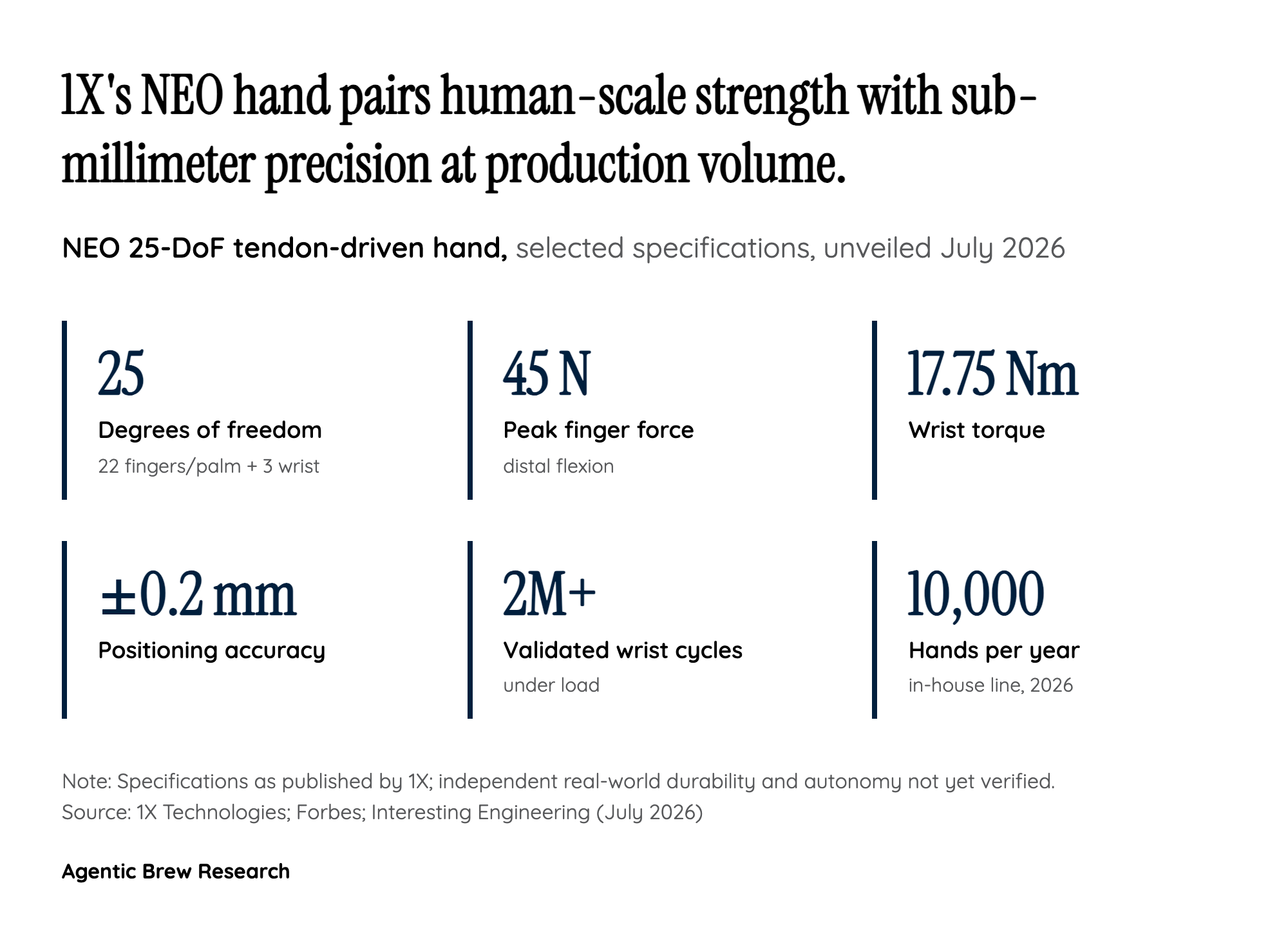
The headline number is 25 degrees of freedom, but the engineering story is buried in a ratio most spec sheets never print. Conventional robot hands drive their joints through gearboxes of roughly 100:1 to 200:1, which multiplies motor torque enormously but at a cost: the joint becomes numb. It cannot feel back through all that gearing, and it holds position rigidly regardless of what it bumps into. 1X went the opposite direction, running quasi-direct-drive tendons through its 1X Tendon Drive at gear ratios of only about 5:1 to 15:1 [1]. That single choice is what makes each of the hand's joints behave as both a motor and a force sensor - the property engineers call backdrivability or force transparency.
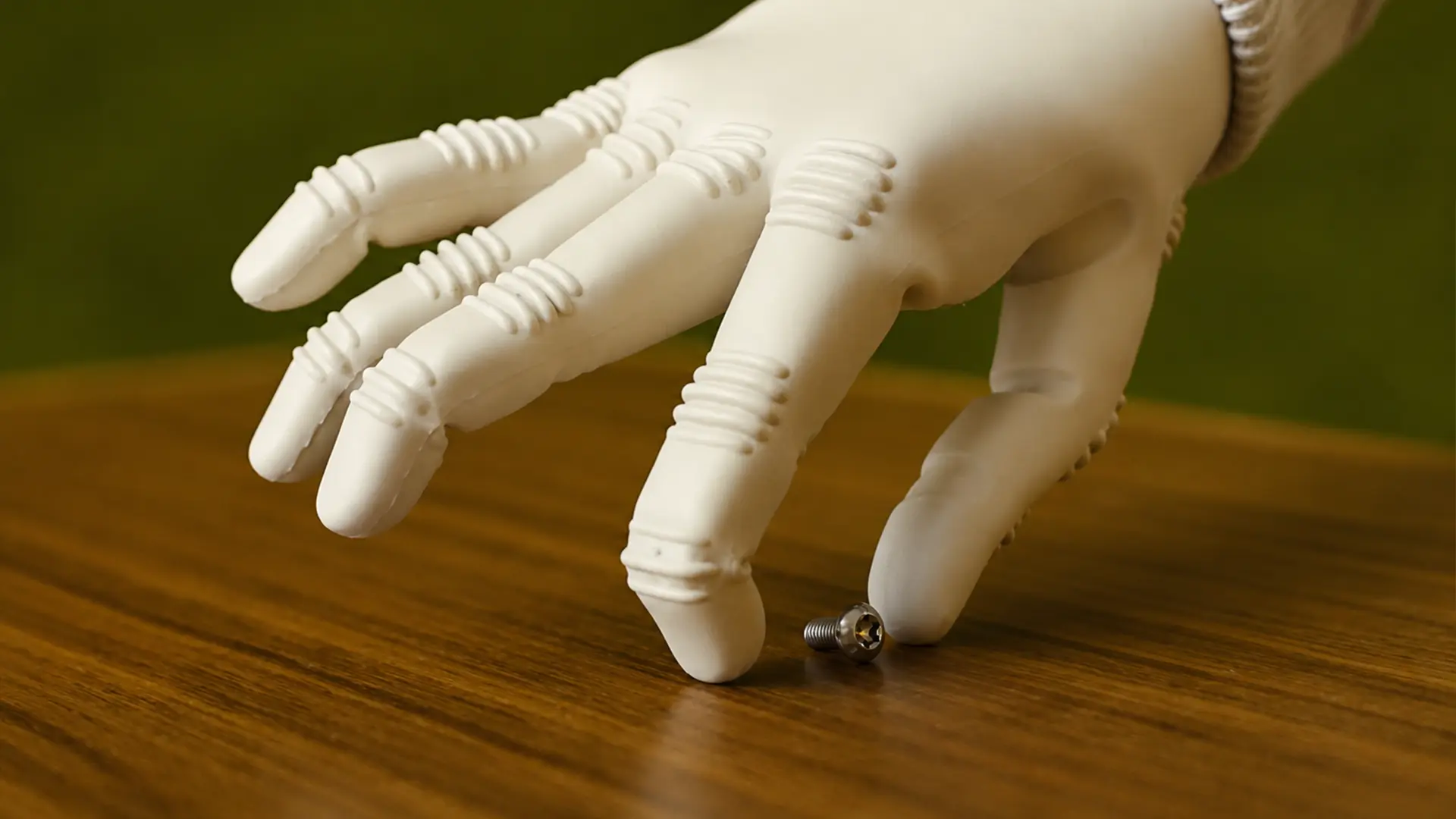
The practical consequences are what the demos are really selling. Because so little gearing sits between the motor and the fingertip, the hand can measure force directly at every joint and yield when it meets resistance - it gives when hit by a hammer or caught in a drawer instead of crushing through. 1X layers on top of that high-resolution tactile sensing that reads normal force, contact location, and shear across the fingertips, which is what lets the hand detect a slip and re-grip in real time [3]. Analyst John Koetsier, who covered the launch, framed exactly this - backdrivability and force transparency - as the differentiator that separates these hands from the stiff, numb grippers that have dominated humanoid demos, arguing that hands, not locomotion, are the gating component for a genuinely useful home robot [2].