Community Transparency Backlash Against AI Data Centers
TECH

Community Transparency Backlash Against AI Data Centers

38+
Signals

Strategic Overview

  • 01.
    Erin Brockovich launched a crowdsourced AI data center map at brockovichdatacenter.com that drew nearly 4,000 submissions in its first month, with 'transparency' surfacing as the single most common community concern — ahead of water, noise, or utility bills.
  • 02.
    Microsoft published a Community-First AI Infrastructure plan on January 13, 2026 committing to concrete community guardrails across electricity pricing, water, jobs, taxes, and local investment — the first hyperscaler-wide commitment of its kind.
  • 03.
    Utah Governor Spencer Cox signed a statewide executive order on May 29, 2026 raising the bar for data center development after Box Elder County approved the 9-GW Stratos project without public comment.
  • 04.
    Rep. LaMonica McIver (NJ-10) introduced the AI Data Center Site Selection Transparency Act of 2026 (H.R.8488), which would require developers to publicly disclose proposed AI data center locations at least 180 days before any definitive development step.

Deep Analysis

Transparency, Not Water, Is the Word in 4,000 Submissions

The most counterintuitive finding from the first month of Erin Brockovich's crowdsourced data center map is what residents are angriest about. The campaign was built around an environmentalist's brand, optimized to surface water draws, generator emissions, and cooling noise. Instead, TechCrunch reports that across nearly 4,000 first-month submissions, 'the single most common concern — more than noise, more than water usage, more than rising utility bills — is the one word that keeps appearing in submission after submission: transparency' [1]. That is a procedural complaint, not a chemical one. The community is not primarily saying the data center will poison them; it is saying they were never told it was coming.

This reframes the entire fight. As long as the dominant story was 'AI uses too much water,' the industry could counter with efficiency disclosures and PPA tweaks. But once the complaint becomes 'you signed an NDA with my mayor before I knew the project existed,' there is no engineering fix — only a governance one. Brockovich herself describes the pattern documented in submissions as 'projects announced after permits are already secured, developers who don't return calls, local officials who signed NDAs before their neighbors knew a project was being considered' [1]. The map's value is not the pin count; it is the proof that the procedural complaint is uniform from Texas to Wisconsin to Florida. That uniformity is what makes federal legislation thinkable.

The NDA Playbook: How Wisconsin Became the Stress Test

Wisconsin is the case study that makes the abstract complaint legible. Wisconsin Watch reported in January 2026 that Beaver Dam, Kenosha, Janesville, Menomonie, and the Town of Beloit had all signed nondisclosure agreements with data center developers before public deliberation began [2]. The most extreme is the $15B 'Lighthouse' project in Port Washington — a code-named, hyperscale build whose footprint local residents could not interrogate because their own elected officials had pre-committed to silence. Public records attorney Christa Westerberg's framing matters here because it shifts the moral weight back to municipalities: 'If you've got the courage and you push back and say, "Listen, we're just not going to do it," (the data center developers) will find a way to operate without having to sign an NDA' [3]. In other words, the NDA is not a price of entry, it is a default that nobody refused.

The mechanism is straightforward. Roughly 35 states offer data center tax incentives [1], which creates a buyer's market for developer attention. A site selector arrives in a mid-sized city, signs a code-named MOU (Project Corn Maze, Lighthouse), and the city — competing against 34 peers — agrees not to disclose specifics until the deal is closed. By the time residents see a rezoning notice, the substation, the water draw, and the tax abatement are already negotiated. Wisconsin Watch's follow-up reporting in March 2026 makes the consequence explicit: 'When cities want to court large, community-changing development, they also should be prepared to act with maximum transparency' [3]. The reason transparency emerged as the #1 concern in Brockovich's map is that this playbook is now the industry's default operating procedure, and every community that goes through it produces the same testimonial.

Why Microsoft Broke Ranks First — and What Its Concessions Imply

Microsoft's Community-First AI Infrastructure plan, published by Brad Smith on January 13, 2026, is the first hyperscaler-wide concession that the NDA playbook is no longer survivable. Smith's framing is unusually direct for a corporate post: 'This commits us to the concrete steps needed to be a good neighbor in the communities where we build, own, and operate our datacenters' [4]. The five pillars — electricity pricing, water, jobs, taxes, and community investment — read as a near-line-by-line response to the complaints Brockovich's map was already collecting. GeekWire's coverage emphasized the cost concessions specifically: Microsoft committed to covering full power costs and rejecting local tax breaks where they would shift costs onto residential ratepayers [5]. That is a meaningful give. Tax abatements and grid cost socialization are precisely the levers that make a hyperscale data center pencil out for a developer; voluntarily removing them prices in the political cost of the alternative.

The reason Microsoft moved first is implicit in the structure of the backlash. Hyperscalers with their own community-facing brands — Azure customers, Office users, retail goodwill — pay a higher reputational tax than colocation operators when a town turns hostile. Smith's framing acknowledges this asymmetry: tech companies have 'a unique opportunity... and a heightened responsibility' [4]. The thurrott.com analysis frames the Community-First plan as Microsoft trying to define the standard others will be measured against, including a 40% water-intensity cut by 2030 [6]. That is the strategic read: by going first, Microsoft is trying to shift the default from 'NDA + tax abatement' to 'disclosure + cost coverage,' knowing that any rival that refuses to match will look like the bad actor in the next Brockovich pin.

The Bipartisan Electoral Signal That Makes This Different From Normal NIMBY

What separates this backlash from a typical NIMBY fight is that it is now producing electoral outcomes in places national political coalitions are not used to seeing align. Brockovich's map documents 15 local moratoria and 6 zoning or permit denials as of late May, evidence that pre-permit organizing is now moving fast enough in places to kill projects before approval. Submission density on the Brockovich map skews toward red and purple regions — 612 reports from Texas, 297 from Sulphur Springs alone — which is exactly the geography that has been pitched as friendly to hyperscale capex because of cheap power and permissive zoning [1]. That cheap-power story now comes with a counter-story: ratepayer cost-shifting, NDAs imposed on small-town mayors, and surprise 9-GW campuses approved without comment.

The legislative response confirms the bipartisan diagnosis. At the federal level, Rep. LaMonica McIver's AI Data Center Site Selection Transparency Act of 2026 (H.R.8488) would require developers to publicly disclose proposed sites at least 180 days before any definitive step [7][8]. Reps. Menendez and Casar's parallel PRICE and Data Center Transparency Acts target cost-shifting and mandatory water/electricity reporting [9]. At the state level, Sen. RaShaun Kemp introduced Georgia SB 421 on transparency [10], and Utah's Governor Cox — a Republican — issued the first binding statewide framework after the Stratos approval, justifying it by stating that 'Utahns have expressed legitimate concerns regarding the potential impacts of large data centers on water resources, air quality, utility rates, local communities, and quality of life' [11]. Harvard's Ben Green captures why the conventional industry rebuttal is failing: 'The public broadly is quite negative about data centers. Overall, their concerns are very legitimate,' and the promised local benefits are 'a significant false promise' [12]. When a Republican governor, a New Jersey Democrat, a Georgia state senator, and a Harvard public-policy academic all land in the same place, this stops being a zoning fight and starts being a category — and that is the signal hyperscalers are now pricing in.

How Community Sentiment Is Shaping the Story Beyond the Headlines

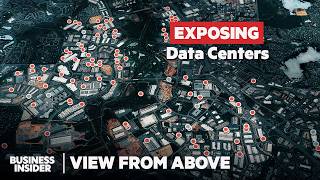
The texture of community reaction across platforms is what's pushing this from local news into a national category. On X, the dominant frame is procedural injustice rather than environmental harm — activist voices outdraw industry PR by an order of magnitude, and Microsoft's own announcement of Community-First drew a notably hostile reply-to-like ratio rather than the polite reception a normal corporate post receives. Investigative video coverage is doing the heavy lifting on visualization: a Business Insider explainer on the 'dark side' of America's data center buildout and a PBS Terra / Floodlight thermal-drone investigation have together driven millions of views, framing opposition as bipartisan and consistently surfacing water, energy, and health harms that NDAs are designed to hide. That is the gap reporters are filling — the federal disclosure regime doesn't exist, so investigative journalism becomes the de facto public-data layer.

Reddit's reception is the most analytically interesting because it is both the most supportive and the sharpest about methodology. A post on r/technology about the map launch drew tens of thousands of upvotes, but the top-rated comments push back on the dataset's signal-to-noise problem — community submissions are unvetted, so some pins are actually solar farms, residential neighborhoods, or pre-AI infrastructure. The dominant frame across the thread is 'privatize profits, socialize costs,' tying the tax-incentive geography directly to the ratepayer-cost geography. The most-cited concrete win in the discussion is a town of roughly 500,000 banning water-cooled data centers entirely — a precedent that is small in absolute terms but disproportionately useful as a template. The takeaway for industry watchers is that the methodological critique of the map does not blunt the political momentum; it sharpens the demand for an authoritative federal dataset, which is exactly what H.R.8488's 180-day disclosure rule would create.

Historical Context

2026-01-01
Investigative reporting exposes that Beaver Dam, Kenosha, Janesville, and Menomonie signed NDAs with data center developers before residents knew projects were being considered.
2026-01-13
Brad Smith publishes the Community-First AI Infrastructure plan committing to community-facing guardrails across electricity, water, jobs, taxes, and investment.
2026-02
A $13.5B, 15-million-square-foot data center proposal is withdrawn following local opposition.
2026-04-09
Publishes Ben Green's analysis on why communities are pushing back against data centers, calling the local economic benefits a 'significant false promise.'
2026-04-30
Opens the crowdsourced submission portal at brockovichdatacenter.com, inviting residents to report local AI data center concerns.
2026-05-04
Approves the 9-GW Stratos data center without a public comment process, becoming the trigger event for Utah's statewide response.
2026-05-29
Signs an executive order raising the bar for Utah data center development, citing legitimate Utahn concerns about water, air, utility rates, and quality of life.
2026-05-31
Confirms Brockovich's map has crossed nearly 4,000 submissions in its first month and reports transparency as the dominant community concern.

Power Map

Key Players
Subject

Community Transparency Backlash Against AI Data Centers

ER

Erin Brockovich

Environmental advocate whose crowdsourced map and Substack 'The Brockovich Report' aggregated nearly 4,000 community submissions in a month, turning fragmented local opposition into a single national dataset that policymakers and reporters now cite.

MI

Microsoft / Brad Smith

First hyperscaler to issue community-facing AI infrastructure commitments covering electricity pricing, water usage, jobs, taxes, and local investment — setting an explicit standard that rivals will be measured against.

GO

Governor Spencer Cox (Utah)

First U.S. governor to impose a binding statewide framework for data center development via executive order, directly responding to the secretive approval of the 9-GW Stratos project in Box Elder County.

RE

Rep. LaMonica McIver (NJ-10), Rep. Foushee (NC-04), Rep. Carson (IN-07)

Co-leads of the federal AI Data Center Site Selection Transparency Act of 2026, which would create a 180-day pre-disclosure window for any proposed AI data center site.

RE

Reps. Rob Menendez (NJ-08) and Greg Casar (TX-35)

Co-sponsors of the PRICE Act and Data Center Transparency Act, focused on preventing cost-shifting of grid expansion onto residential ratepayers and forcing disclosure of water and electricity usage.

WI

Wisconsin municipalities and public-records advocates

Five communities — Beaver Dam, Kenosha, Janesville, Menomonie, and the Town of Beloit — signed developer NDAs (including for the $15B 'Lighthouse' project in Port Washington), turning the state into the country's canonical case study in pre-permit secrecy.

Fact Check

12 cited
  1. [1] Erin Brockovich takes aim at data center secrecy
  2. [2] Wisconsin data center secrecy deals: nondisclosure agreements shield projects from public view
  3. [3] Wisconsin data center secrecy: NDAs keep communities in the dark
  4. [4] Community-First AI Infrastructure
  5. [5] Microsoft responds to AI data center revolt, vowing to cover full power costs and reject local tax breaks
  6. [6] Microsoft details how it plans to build a Community-First AI Infrastructure
  7. [7] H.R.8488 — AI Data Center Site Selection Transparency Act of 2026
  8. [8] McIver introduces bill to stop surprise AI data center development
  9. [9] Menendez, Casar Introduce Groundbreaking Legislation to Protect Americans from Financial and Environmental Impacts of AI Data Centers
  10. [10] Sen. RaShaun Kemp introduces legislation to address data center transparency
  11. [11] Cox orders higher bar for data centers, says public input 'absolutely matters'
  12. [12] Why are communities pushing back against data centers?

Source Articles

Top 4

THE SIGNAL.

Analysts

"Says the map documents a consistent pattern: 'projects announced after permits are already secured, developers who don't return calls, local officials who signed NDAs before their neighbors knew a project was being considered.'"

Erin Brockovich
Environmental advocate, founder of brockovichdatacenter.com

"Argues that 'the public broadly is quite negative about data centers' and that 'their concerns are very legitimate,' and calls the developer promise of meaningful local economic benefits 'a significant false promise of these data centers.'"

Ben Green
Assistant Professor, University of Michigan School of Information and Public Policy; Faculty Associate, Berkman Klein Center for Internet & Society at Harvard

"Frames the Community-First plan as both opportunity and obligation: 'we believe that tech companies like Microsoft have both a unique opportunity to help contribute to these advances and a heightened responsibility to address these challenges head-on.'"

Brad Smith
Vice Chair and President, Microsoft

"Says NDAs are a choice, not a requirement: 'If you've got the courage and you push back and say, "Listen, we're just not going to do it," (the data center developers) will find a way to operate without having to sign an NDA.'"

Christa Westerberg
Madison-based public records attorney

"Justifies his executive order by acknowledging that 'Utahns have expressed legitimate concerns regarding the potential impacts of large data centers on water resources, air quality, utility rates, local communities, and quality of life.'"

Governor Spencer Cox
Governor of Utah
The Crowd

"Erin Brockovich has launched a website and has begun tracking all data centers in America and logging resident complaints In just 1 week it's already logged 1,690 resident complaints For this who don't remember Erin Brockovich was the paralegal responsible for winning out a"

@@WallStreetApes66506

"69 US jurisdictions have now blocked new data centers. Citing the need to protect local power grids and water supplies, a growing number of cities, counties, and towns are pushing back hard against the explosive growth of AI data centers."

@@Rainmaker19734836

"Today, we are announcing @Microsoft's five-point plan for building Community-First AI Infrastructure, our pledge to build and operate datacenters responsibly as we help power the next generation of AI."

@@BradSmi826

"Erin Brockovich launches map of over 4,200 data centres in the US, appeals for local communities to report environmental impact and other costs"

@u/marketrent34000
Broadcast
Exposing The Dark Side of America's AI Data Center Explosion | View From Above | Business Insider

Exposing The Dark Side of America's AI Data Center Explosion | View From Above | Business Insider

We Saw What AI Data Centers Don't Want You to See

We Saw What AI Data Centers Don't Want You to See

Erin Brockovich on AI data centers: 'People aren't being heard'

Erin Brockovich on AI data centers: 'People aren't being heard'