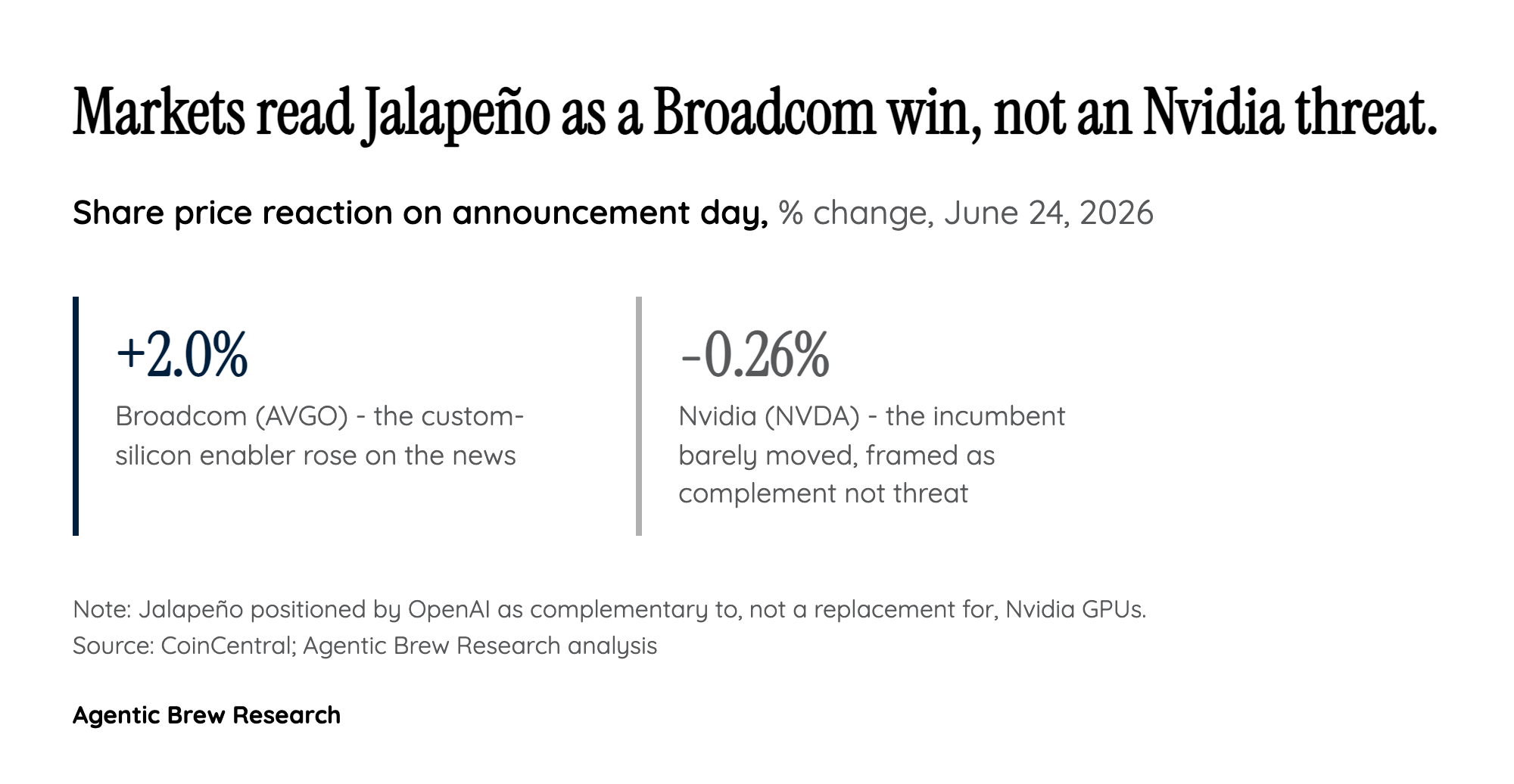
Nine months to tape-out, with the models helping design the chip
The detail that traveled fastest is the timeline - Jalapeño went from initial design to manufacturing tape-out in about nine months, which OpenAI describes as the fastest ASIC development cycle for a high-performance semiconductor it is aware of [1][2]. High-performance accelerators normally take far longer to reach tape-out, so compressing the cycle this hard is the unusual part of the story, and engineering samples are already running ML workloads in the lab at production target frequency and power, including the GPT-5.3-Codex-Spark model [1][3]. The reason given is reflexive - OpenAI says it used its own models to accelerate parts of the design and optimization process, and Greg Brockman said the degree of acceleration was surprising [1]. That framing dominated the social reaction too, where the nine-month build and the 'designed from scratch' claim were the most-shared specifics and the dominant narrative was OpenAI shifting from chip customer to chip designer. The takeaway - if AI-assisted design genuinely compressed a multi-year cadence, the moat is less the chip than the loop that builds the next one faster.