Nvidia-Rebellions talks
TECH

Nvidia-Rebellions talks

38+
Signals

Strategic Overview

  • 01.
    Nvidia is in early-stage, preliminary discussions with South Korean AI inference chip startup Rebellions about a possible deal that could range from a technical partnership to an investment to an outright acquisition.
  • 02.
    Nvidia CEO Jensen Huang met Rebellions co-founder and CEO Sunghyun Park at Nvidia's Santa Clara headquarters this week to discuss a potential tie-up.
  • 03.
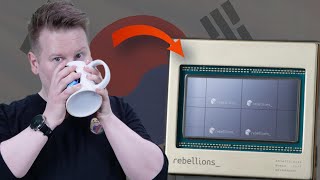
    Rebellions builds neural processing units optimized for AI inference rather than model training, with its Atom and Atom Max chips in mass production since 2023.
  • 04.
    No structure, price, or stake size has been reported for any potential deal, and talks could still fall apart.
  • 05.
    The talks surfaced just two days after Rebellions' CFO confirmed the company is actively preparing an IPO on South Korea's main exchange.

Deep Analysis

Why an inference specialist, specifically

Nvidia's own data-center chief has acknowledged the tension behind this interest: specialized inference architectures can match GPU-cluster performance, but only by throwing more chips at the problem[1]. Rebellions has spent three years turning that trade-off into a business, shipping its Atom and Atom Max NPUs since they entered mass production in 2023 and building a product line purpose-built for running trained models rather than training them[1]. That distinction matters because inference, not training, is the workload that scales with every new user and every new product built on top of a model - which is why Nvidia keeps circling inference-focused rivals rather than only defending its training-chip lead. Rebellions' own leadership has framed that same bet as a founding thesis rather than a recent pivot: the company chose to build for inference over training years ago, reasoning that training is a bounded, project-based R&D activity while inference at scale is a much bigger, recurring addressable market - a thesis it points to real deployments to support, including powering South Korea's national freeway CCTV monitoring system and call-center customer-service inference workloads.

Same company, two opposite headlines

The acquisition-track story sits awkwardly next to a parallel narrative: Rebellions and its partner SK Telecom have also been publicly framed as building Korean AI chip infrastructure specifically to reduce dependence on Nvidia. Both threads trace back to the same company and the same week of reporting - Nvidia in early talks to invest in or absorb Rebellions[2]- which means the outcome of these talks will determine whether Rebellions ends up extending Nvidia's reach into inference or remaining the flagship of Korea's push toward chip sovereignty. Nothing reported so far resolves which version wins; the ambiguity is the story, and it has bred its own skepticism outside the official framing. Because Rebellions is privately held, there is no direct way for outside investors to take a position on the outcome, and against Nvidia's multi-trillion-dollar market cap, even an outright acquisition would be too small to move the needle financially - whatever significance it has is strategic, not financial. Readers have split on what that strategic logic actually is: some read it as defensive, a hedge against AMD's own inference push, while others see it as pre-emptive supply-chain consolidation before a fast-growing rival scales further. A few have pointed to SK Hynix's stake in Rebellions as a way to get indirect exposure to a company that cannot be bought directly, and others have flagged the broader pattern of Nvidia investing in companies that then become customers for its chips as a kind of circular financing worth watching for in whatever structure emerges here.

Nvidia's fourth inference deal in a year

If talks advance, Rebellions would extend a pattern rather than start one. Nvidia's roughly $20 billion move to license Groq's inference technology and absorb its leadership team late last year[3]was structured as a non-exclusive license rather than a straight acquisition, a design one analysis described as keeping the 'fiction of competition' alive while Nvidia still captured the talent and technology it wanted[4]. A similarly shaped Rebellions deal - partnership or investment rather than outright purchase - would let Nvidia extract the same benefit while inviting the same criticism.

Two regulators, two different objections

Any deal that moves beyond a partnership faces scrutiny on two fronts that don't overlap. In the US, Nvidia's dominant share of AI training silicon means the Department of Justice would likely need to clear a large acquisition[5]. In South Korea, semiconductors are treated as a strategic national asset and the government holds a stake in Rebellions through the Korea National Growth Fund[6]- meaning a foreign acquisition of a homegrown AI chip champion would draw its own, separate layer of resistance regardless of how US regulators respond.

The IPO clock is the real deadline

Rebellions has been on an IPO track for months: it hired JPMorgan to lead a South Korea listing in March[8], closed a $400 million pre-IPO round at roughly a $2.34 billion valuation the same month[7], and was still targeting a 2027 listing as of July[9]. Its CFO confirmed active IPO preparations just two days before the Nvidia talks broke[6], which is why the timing reads less like coincidence and more like both sides negotiating against a closing window - a deal gets structurally harder to strike once Rebellions has public shareholders. For now the market is treating the story as exactly as preliminary as Bloomberg described it: Nvidia shares barely moved on the news of Huang's meeting with Rebellions' CEO[10], a sign investors are waiting for an actual transaction before pricing anything in.

Historical Context

2020-09
Founded in South Korea by Sunghyun Park, Oh Jinwook, Kim Hyo-Eun, and Shin Sung-ho.
2023
Atom and Atom Max NPUs entered mass production, the company's first commercial chip shipments.
2024-01
Raised a $124 million Series B round led by KT.
2024-12
Merged with Sapeon Korea (SK Telecom's AI chip subsidiary).
2025-09
Raised a $250 million Series C round at a $1.4 billion valuation.
2025-12
Nvidia struck a roughly $20 billion deal to non-exclusively license Groq's inference technology and hire its founder-CEO and core engineering team.
2026-03-03
Hired JPMorgan to lead a South Korea IPO.
2026-03
Closed a $400 million pre-IPO round at roughly $2.34 billion valuation, bringing total funding to about $850 million; selected for South Korea's 'K-NVIDIA' direct-investment initiative.
2026-07-08
CEO told CNBC the company is targeting a South Korea IPO tentatively for 2027, with no final timing confirmed.
2026-08-19
CFO Sungkyue Shin announced active preparations for an IPO on South Korea's main exchange, days before the Nvidia talks were reported.
2026-08-21
Bloomberg first reported Nvidia is in early-stage talks with Rebellions about a technical partnership, investment, or acquisition.

Power Map

Key Players
Subject

Nvidia-Rebellions talks

NV

Nvidia

Dominant AI chipmaker exploring a technical partnership, investment, or acquisition of Rebellions

RE

Rebellions

South Korean AI inference chip (NPU) startup founded in 2020 by Sunghyun Park, Oh Jinwook, Kim Hyo-Eun, and Shin Sung-ho

JE

Jensen Huang

Nvidia CEO who personally met Rebellions' CEO to discuss the potential tie-up

SU

Sunghyun Park

Rebellions co-founder and CEO; previously at Intel Labs, Samsung (USA), SpaceX (Starlink ASIC design), and Morgan Stanley

SK

SK Hynix

Major investor in Rebellions and a memory supplier, giving the startup a supply-chain edge over rival chip startups

SA

Samsung Ventures and Arm Holdings

Additional investors backing Rebellions

SO

South Korean government

Holds a financial stake in Rebellions via the Korea National Growth Fund and treats semiconductors as a strategic national asset

US

US Department of Justice

Would likely need to review any large acquisition given Nvidia's dominant share of AI training chips

SU

Sungkyue Shin

Rebellions CFO who announced the company's IPO preparations on South Korea's main exchange on August 19, 2026

Fact Check

10 cited
  1. [1] Nvidia in Talks With Korea's Rebellions on Inference Chips
  2. [2] Nvidia in Talks With Chip Startup Rebellions for Potential Deal
  3. [3] Nvidia Buying AI Chip Startup Groq for About $20 Billion, Biggest Deal
  4. [4] Nvidia-Groq Deal Is Structured to Keep 'Fiction of Competition' Alive
  5. [5] Nvidia Looks To Strengthen AI Empire With Potential Rebellions Deal
  6. [6] Nvidia-Rebellions AI Chip Acquisition Talks: Regulatory and Strategic Risks
  7. [7] AI Chip Startup Rebellions Raises $400 Million Ahead of IPO
  8. [8] Nvidia Challenger Rebellions Hires JPMorgan for South Korea IPO
  9. [9] Rebellions Targets South Korea IPO in AI Chip Race With Nvidia
  10. [10] Nvidia (NVDA) CEO Jensen Huang Meets With Korean AI Chipmaker Rebellions for Potential $2-3B Deal

Source Articles

Top 4

THE SIGNAL.

Analysts

Frames why specialized inference architectures interest Nvidia despite a scaling trade-off: reaching comparable performance to a GPU cluster still requires many specialized chips.

Ian Buck, Nvidia data center head
Nvidia executive commentary on inference-chip economics

Argues Nvidia's interest in an inference specialist reveals where competitive pressure is actually building: not in training models, but in the much larger, recurring task of running them.

TradingKey analysis
Market and industry analysis

Treats the in-person Huang-Park meeting as a signal the talks are serious, framing the range of outcomes from technical partnership to full acquisition.

Wall St Engine (financial commentary)
Market commentary on the reported talks
The Crowd

Nvidia Corp. is in early discussions with the Korean AI chip designer Rebellions about possible collaborations, including a technical partnership, an investment or perhaps even an acquisition, according to people familiar with the matter.

@@business59

$NVDA could be eyeing its next AI chip acquisition with South Korean startup Rebellions. Jensen Huang reportedly met CEO Sunghyun Park this week as Nvidia explores a partnership, investment or potential takeover of the $2.3B inference chipmaker backed by $SKHY and $ARM.

@@StockSavvyShay306

Nvidia in early talks with Korea's Rebellions on potential deal

@@techsnif0

Nvidia in Talks With Chip Startup Rebellions for Potential Deal - Bloomberg

@u/Optimal_Image519244
Broadcast
The Rebellions Have Started: Korea's Answer to NVIDIA

The Rebellions Have Started: Korea's Answer to NVIDIA

Targeting AI: Rebellions vs. Nvidia: The Inference Chip Revolution

Targeting AI: Rebellions vs. Nvidia: The Inference Chip Revolution

AI 중심축 '추론'으로 엔비디아 독점 깨는 리벨리온!

AI 중심축 '추론'으로 엔비디아 독점 깨는 리벨리온!