IMF Warns AI 'Slow-Moving Tsunami' Threatens 40% of Global Jobs
TECH

IMF Warns AI 'Slow-Moving Tsunami' Threatens 40% of Global Jobs

26+
Signals

Strategic Overview

  • 01.
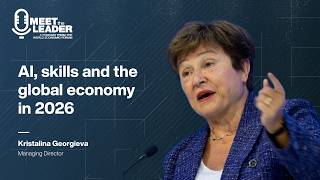
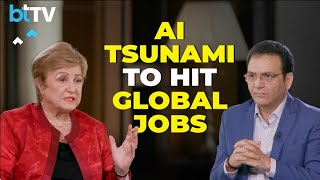
    IMF Managing Director Kristalina Georgieva told the IMF-World Bank Annual Meetings in Bangkok on October 12, 2026 that AI is hitting labor markets like a 'slow-moving tsunami,' with roughly 40% of jobs worldwide eventually augmented, downgraded, or eliminated.
  • 02.
    Exposure is highly uneven by income level - about 60% of jobs in advanced economies are exposed to AI, versus roughly 40% in emerging markets and just 23-26% in low-income countries.
  • 03.
    Georgieva said the net labor-market effect she studied is positive overall, but weighted toward lower-paying jobs like construction tied to data-center build-out and basic services - a result she said is 'not a story to celebrate.'
  • 04.
    Georgieva flagged a fiscal risk alongside the jobs warning - if AI shifts economic activity from labor toward capital, governments' traditional labor-income tax base could erode.

Deep Analysis

The Lattes Problem: Why a 'Net Positive' Jobs Number Isn't Good News

Georgieva's headline framing is that AI's net effect on jobs is positive [1]- but she immediately undercuts the good news: the gains are concentrated in lower-paying work, like construction tied to data-center build-out and basic services, not in the mid-career roles AI is displacing [1]. She put it in starkly personal terms, saying she doesn't think any young person wants a barista job in a coffee shop as their professional future - a line that set off the loudest reaction to this story outside the official channels. Across discussion threads reacting to the IMF's framing, the dominant response wasn't a debate over whether AI will displace jobs - it was pointed mockery of the underlying contradiction: if AI pushes white-collar and middle-skill workers out while growth concentrates in low-wage service jobs, who is left with enough income to sustain consumer demand for that same service economy. Several commenters framed this explicitly as a 'K-shaped economy' problem, where AI-enhanced high earners and a growing base of low-wage service jobs expand in opposite directions while the middle gets squeezed out from both sides. That mechanism lines up with Georgieva's own caveat - a technically positive jobs number that is 'not a story to celebrate' because of where the growth lands.
Graduates Are Absorbing the First Shock of Automation

The clearest evidence of disruption isn't in the aggregate 40% figure - it's in who is failing to get hired in the first place. In Singapore, only 74% of the 2025 university graduate cohort secured full-time work, down from 88% for the 2022 cohort, with graduate unemployment roughly doubling from under 4% to about 10% [2]. Harvard research cited in the same reporting found a 9% decline in junior employment at firms that have adopted generative AI [2], consistent with the idea that routine, repetitive tasks - the ones entry-level roles are typically built around - are the easiest for AI to absorb first. That is precisely why Tharman Shanmugaratnam, Singapore's president and co-chair of the World Bank's Jobs Council, is pushing to convert crisis-era graduate-hiring subsidies into a permanent policy tool rather than a one-off emergency response [3][4]. The World Bank Jobs Council has echoed that call directly, urging governments to treat employment support for new entrants as a structural feature of labor policy, not a recession-only lever [3].

If Labor Shrinks, What Exactly Does a Government Tax?

Buried under the jobs headline is a quieter fiscal warning that may matter more for policymakers than the employment numbers themselves. Georgieva posed it as a direct question: if AI shifts the structure of the economy toward capital and away from labor, what is left for governments to tax [1]? Most government revenue in advanced economies is still built on labor-income taxation, so a sustained shift toward capital-heavy, AI-driven output would erode that base just as demand for public employment support - the kind Tharman and the Jobs Council are calling for - is rising [5]. That timing problem is arguably the most consequential, least-discussed part of the IMF's warning: the same trend that increases the need for social spending also threatens the tax base that funds it.

Automation Is a Choice, Not a Law of Physics

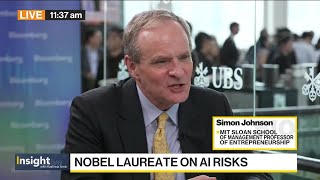
Two very different diagnoses of the same 40% statistic point in opposite policy directions. MIT economist Daron Acemoglu frames the risk as a choice made inside companies: AI has an 'automating form' that simply displaces workers and a 'complementary form' that strengthens what workers can do, and which one wins out is decided by firms and executives, not dictated by the technology itself - replacing people is easy, he argues, while building tools that expand what a company can do takes deliberate effort. Ajay Banga's World Bank pitch for 'small AI' is effectively a bet that this choice can be engineered in the developing world's favor: affordable, localized AI tools in agriculture, construction, healthcare, and tourism create an 'enormous' jobs and productivity opportunity for middle- and lower-income countries [6][7]. Read together, the IMF's aggregate 40% warning and the World Bank's small-AI optimism aren't contradictory - they're describing the same technology applied under two very different sets of incentives.

Historical Context

2024-01-14
Origin of the '40% of global employment exposed to AI, 60% in advanced economies' statistic, first published in an IMF staff discussion note and summarized by Georgieva on the IMF blog ahead of the January 2024 Davos meeting.
2024-05-15
Georgieva first used the 'tsunami' metaphor for AI's labor-market impact around this period, a framing she has now repeated at the October 2026 Bangkok meetings two and a half years later.

Power Map

Key Players
Subject

IMF Warns AI 'Slow-Moving Tsunami' Threatens 40% of Global Jobs

KR

Kristalina Georgieva

IMF Managing Director; the principal voice behind the '40%/60% of jobs' statistic and the 'slow-moving tsunami' framing that is driving the current policy debate

TH

Tharman Shanmugaratnam

President of Singapore and co-chair of the World Bank's Jobs Council; pushing governments to convert crisis-era graduate-hiring subsidies into permanent structural policy

AJ

Ajay Banga

World Bank Group President; steering the institution's jobs strategy toward 'small AI' tools for middle- and lower-income countries rather than just frontier-model policy

WO

World Bank Jobs Council

Advisory body formally urging governments to make crisis-era employment support a permanent structural tool rather than a one-off emergency measure

GO

Goldman Sachs Research

Independent Wall Street research arm whose own estimate - roughly 300 million jobs globally exposed to AI automation, with about 25% of US work hours automatable - corroborates the IMF's warning from outside the Fund's own modeling

Fact Check

7 cited
  1. [1] IMF Warns AI Could Hit 60 Percent of Jobs in Advanced Economies - City AM
  2. [2] IMF's Georgieva Calls AI a 'Slow-Moving Tsunami' Again as Graduates Feel the First Hit - InvestingLive
  3. [3] IMF and World Bank Warn AI Threatens Jobs Amid Inflation Concerns - CNBC
  4. [4] Tharman Urges Governments to Back Hiring of Fresh Graduates as AI Erodes Entry-Level Jobs - The Online Citizen
  5. [5] IMF Chief Alarmed at 'Slow-Moving Tsunami' of AI for Jobs and Taxes - The Irish Times
  6. [6] World Bank Shifts Focus to Job Creation and Productivity Through AI, Says Banga - Gazette NGR
  7. [7] Annual Meetings Session: Small AI, Big Jobs - World Bank Live

Source Articles

Top 5

THE SIGNAL.

Analysts

“Said AI is not shrinking overall demand for workers but shifting it, dispelling what she called the 'myth' that AI simply destroys jobs. She outlined three government priorities: updating labor policy to help workers move into growing occupations, reforming education toward lifelong learning, and reviewing tax and fiscal systems as labor's income share shrinks.”

Kristalina Georgieva (IMF Managing Director)
AI disruption is real and broad but unfolds gradually, and policy has to catch up rather than panic

“Argued that COVID-era and financial-crisis-era government subsidies for graduate hiring should be reframed as structural policy, because the 'first rung' of entry-level employment is seeing declining demand as AI absorbs routine tasks.”

Tharman Shanmugaratnam (President of Singapore)
Crisis-era hiring support for young graduates should be made permanent, not treated as an emergency measure

“Said middle- and lower-middle-income countries have an 'enormous' opportunity to use affordable, localized AI tools in agriculture, construction, healthcare, tourism, and manufacturing to build jobs and productivity, rather than simply inheriting the disruption facing richer countries.”

Ajay Banga (World Bank Group President)
Frontier AI gets the headlines, but affordable 'small AI' is the bigger jobs opportunity for developing economies

“In remarks on Bloomberg Television, Acemoglu warned of a real danger that AI's 'automating form,' which displaces workers, predominates over its 'complementary form,' which strengthens human expertise - and said that balance is decided by firms and executives, not forced by the technology itself. He noted it is easy to replace people, but expanding what a company can actually do requires more deliberate work.”

Daron Acemoglu (MIT economist, co-author of Power and Progress)
Whether AI mainly displaces workers or strengthens their expertise is a corporate choice, not a built-in property of the technology
The Crowd

“JUST IN: IMF predicts AI will take over 40% of all jobs.”

@@WatcherGuru8503

“IMF Managing Director Kristalina Georgieva said AI investment is keeping global growth near 3%, but warned of a 'slow-moving tsunami' that could disrupt up to 40% of jobs worldwide”

@@Reuters55

“AI Will Hit 40% of Jobs, IMF Warns. Young People Are First in Line”

@@DecryptMedia6

“IMF chief warns AI's 'slow-moving tsunami' is coming—and it could leave Gen Z graduates stuck making lattes at Starbucks”

@u/joe4942390
Broadcast
Davos 2026: IMF's Kristalina Georgieva on what's next for AI, skills and the global economy - Meet The Leader

Davos 2026: IMF's Kristalina Georgieva on what's next for AI, skills and the global economy - Meet The Leader

IMF Warns AI To Impact 40% Of Global Jobs, Middle-Class Roles Face Biggest Squeeze

IMF Warns AI To Impact 40% Of Global Jobs, Middle-Class Roles Face Biggest Squeeze

AI Automation, Job Loss Fears and Where New Work Emerges

AI Automation, Job Loss Fears and Where New Work Emerges